

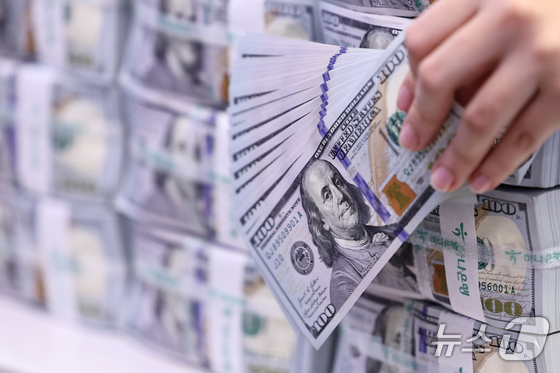
On July 6, 1785, the Continental Congress adopted the dollar, derived from the Spanish dollar, as the official currency of the U.S. This bold move signaled a strong political determination to break free from British economic influence and establish the nation’s foundation as a truly independent sovereign state.
At the time, the U.S. was grappling with severe financial chaos. During the intense years of the Revolutionary War, the Continental Congress had recklessly printed paper money called Continentals to fund the war effort. However, without sufficient gold or silver to back it, the value of this currency plummeted. The situation became so dire that a popular saying emerged: Not worth a Continental, reflecting the currency’s complete loss of public trust.
To address this crisis, Founding Fathers like Thomas Jefferson and Alexander Hamilton designed a new monetary system. They chose to model it after the Spanish dollar, a currency already familiar to the public and known for its stable value. Jefferson, in particular, championed an intuitive decimal system, dividing the dollar into 100 cents. This innovative approach brought unprecedented convenience to American currency.
The dollar began circulating as the nation’s official currency following the establishment of the first federal mint in Philadelphia under the Coinage Act of 1792. Federal control over the currency strengthened with the introduction of the gold standard in the 19th century and the issuance of Greenbacks during the Civil War. The creation of the Federal Reserve System in 1913 marked the dollar’s transition to management under a modern central banking system.
Today, the dollar stands as the world’s preeminent reserve currency, dominating global financial transactions. Its rise to this position began with the Bretton Woods system established after World War II, which cemented the dollar’s role as the linchpin of global finance. Even after the Nixon Shock in 1971 ended the dollar’s gold convertibility, the currency maintained its supremacy through the petrodollar system, which mandated that global oil transactions be conducted in dollars.
The dollar’s dominance persists in the face of challenges from the euro, Chinese yuan, and cryptocurrencies. It still accounts for over half of global foreign exchange reserves, a testament to its enduring strength. The seemingly small decision made by the Continental Congress 241 years ago laid the groundwork for the immense financial hegemony the U.S. enjoys today.