

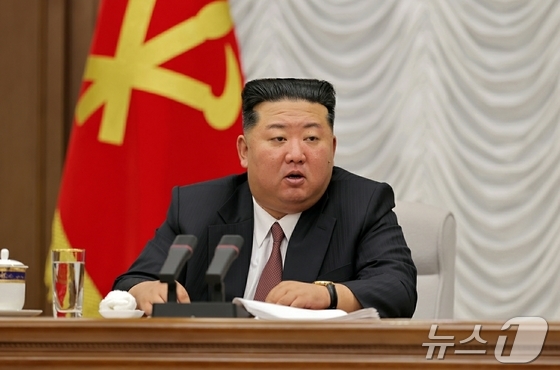
North Korean leader Kim Jong Un has reaffirmed plans to quantitatively and qualitatively expand the country’s nuclear forces while advancing the standardization, specialization, and modernization of military bases, according to state media.
Kim also ordered stronger military reconnaissance and intelligence capabilities, including an expansion of the role of the Reconnaissance General Bureau (RGB), North Korea’s primary military intelligence agency responsible for intelligence gathering and overseas operations. The move is expected to bolster Pyongyang’s intelligence and covert activities.
The decisions were announced during the first enlarged meeting of the 9th Central Military Commission of the Workers’ Party of Korea, the country’s highest military decision-making body, held on July 9.
Military modernization and intelligence expansion
North Korea’s ruling Rodong Sinmun newspaper reported Friday that the meeting was attended by members of the Central Military Commission, senior officials from the Ministry of National Defense, commanders of major Korean People’s Army units, and Workers’ Party officials.
Kim declared that the military must be transformed into a fully field-ready, modern fighting force capable of improving combat effectiveness.
The meeting discussed upgrading the technological foundation of North Korea’s combat system and expanding the country’s nuclear arsenal. Participants also reviewed plans to standardize, specialize, and modernize military bases across all branches of the armed forces.
State media also reported that officials discussed expanding the functions and responsibilities of the Reconnaissance General Bureau while strengthening military reconnaissance and intelligence capabilities.
The RGB, formerly known as the Reconnaissance Bureau before organizational restructuring, oversees military intelligence collection as well as operations targeting South Korea and overseas. It has been linked to major military provocations and cyber operations.
The meeting also addressed naval modernization. According to Rodong Sinmun, officials discussed constructing modern naval bases and expanding and upgrading shipbuilding facilities in line with what it described as a significant transformation in the role and status of the North Korean Navy.
The measures appear to support Pyongyang’s ongoing naval expansion, including the deployment of a new 5,000-ton destroyer and development of a nuclear-powered submarine.
Kim signed seven military orders related to major decisions adopted during the meeting. The Central Military Commission also finalized implementation directives for military units and approved personnel changes involving several senior commanders.
Kim emphasized that national security cannot be guaranteed through determination alone, saying only a strong military capable of deterring threats and maintaining control can secure lasting peace.
Military to continue supporting economic projects
The meeting also approved plans to deploy military personnel to support economic development projects.
According to Rodong Sinmun, the military’s mission and responsibilities were formalized for a nationwide initiative to modernize North Korea’s coal mining regions.
The project follows decisions made at the Workers’ Party plenary meeting last month and reflects North Korea’s continued practice of assigning military forces to major construction and infrastructure projects, a policy that has expanded since the party congress in 2021.
Kim said the military must continue to play a leading role in national development, describing the assignment of major state projects to the armed forces as a demonstration of the party’s trust and confidence.
He also called for building the military into a force completely united with the Workers’ Party leadership, stressing that strengthening political loyalty, morale, and military technology remains a central objective of North Korea’s military development strategy.