

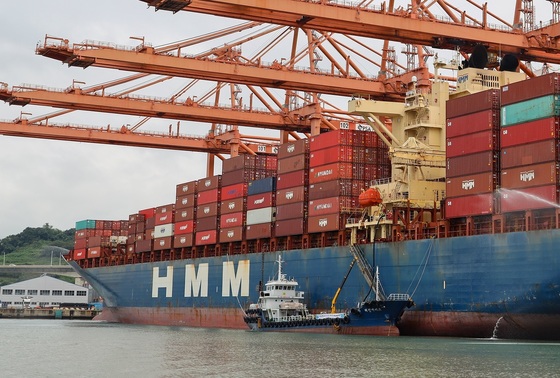
As the United States moves to curb China’s shipping industry, shares of South Korean shipping company HMM surged nearly 7% during early trading on Friday.
As of 9:21 a.m. local time on Friday, HMM was trading at 20,600 KRW (approximately 14.47 USD), up 1,330 KRW (6.90%, approximately 2.32 USD) from the previous day.
The rally is driven by growing expectations that HMM could benefit from the U.S. government’s decision to impose port entry fees on Chinese-operated ships, which could create a competitive edge for other global carriers.
On Thursday, the Office of the United States Trade Representative (USTR) announced that it will begin charging fees on vessels either built in China or operated by Chinese entities. The move is aimed at curbing China’s influence while strengthening domestic industry.
The new fees will be implemented gradually starting October 14, 2025—180 days from the announcement—and are scheduled to increase annually.
Lee Jaehyuk, an analyst at LS Securities, noted that while USTR’s sanctions may have limited impact in reversing broader market conditions, HMM is expected to maintain superior profitability and operational strength compared to global peers, especially amid mounting cost pressures from the deteriorating market environment and U.S.-China maritime sanctions.
He added that short-term shipping demand disruptions are likely due to the combined effects of the USTR-led maritime sanctions and the ongoing tariff war.