


As the South Korean government prepares to impose sanctions on Coupang following a massive data breach, U.S. lawmakers have raised concerns about potential discrimination against American companies in South Korea.
Given the U.S.’ history of sensitive reactions to regulations affecting its companies, the response from the U.S. administration and political circles could significantly impact South Korea’s approach to sanctioning Coupang. To address potential misunderstandings, Seoul has dispatched a high-ranking official to engage with U.S. counterparts.
On Tuesday, during a trade subcommittee hearing on maintaining U.S. innovation and technology leadership in Washington, D.C., Republican Representative Adrian Smith of Nebraska, who chairs the House Ways and Means Committee, alleged that South Korea continues to pursue legislation explicitly targeting American companies.
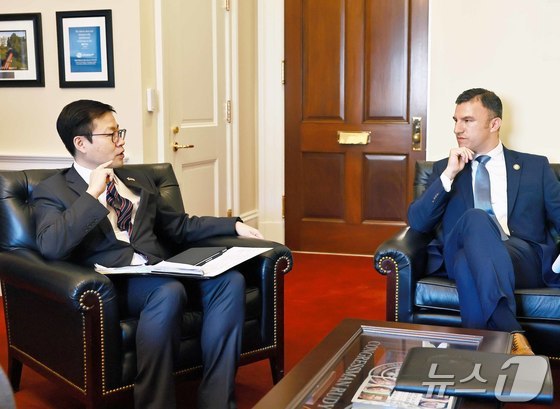
The hearing coincided with a visit by Yeo Han-koo, South Korea’s chief trade negotiator, who aimed to alleviate U.S. concerns about South Korean digital legislation. Smith emphasized what he perceived as discriminatory regulatory actions against Coupang, citing the government’s response to the company’s recent data leak.
Lawmakers from both parties criticized South Korea’s actions against Coupang during the hearing. Republican Carol Miller labeled the recent amendment to South Korea’s Telecommunications Business Act a censorship law, claiming a political witch hunt against two American Coupang executives. Democrat Suzan DelBene echoed these concerns, stating she had heard that Korean regulators were violating commitments made to companies like Coupang.
Analysts suggest that tensions between the two countries could escalate over South Korea’s pressure on Coupang Inc., given the U.S. government’s historically sensitive responses to issues affecting its industries and trade.
Last August, then-President Donald Trump’s threat to impose significant tariffs on countries introducing digital regulations targeting U.S. companies led to the suspension of South Korea’s proposed online platform laws.
More recently, the U.S. Trade Representative’s office canceled a scheduled Korea-U.S. Free Trade Agreement Joint Committee meeting, reportedly in protest of South Korea’s treatment of American companies like Coupang.
South Korea’s regulatory pressure on Coupang has intensified, with the Fair Trade Commission conducting a large-scale investigation at the company’s headquarters on Tuesday. The probe aims to determine whether Coupang’s chairman, Kim Beom-seok, should be subject to stricter disclosure obligations and regulations. Discussions about potentially suspending Coupang’s operations are ongoing.
Industry experts warn that U.S. government perception of unfair treatment towards Coupang could escalate into a broader trade dispute between the two nations.
Reports indicate that Coupang has established an office in a strategic Washington location to strengthen its engagement with U.S. government officials and lawmakers, apparently as part of a campaign to generate support against perceived unfair treatment by South Korean authorities.
While the U.S. administration has not yet taken an official stance on Coupang, political support for the company is expected to grow as the November midterm elections approach.
The South Korean government maintains that its actions against Coupang are a justified response to the data breach, not unfair discrimination. To clarify this position, they have sent Deputy Minister Yeo to Washington for discussions with U.S. officials.
On January 11, Yeo emphasized the need to clearly explain South Korea’s policy intentions, stating that Coupang’s data leak and inadequate response are the core issues, which should be addressed separately from trade or diplomatic concerns.
Lee Young-ki, an attorney representing Coupang shareholders in a U.S. class-action lawsuit, noted that three major law firms have filed suits against Coupang for alleged illegal activities. He expressed hope that South Korea would not be swayed by what he characterized as hasty intimidation from the U.S.