On January 15, the Taiwanese government pledged a 500 billion USD investment in the U.S. and secured a tariff reduction, expressing its desire to become a close artificial intelligence (AI) strategic partner with the U.S.
Reuters reported that Cheng Li-chiun, Taiwan’s Deputy Premier, held a press conference in Washington, describing the negotiations as mutually beneficial. Cheng spearheaded the trade talks with the U.S. on Taiwan’s behalf.
The cornerstone of this agreement is Taiwan’s bold commitment to U.S. investment. Taiwanese firms have committed to directly investing at least 250 billion USD in constructing or expanding facilities in the U.S., focusing on cutting-edge semiconductor, energy, and AI sectors.
Moreover, the Taiwanese government has agreed to provide credit guarantees of an additional 250 billion USD to companies expanding their operations in the U.S.
As part of the deal, the U.S. will lower its tariff on Taiwanese imports from 20% to 15%, bringing it in line with rates applied to South Korea and Japan.
Cheng emphasized that the investment plan is industry-driven and assured that Taiwanese companies would continue to invest domestically. He argued that this move would not hollow out Taiwan’s industries but rather expand its tech sector globally.
He underscored the importance of the U.S. as Taiwan’s key ally and arms supplier, adding that this agreement would likely stimulate increased U.S. investment in Taiwan.
A standout feature of this agreement is the introduction of a Taiwan model that directly links U.S. investment with tariff benefits.
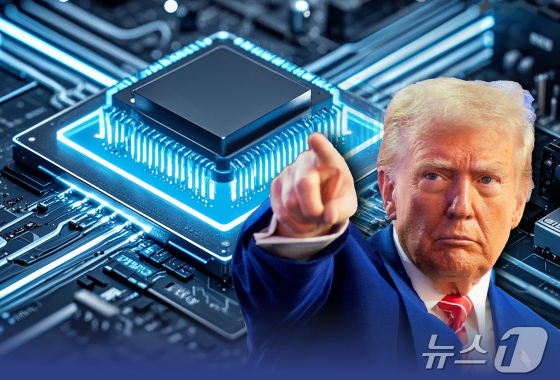
Under this model, Taiwanese companies building new semiconductor plants in the U.S. can import semiconductors duty-free, up to 2.5 times their planned production capacity during the construction phase. Lower preferential tariff rates will apply to imports exceeding this quota.
Even after plant completion, duty-free benefits will continue for up to 1.5 times the new U.S. production volume. This serves as a powerful incentive and pressure tactic for companies considering U.S. investment.
In a CNBC interview, Commerce Secretary Gina Raimondo stated that companies opting not to build factories in the U.S. could face tariffs as high as 100%. She added that the administration aims to relocate 40% of Taiwan’s semiconductor supply chain to the U.S. during President Donald Trump’s term.
Raimondo concluded by emphasizing the importance of Taiwan’s cooperation, stating that Taiwan needs to keep the president happy because he’s key to protecting Taiwan.