

The U.S. Supreme Court continues to deliberate on the legality of reciprocal tariffs imposed during the Trump administration. Initially, experts considered the possibility that these tariffs would be declared unconstitutional, sparking a series of lawsuits seeking refunds. However, as the Court prolongs its decision, analysts now suggest that political factors may be influencing the process.
South Korean industries are keenly observing the potential impact of the Supreme Court’s decision. While many industry insiders believe the outcome may not significantly alter the current situation, some argue that a ruling in favor of constitutionality could offer slight advantages.
Reports from business circles and foreign media on Wednesday indicate that the U.S. Supreme Court did not issue a ruling on Tuesday on the constitutionality of President Donald Trump’s reciprocal tariffs. Although the Court doesn’t typically announce decision dates in advance, many had anticipated a ruling on that day.
Bloomberg projects that the Supreme Court will enter recess from January 21 until February 20, suggesting at least another month’s wait for a decision. The expected ruling dates have been repeatedly postponed from January 9 to 14, then to 20, and now it appears the Court is taking a measured approach.
Market expectations, which previously leaned toward an unconstitutional ruling, are now uncertain.
The lawsuit’s core issue is whether the tariffs imposed under the International Emergency Economic Powers Act (IEEPA) were lawful. Enacted in 1977, the IEEPA empowers the President to declare a national emergency and regulate foreign economic transactions when facing unusual and extraordinary threats to U.S. security, foreign relations, or economy.
Lower courts in both the first and second trials ruled that the reciprocal tariffs exceeded presidential authority and were invalid. Even the conservative-leaning Supreme Court has expressed skepticism towards the Trump administration’s arguments, increasing the likelihood of a ruling against the tariffs. Consequently, over 1,000 companies, including U.S. subsidiaries of South Korean firms, have initiated lawsuits demanding tariff refunds.
However, as the final decision continues to be delayed, some speculate that the Supreme Court may be weighing political considerations beyond legal interpretations. President Trump has publicly pressured the Court, warning that an unfavorable ruling would leave the administration screwed and asserting that the amount the government might have to pay back could reach trillions of dollars.
Kim Dong Young, a senior researcher at the Korea Development Institute (KDI), suggests that the Supreme Court’s delay might indicate a search for a logical basis, potentially signaling a shift in the Court’s approach.
Han Ah Reum, a senior researcher at the Korea International Trade Association, points out that ruling against the tariffs could significantly weaken the administration’s policy momentum, especially given that the U.S. has already reached reciprocal tariff agreements with several countries.
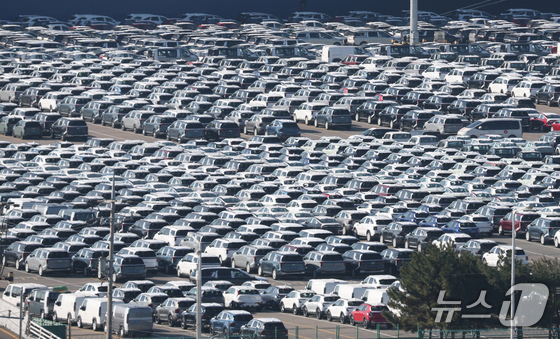
Many experts in academia and industry maintain that the outcome, whether constitutional or not, may not dramatically alter the current landscape.
If the reciprocal tariffs are upheld, U.S. tariff policy might remain stable in the short term. Conversely, if the tariffs are invalidated, the Trump administration is likely to activate alternative measures under various trade laws, such as Section 232 of the Trade Expansion Act, Section 301 of the Trade Act, or Section 122 of the Tariff Act. This would merely change the legal basis for imposing tariffs while maintaining similar outcomes.
Kim Dong Young Kim noted that reciprocal tariffs are deeply rooted in the United States’ America First policy, arguing that unless President Trump abandons his tariff strategy, debates over constitutionality risk becoming a distraction from a broader framework that remains fundamentally unchanged.
However, some analysts argue that a constitutional ruling could be more favorable when considering South Korea’s export structure. Key export sectors like automobiles, steel, and electronics are already subject to Section 232 tariffs, making them less affected by reciprocal tariffs. A ruling against the tariffs might lead to new tariff substitutes or an expansion of existing item-specific tariffs, potentially increasing market uncertainty.
Han Ah Reum suggests that if reciprocal tariffs are invalidated, the Trump administration might readily turn to Section 232 of the Trade Expansion Act. She notes that the U.S. Department of Commerce has been investigating potential tariffs on semiconductors, pharmaceuticals, critical minerals, wind turbines, and industrial machinery since last year, with results potentially emerging soon.
The Trump administration has already hinted at semiconductor-specific tariffs. At a recent groundbreaking ceremony for a Micron plant in New York, U.S. Secretary of Commerce Gina Raimondo said that memory producers effectively face two options: paying a 100% tariff or producing their products in the United States, a remark widely seen as pressuring South Korean semiconductor firms to expand local investment.