
The Korean automotive industry is once again staring down the barrel of a potential tariff bomb from the United States. If tariffs surge back to 25%, industry giants Hyundai Motor and Kia could see their operating profits plummet by over 5 trillion KRW (approximately 3.75 billion USD) this year. The sector is sounding the alarm on renewed uncertainty surrounding U.S. tariffs, calling for swift action from both the government and the National Assembly.
On Monday, U.S. President Donald Trump dropped a bombshell, announcing his intention to hike tariffs on Korean-made vehicles back to 25%. Trump took to his social media platform, Truth Social, to lambast the Korean National Assembly for failing to ratify a trade agreement. He declared his readiness to raise tariffs on various items, including automobiles, from 15% to 25%.
Last July, Korea struck a deal to lower mutual tariffs and automotive duties to 15% in exchange for a whopping 350 billion USD investment in U.S. strategic industries, as agreed during the October U.S.-Korea summit. The plan included disbursing 200 billion USD in annual installments of 20 billion USD. To facilitate this, a special bill for managing U.S.-Korea strategic investments was introduced in the National Assembly last November. However, it remains in limbo due to partisan gridlock.
Trump stated that he and South Korean President Lee Jae Myung inked a stellar trade deal benefiting both nations on July 30, 2025, which he reaffirmed during his visit to Korea on October 29, 2025, questioning why the Korean National Assembly had yet to give it the green light.
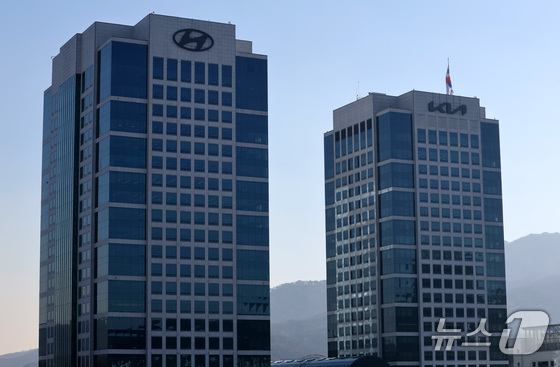
The auto industry was blindsided by Trump’s unilateral declaration. Hyundai and Kia, Korea’s automotive powerhouses, took a staggering 4.6 trillion KRW (3.45 billion USD) hit in operating losses from April to September last year due to the 25% U.S. tariff. Despite record-breaking U.S. sales, the hefty tariffs caused their operating profits to nosedive. Hyundai and Kia sold over 1.83 million vehicles stateside, clinching a market share of 11.3% – an all-time high.
Wall Street analysts predict that if tariffs rocket back to 25%, Hyundai and Kia could face a gut-wrenching 5 trillion KRW (3.75 billion USD) in operating losses this year. Meritz Securities estimates that a 10% tariff hike would inflict additional operating costs of 3.1 trillion KRW (2.325 billion USD) for Hyundai and 2.2 trillion KRW (1.65 billion USD) for Kia. Kim Jun Sung, a Meritz Securities analyst, explained that a 10 percentage point tariff increase would slash the 2026 annual operating profit consensus by 23% for Hyundai and 21% for Kia.
Korea’s General Motors, which exports over 80% of its domestic production to the U.S., is also facing renewed speculation about a potential exit following the tariff hike announcement.
While trying to decipher Trump’s true intentions, the Korean auto industry is pressing for rapid negotiations between the government and the National Assembly. The Ministry of Economy and Finance said that it was currently gauging the U.S. position and would maintain open lines of communication with the U.S. government, keeping it informed about the progress of legislative discussions in the Korean National Assembly. It added that Trade Minister Kim Jeong-gwan, who is currently in Canada to support submarine contracts, plans to meet the U.S. Commerce Secretary during an upcoming visit to the U.S.
Professor Lee Ho Geun from Daedeok University’s Department of Future Automotive Studies warned that the auto industry’s profitability hinges on exports and that President Trump’s tariff threats introduce unpredictability that would inevitably create management challenges. He cautioned that if tariff-related difficulties seen last year were to resurface in the first half of this year, it would be a rough ride, adding that renegotiating and adjusting the tariffs would likely be a protracted process.


