

Coupang has unexpectedly found itself in a delicate position between the U.S. and South Korea.
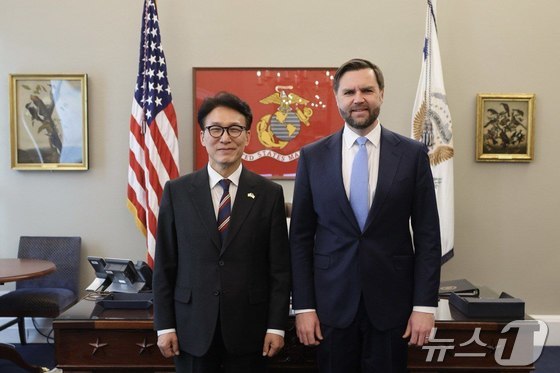
This situation arose shortly after U.S. Vice President JD Vance cautioned South Korean Prime Minister Kim Min-seok during his recent U.S. visit against disadvantaging American tech giants like Coupang. Following this, President Donald Trump ramped up pressure to increase tariffs on South Korean products.
While the White House has drawn a clear line stating no connection between these two events, and President Trump, a day after mentioning tariff hikes, expressed willingness to work with Korea on a solution, the aftershocks of these incidents still reverberate.
Unprecedented Warning from the U.S. Vice President… Lobbying Efforts Actually Decreased
It’s highly unusual for a vice president to single out and warn about one specific company. Some speculate that Coupang’s lobbying might be behind the entire sequence of events – from U.S. investors requesting a government investigation into the Coupang situation, to Vice President Vance’s mention of Coupang, to President Trump’s tariff pressure.
If U.S.-Korea negotiations sour and tariff increases become a reality, Coupang could be vilified as the arch-criminal that cornered Korea, potentially intensifying consumer backlash. For Coupang, already viewed unfavorably, this is an undoubtedly perplexing predicament.
At this point, one might wonder just how much lobbying Coupang has actually done.
Coupang’s U.S. lobbying expenditures over the past five years, from 2021 to 2025, are reported to be around 15 billion KRW (approximately 10.5 million USD). In the year following the Trump administration’s inauguration, Coupang’s lobbying expenses were 2.27 million USD, a 30% decrease from the previous year’s 3.31 million USD. This amount is also less than what other companies like Samsung Electronics (7.41 million USD), SK Group (5.57 million USD), Hanwha Group (3.77 million USD), and Hyundai Motor Group (3.34 million USD) spent.
Therefore, it’s somewhat of an overstatement to suggest that Coupang wields enough lobbying power to manipulate the U.S. government. Moreover, Coupang isn’t a household name among American citizens. Even from a political calculus standpoint, the U.S. government has little reason to mention Coupang to court votes in upcoming elections.
U.S. Moves to Protect Its Companies’ Interests… South Korea Needs to Reassess
So why is the U.S. going to such lengths to defend Coupang?
An industry insider analyzed that it seems excessive for over ten government departments to deploy hundreds of investigators to scrutinize various fields such as labor practices, fair trade, and logistics, especially when the results of the personal data breach incident have yet to surface.
The insider also noted that summoning the Chief Investment Officer of the National Pension Service to a parliamentary hearing and pressuring them to exclude Coupang from investments likely came as a shock to American observers.
Thus, while Coupang’s lobbying efforts can’t be completely discounted, the current situation may reflect the U.S. government’s assessment that its domestic companies are facing undue disadvantages.
The South Korean government’s role has now become crucial. To avoid trade friction that could significantly impact domestic industries, it’s imperative to carefully chart the course forward. South Korea must meticulously examine the reasons behind the U.S. stance and ensure that ongoing investigations don’t appear discriminatory.
By analyzing past cases, it’s necessary to distinguish between genuine concerns and habitual criticism. It’s also important to exchange relevant information with the U.S. and seek understanding from political factions critical of Coupang.
An industry insider remarked that the investigation into Coupang is just beginning. It can’t predict how the U.S. will respond in the coming stages, so it seems necessary to proceed cautiously to avoid further misunderstandings.