

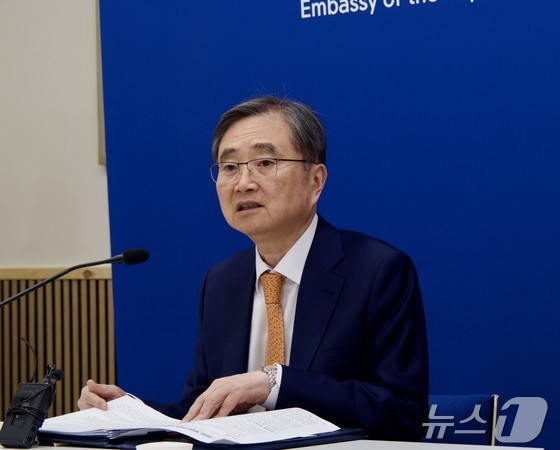
On Thursday, during a trip to the United States, South Korean Foreign Minister Cho Hyun said U.S. Secretary of State Marco Rubio expressed concerns about the unfavorable atmosphere surrounding South Korea’s implementation of trade commitments agreed to in the joint fact sheet from last November.
Minister Cho shared this information during a press briefing at the South Korean Embassy in Washington, D.C., where he discussed the outcomes of his Tuesday meeting with Secretary Rubio.
He stated that Secretary Rubio told him the overall United States–South Korea relationship was not in a critical state. Still, that sentiment in Washington regarding Korea’s follow-through on trade commitments was negative.
He added that although Rubio does not directly handle trade policy, he oversees the broader bilateral relationship in his role as the top U.S. diplomat and national security lead, which is why he shared that assessment.
He emphasized that they agreed the two countries should stay in close contact through diplomatic channels so frustration over delays in implementing the trade agreement does not spill into the wider relationship.
On January 26, President Donald Trump announced via his social media platform, Truth Social, that because South Korea’s legislature had not ratified what he called a historic trade agreement, the U.S. would raise tariffs on cars, wood, pharmaceuticals, and other goods from 15% to 25%.
Amid speculation that the U.S. is moving forward with the publication procedures necessary to raise tariffs, Minister of Trade, Industry and Energy Kim Jung Kwan and Chief Trade Negotiator Yeo Han Koo have already visited the U.S. Following this, Minister Cho is also engaging in discussions with U.S. officials during the Ministerial Meeting on Critical Minerals.
Despite the mobilization of the industrial, trade, and diplomatic sectors to persuade the U.S., they have yet to receive any confirmation that the tariff increase will be retracted or postponed, raising concerns that it may soon become a reality.