

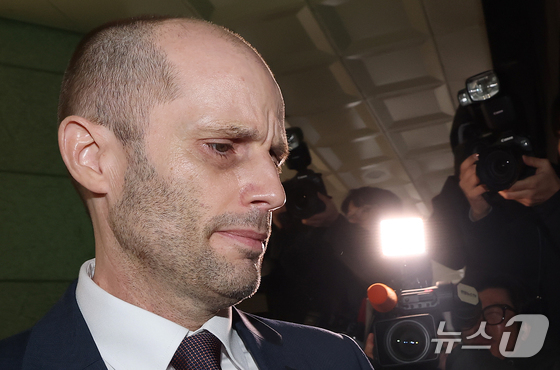
On Thursday, the U.S. House Judiciary Committee issued a subpoena to Harold Rogers, the interim representative of Coupang’s Korean subsidiary and its Chief Administrative Officer (CAO) and General Counsel.
This formal request for Rogers to appear at a Judiciary Committee hearing marks the start of an official investigation into claims that the South Korean government has unfairly treated Coupang.
Coupang has stated its intention to fully cooperate with the congressional inquiry.
In a letter to Rogers, Republican Representatives Jim Jordan, the committee’s chairman, and Scott Fitzgerald, who oversees regulatory reform and antitrust issues, wrote that over recent months, Korean government agencies, including the Korea Fair Trade Commission (KFTC), have intensified discriminatory attacks on American tech companies, escalating to threats of criminal prosecution against U.S. citizens.
They cited President Lee Jae Myung’s demands for severe penalties and substantial fines against Coupang as a prime example, noting that the KFTC recommended suspending Coupang’s operations. They added that calls for punitive measures continued even as Coupang worked closely with South Korea’s National Intelligence Service to ensure a swift recovery.
The representatives explained that the committee must investigate the scope and nature of these efforts and their impact on Americans’ due process rights and on global competitiveness to develop effective legislation, including new laws to protect U.S. companies and citizens from discriminatory foreign laws and their enforcement.
This move formalizes their intention to thoroughly investigate whether South Korea’s digital regulations infringe on American companies’ due process and global competitiveness, aiming to introduce new protective legislation against foreign government regulations.
The committee emphasized that the Trump administration had clearly stated its intolerance for foreign attempts to impose more burdensome regulations on U.S. companies than on domestic firms. They also highlighted that the recent U.S.-Korea trade agreement explicitly guarantees non-discrimination against American companies in the digital services sector.
They argued that South Korea’s digital regulatory proposals target U.S. companies, similar to the EU’s Digital Markets Act (DMA), while effectively exempting South Korean small businesses and Chinese competitors.
The two representatives stated that the targeting of Coupang and the potential prosecution of its American executives directly contradict South Korea’s recent promises of non-discrimination against U.S. businesses, and demanded all relevant communications between Coupang and the South Korean government.
They added that the requested materials should include information on the company’s compliance with foreign laws, regulations, judicial orders, or other government actions, and on how these laws affect U.S. companies.
Furthermore, they summoned Rogers to testify before the committee regarding the South Korean government’s targeting of Coupang and other innovative American companies.
According to the attached subpoena, Rogers must appear at the hearing scheduled for February 23. He was appointed interim representative of Coupang’s Korean subsidiary following a major data breach that affected 33.7 million users. Initially, the National Assembly planned to summon both Coupang’s board chairman, Kim Beom Seok, and interim representative Rogers for hearings, but only Rogers appeared before the National Assembly’s Science, Technology, Information, Broadcasting, and Communications Committee last December. Rogers has recently been under police investigation for allegations of destroying evidence and committing perjury.
This subpoena comes as President Donald Trump has warned of potentially increasing reciprocal tariffs to 25% due to delays in South Korea’s investment legislation affecting the U.S. With Congress and the administration highly sensitive to foreign government regulations impacting domestic tech companies, there’s growing concern that the Coupang situation could escalate into broader trade tensions between the U.S. and South Korea.
The Judiciary Committee emphasized its jurisdiction to oversee illegal restrictions on competition and monopolies, which could lead to future legislative reforms. They reiterated that Coupang falls under the committee’s jurisdiction and has the necessary documents for the investigation, thereby granting the committee the legal authority to issue the subpoena.
Tyler Grem, who sent the letter on behalf of Chairman Jordan, previously served as the committee’s policy and strategy chief and is currently registered as a lobbyist representing Coupang’s interests. His firm, Miller Strategies, has become one of the most prominent lobbying companies in Washington, D.C., under the Trump administration. Jeff Miller, the firm’s principal, is known for communicating directly with figures such as Trump and House Speaker Mike Johnson.
Coupang issued a statement affirming its commitment to fully cooperate with the U.S. House Judiciary Committee’s investigation, including submitting documents and providing witness testimony as requested in the subpoena.