

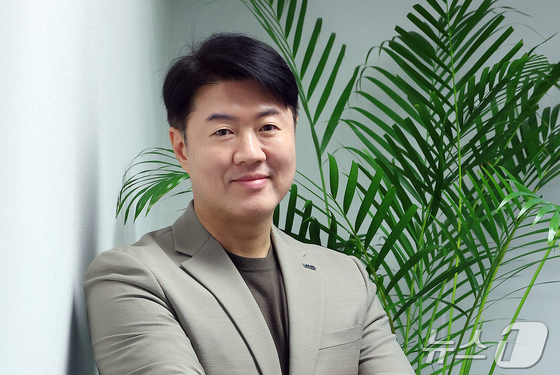
In the realm of investment management, industry practice typically favors halting additional investments or gradually reducing positions rather than immediately divesting from invested companies. Jeon Hwa Sung, CEO of CNT Tech and president of the Early Investment Accelerator Association, addressed fears of a SaaSpocalypse originating from Wall Street. He noted that B2B SaaS companies, which have traditionally relied on user-based pricing models and Annual Recurring Revenue (ARR), are now facing a more conservative approach to both new and follow-on funding.
The subscription-based SaaS business model, which has dominated the global B2B software market for nearly two decades, is now under pressure. Some U.S. tech stocks have plummeted in response to the shock from Anthropic’s Claude Cowork.
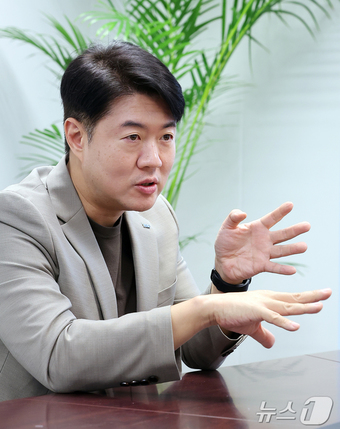
Jeon observed that in Korea, SaaS companies that may face fundamental disruptions to their billing structures due to AI agents are increasingly being excluded from follow-up investment considerations. He said it would be inaccurate to claim the entire Korean AC and VC industry is abandoning software or SaaS companies, but added that perceptions of traditional SaaS business models as viable investments have clearly shifted.
He also said they do not view all software companies negatively, noting that AC and VC firms now focus less on whether a company is SaaS and more on whether it can redefine pricing power and revenue structures in an AI-driven environment. He added that they are looking for companies that can effectively replace or control industry workflows and processes, rather than simply providing basic functionalities.
Jeon predicts that the trend of declining investment numbers and the select-and-concentrate strategy focused on AI and deep tech will persist for the foreseeable future.
The Korean government, primarily through the Ministry of SMEs and Startups, has been ramping up support for deep tech (including AI and SaaS) startups, digital transformation initiatives, and B2B software companies. The 2026 budget anticipates unprecedented support, including 1.1 trillion KRW (approximately 825 million USD) for the fund of funds and projects centered on super-gap startups and AX (Corporate AI Transformation) tracks, signaling a strong push for SaaS and AI-converged startup growth.
Jeon said that while overall investment levels remain stable and there is continued emphasis on fostering SaaS, there is a significant disconnect in how the AC and VC sectors interpret that support. He added that they see it not as a return to stable recurring revenue models, but as a broader re-evaluation of AI-based services, and suggested that this divergence would likely become a critical point of discussion in aligning future policies with market realities.
He also said Korean AC and VC firms now view the investment premium for traditional SaaS models as extinct, adding that they have entered a phase of selectively considering only companies that can clearly demonstrate viable revenue structures in an AI-dominated landscape.
CNT Tech, known for effectively leveraging the government’s TIPS program, has built a diverse investment portfolio across 16 industry sectors, including food tech, SaaS, deep tech, manufacturing, materials, healthcare, and cultural arts.
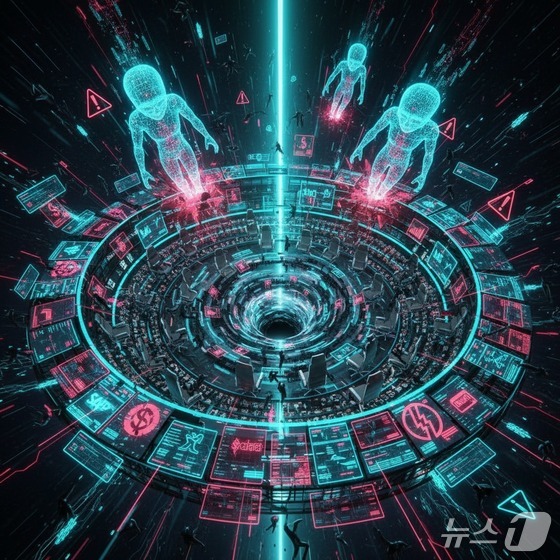
Venture capital (VC) firms unanimously agree that the era of high valuations for startups based solely on their SaaS status is over.
However, they believe that AI agents won’t entirely replace SaaS applications, particularly in highly specialized ‘vertical SaaS’ sectors that will maintain their competitive edge.
A VC representative said the focus should be on the evolution of SaaS rather than its demise, adding that opportunities would persist in vertical areas that tackle complex, industry-specific challenges, as well as in solutions built on unique domain expertise and data that AI struggles to replicate.
Another VC insider said big tech SaaS companies face structural limitations in rapidly pivoting their existing business models, making AI’s rapid advancement both an opportunity and a risk. The insider added that while SaaS valuations have adjusted from their 2018–2021 peaks, native AI startups are successfully integrating AI to expand their market presence.