As the United States and China intensify their use of economic pressure as a strategic weapon in diplomacy and economic policy, experts argue that South Korea must respond by strengthening its security and economic alliances with partners such as the G7. This assertion emerged on Sunday.
In today’s climate, as both nations formalize mutual pressure under the banner of protectionism, strategies such as strategic ambiguity and supply chain diversification to de-risk are no longer effective. Critics suggest that the Trump administration should abandon its approach of weaponizing tariffs and join an economic alliance.
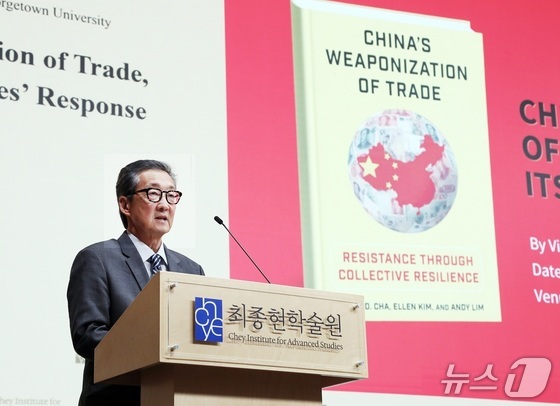
Victor Cha, Senior Vice President for Asia and Korea Chair at the Center for Strategic and International Studies (CSIS) and professor at Georgetown University, shared these insights during a special lecture at the Choi Jong Hyun Academy in Seoul’s Gangnam district on Friday. He introduced his recently published book, China’s Weaponization of Trade: Resistance Through Collective Resilience.
Cha defines economic coercion as the use of trade and investment to alter the sovereign political choices of target countries. He noted that since 1997, China has pressured 18 countries and 470 companies through over 600 instances of economic coercion.
U.S. companies were the most affected, with 278 targeted, followed by Japan (59), South Korea (33), and Taiwan (33). Cha highlighted that these coercive incidents have surged dramatically since Xi Jinping, China’s president and general secretary of the Chinese Communist Party, assumed power.
To counter China’s aggression, Cha emphasized the need to identify China’s structural vulnerabilities. According to a 2024 analysis from the UN International Trade Center (UN Comtrade), China relies on imports for over 70% of 589 product categories, with 259 of those categories exceeding 90% dependency.
For instance, China’s reliance on imports for OLED (organic light-emitting diode) display panels reached 94%. Additionally, U.S. non-cyclic hydrocarbons, Japanese industrial robots, and silver used in solar panels are among the high-dependency items that China cannot easily replace in the short term.
Cha proposed collective resilience as a solution. He explained that even if individual countries pursue de-risking, China will attack and undermine alternative supply chains. Therefore, he advocated applying NATO’s collective defense logic to the economic realm, suggesting that when China pressures one country, like-minded nations should jointly respond with countermeasures.
For the practical implementation of collective resilience, Cha advised that allied and partner countries should share responsibility for their vulnerable products (high-dependency items) and prepare one response card (deterrent measure) each. He stated that countries do not need to defend every item, arguing that it is more realistic for each to take responsibility for one core vulnerable product to create a collective deterrent.
Cha argued that in an environment where both the U.S. and China, the G2 and South Korea’s largest markets, employ economic coercion strategies, South Korea’s traditional diplomatic strategy of strategic ambiguity is no longer viable.
During a discussion with former South Korean Ambassador for Economic Affairs Choi Seok Young, he said the old formula of security with the U.S. and economy with China was once common. Still, he added that it is no longer a sustainable option.
He continued, noting that long-term trends show a clear shift toward a U.S.-centered supply chain, while also pointing out that dependence on China remains for some critical items, such as rare earth elements, which pose a structural risk. He viewed the collaboration among various countries, including South Korea, to secure supply chains as an unavoidable response rather than a matter of choice.
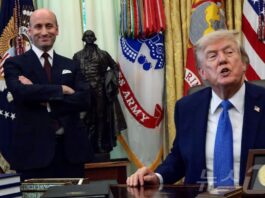
Although Cha focused on China’s economic pressure strategy, he noted that this logic applies equally to the Trump administration in the U.S.
He acknowledged that the U.S. also began using trade as a strategic tool of pressure during the Trump administration. In fact, when President Donald Trump imposed global tariffs last April, U.S. tariffs quickly became the top risk for the South Korean industry throughout the year.
Cha advised that the Trump administration should shift from imposing tariffs on allies to forming coalitions to apply joint pressure on China. He proposed that South Korea could realistically implement collective resilience by aligning with middle powers like Australia within the G7 framework.
Cha emphasized that the U.S. approach of intimidating or pressuring allies is strategically misguided, as it ultimately strengthens China’s strategy. Collective resilience serves not only as a deterrent against China but also as a means for the U.S. to restore its strategic credibility.