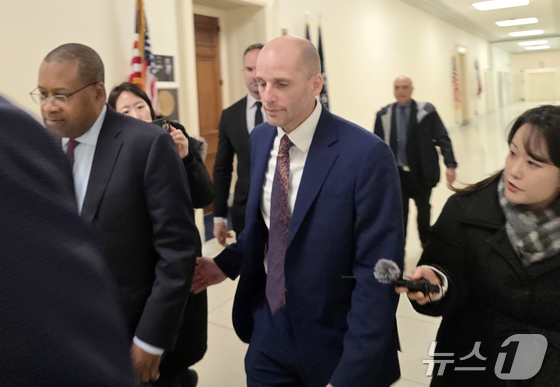
Harold Rogers, the interim representative of Coupang’s Korean subsidiary, appeared before the U.S. House Judiciary Committee to provide closed-door testimony.
The Coupang situation has escalated into a significant trade issue between the U.S. and South Korea after the Donald Trump administration invoked Section 301 of the Trade Act. This provision allows for tariffs in response to unfair or discriminatory policies by foreign governments, raising concerns about potential developments.
Seven-Hour Inquiry Sparks Speculation About Potential Congressional Action
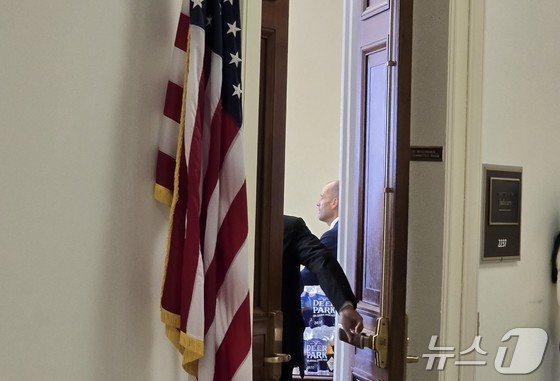
The hearing with Rogers, held on Monday at the Capitol in Washington, D.C., lasted seven hours, beginning in the morning.
This testimony drew attention as it followed the Supreme Court’s ruling on tariff illegality, with the Trump administration proposing Section 301 as an alternative means for imposing tariffs.
The closed-door session, attended by congressional aides, specialists, and lawyers, likely focused on whether South Korea’s sanctions against Coupang constitute discriminatory treatment.
The specifics of Rogers’ testimony remain confidential. He refrained from commenting to reporters, adhering to the Judiciary Committee spokesperson’s statement that details of the closed-door testimony cannot be disclosed.
Some analysts suggest that Rogers’ testimony could sway the Trump administration and Congress, given their sensitivity to perceived discrimination against U.S. tech firms.
The Judiciary Committee spokesperson’s broad statement that everything is on the table regarding legislative measures against discrimination of American companies hints at the possibility of formal hearings or legislative action.
Coupang Navigates U.S.-South Korea Tensions, Likely Exercising Diplomatic Caution
In South Korea, Coupang remains under intense scrutiny, with ongoing investigations by 11 government agencies and persistent public and political criticism.
Given its precarious position between the two nations, Coupang likely maintained a neutral stance during the testimony, avoiding statements that could further complicate relations with the South Korean government. With over 90% of its revenue derived from South Korea, Coupang presumably steered clear of remarks that could exacerbate U.S.-South Korea tensions.
Notably, Robert Porter, Coupang Inc.’s Chief Global Affairs Officer and a close associate of President Trump, issued a statement positioning the company as a bridge between the U.S. and South Korea.
Porter expressed regret over the situation leading to the U.S. House hearing, stating that it hopes Coupang can serve as a bridge between the U.S. and South Korea, fostering improved economic ties, strengthened security alliances, and enhanced trade and investment for mutual benefit.
An industry insider noted growing interest in how Porter, with his expertise in U.S.-South Korea trade relations, will navigate the divergent positions of both countries in the Coupang-centered trade dispute.