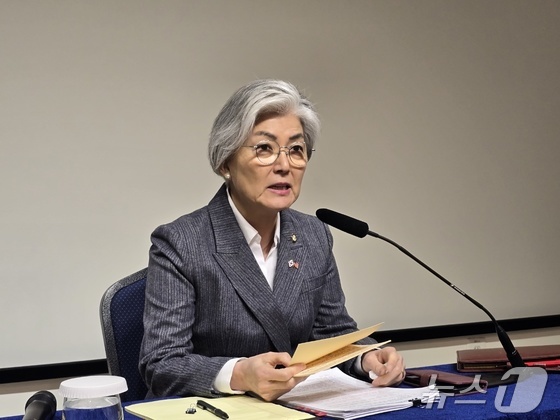
On Tuesday, South Korean Ambassador to the U.S. Kang Kyung-wha stated that the South Korean government plans to respond in a way that best serves national interests regarding the U.S. Supreme Court’s ruling invalidating tariffs imposed under the International Emergency Economic Powers Act (IEEPA).
Ambassador Kang made these remarks during a meeting with South Korean correspondents at the Korean Cultural Center in Washington, D.C. She noted that the ruling doesn’t provide clear guidelines for refunding tariffs already paid, so uncertainty remains regarding the refund process.
She added that its embassy will closely monitor the Donald Trump administration’s follow-up actions and support discussions with the U.S. in a constructive manner. For refunds on tariffs already paid, which weren’t explicitly addressed in the ruling, it’ll work closely with businesses and economic organizations to ensure the companies receive accurate information promptly.
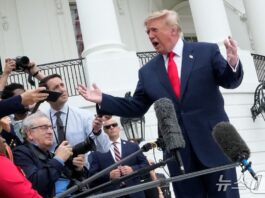
In response to the Supreme Court’s ruling, the Trump administration activated a 10% global tariff under Section 122 of the Trade Act as a substitute, effective immediately. This tariff applies to almost all items, excluding certain essential goods for manufacturing, such as critical minerals. President Trump indicated plans to increase the tariff rate to 15%, and the White House is currently working on the necessary follow-up actions.
As the global tariff will only be in effect for 150 days, the Trump administration plans to maintain tariffs at pre-ruling levels by utilizing Section 232 of the Trade Expansion Act and Section 301 of the Trade Act, which addresses unfair trade practices, as a Plan B.
In this context, the South Korean government believes there’s a significant possibility that the Trump administration may impose tariffs under Section 301 as an alternative to the mutual tariffs ruling and is closely monitoring the situation.
Section 301 of the Trade Act allows for retaliatory tariffs against unfair trade practices by other countries and was used during the U.S.-China tariff war in Trump’s first term. Reports indicate that the U.S. plans to decide whether to investigate under Section 301 by early March.
Particularly, following the House Judiciary Committee’s summons of Harold Rogers, Coupang’s interim representative in South Korea, to investigate alleged discrimination against the company, the South Korean government maintains that thorough investigations are necessary to protect consumers in light of personal data leaks and is explaining this stance to the U.S. side.
The House Judiciary Committee has requested explanations from the South Korean government regarding this closed deposition. Last week, South Korean officials reportedly explained the investigation’s background, the current situation, and the government’s position on Coupang.
After the Supreme Court ruling, the Trump administration announced plans to investigate unfair practices against major trading partners as a replacement for existing tariffs. Coupang may fall under the category of discriminatory practices against digital goods and services, which the U.S. Trade Representative (USTR) identified as a crucial element in the Section 301 investigation.
Additionally, on the day the U.S. Supreme Court ruled the imposition of tariffs under IEEPA illegal, reports indicate that the Deputy USTR met with Ambassador Kang.
Regarding the Joint Factsheet that President Trump agreed upon, which lowered the mutual tariff imposed on South Korea from 25% to 15%, Ambassador Kang stated that since President Trump mentioned raising tariffs on South Korea via social media on January 26 due to delays in the National Assembly’s investment legislation, our embassy has been closely communicating with various levels of the U.S. administration to ascertain the facts and manage the situation to prevent deterioration.
Ambassador Kang noted that the Foreign Minister, Minister of Trade, and Chief Trade Negotiator have all visited the U.S. to convey our government’s firm commitment to investment. They’re actively working to pass the special investment law for the U.S. and have formed special committees to expedite this process. They’re also establishing a strategic investment implementation committee to review potential investment projects before the special law takes effect.
She emphasized that it aims to actively support the progress of cooperation in the three agreed areas of nuclear enrichment reprocessing, nuclear-powered submarines, and shipbuilding at the ambassadorial level.
She added that the recently announced U.S. Maritime Action Plan (MAP) includes opportunities for us, such as partnerships with allies. It will use this as a reference to strive for mutually beneficial outcomes in shipbuilding cooperation between the two countries.
Reports indicate that the U.S. negotiating team’s visit to South Korea for nuclear submarine and nuclear cooperation has been delayed due to ongoing internal discussions regarding team composition. They are coordinating the timing of the visit and are also considering a reciprocal visit from the South Korean side.
Furthermore, regarding the recent visit of the practical negotiation team for U.S. investment, there are expectations that South Korea and the U.S. will discuss investment projects and announce the first and second investment projects as soon as the special investment law passes.
Ambassador Kang commented on the 9th Congress of the Workers’ Party of North Korea, which began on the 19th, stating that Kim Jong Un asserted in his opening remarks that he has irreversibly solidified the country’s international status and showcased achievements in the economy, defense, and diplomacy. His reappointment as General Secretary seems to have further strengthened his position.
She continued that the messages directed towards South Korea and the U.S. have yet to be announced, and there is growing interest in the content that will be made public in the future. They’re closely monitoring developments regarding the possibility of North Korea-U.S. dialogue in light of President Trump’s visit to China in April.
Ambassador Kang stated that they’re considering various factors, including the ongoing Russia-Ukraine war, U.S.-China relations, and North Korea-China relations, as it observes the situation.
She explained that the nembassy communicates regularly with the National Security Council (NSC), the State Department, and various levels of the administration to share North Korea’s domestic and international trends and discuss policy directions towards North Korea.
She added that the U.S. has consistently stated that there will be no changes to its North Korea policy and that it will communicate closely to prevent any surprising developments for South Korea. In this regard, the Director of the Ministry of Foreign Affairs’ Strategic Information Office is expected to visit the U.S. starting today for related discussions.
Ambassador Kang mentioned that she is actively communicating with key members of Congress, including Senate Foreign Relations Committee Chairman Jim Risch, House Armed Services Committee Chairman Michael Rogers, and House Foreign Affairs Committee Chairman Brian Mast, as well as major members of both parties who play pivotal roles in U.S.-Korea relations, such as the Korea Caucus and the Korea Study Group.
She concluded that for the U.S. administration’s foreign policy to be smoothly implemented, legislative and budget approvals from Congress are essential. Therefore, she will continue to prioritize communication and engagement with key lawmakers.