

The recent Middle East war crisis, sparked by U.S. and Israeli airstrikes on Iran, is expected to cast a shadow over the global smartphone market due to logistics and cost risks.
On Wednesday, market research firm Counterpoint Research warned that the escalating tensions in the Middle East could become complex and protracted, potentially disrupting the global smartphone supply chain and pricing strategies.
Logistics pose the most significant risk. Global manufacturers rely on air routes to supply smartphones to key markets across the Middle East, Europe, Africa, and the Americas.
The crux of the issue lies in the strategic importance of Dubai International Airport in the United Arab Emirates (UAE) and Hamad International Airport in Qatar, which serve as crucial tech transit points and cargo logistics hubs. Manufacturers typically consolidate and redistribute shipments at these airports before dispatching them to various regions.
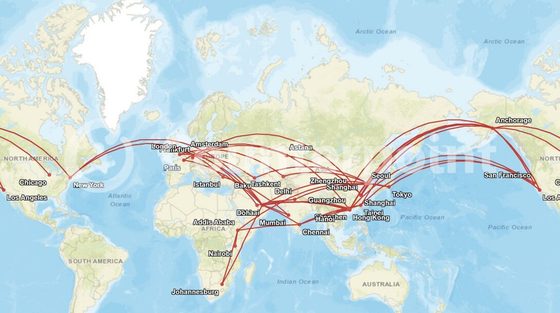
Alternative routes do exist. European-bound shipments can be rerouted through Central Asian hubs like Tashkent. Cargo destined for the U.S. East and West coasts can transit through East Asia and North America. For African and certain regional markets, Addis Ababa or Egypt could serve as viable alternatives.
However, these detours will inevitably drive up logistics costs.
Counterpoint Research highlighted that a typical long-range cargo plane like the Boeing 777F burns through about 7 to 8 tons of fuel per hour at cruising altitude. By 2026, the cost of employing two pilots for flights exceeding 14 hours is projected to hit around 12,000 USD. They further noted that alternative routes could add at least 2 to 3 hours of flight time, with just 3 extra hours potentially hiking fuel costs by about 25,000 USD.
For long-haul detours surpassing 12 to 14 hours, airlines must double their crew size to comply with rest regulations, incurring additional labor costs. When factoring in ground handling fees at transit points, route-specific insurance premium hikes, and rising labor costs, the overall expense surge could be substantial.
The situation is further complicated by Iran’s Islamic Revolutionary Guard Corps (IRGC) threatening to completely blockade the Strait of Hormuz, which could trigger a spike in oil prices and raw material costs.
U.S. Energy Information Administration data underscores the Strait of Hormuz’s critical role, accounting for roughly 20% of global oil supply. In the wake of Iran’s blockade announcement, oil prices surged by approximately 6% (as of April 2nd).
JP Morgan analysts predict that if the blockade persists for over 25 days, oil-producing nations may be forced to implement production cuts. This scenario could potentially push international oil prices beyond the 100 USD per barrel mark.
The blockade’s ripple effects could extend to the used smartphone market as well. While new smartphones are typically air-freighted, most components used in refurbishing are transported by sea.
A Counterpoint Research spokesperson emphasized that while distributing costs across hundreds of thousands of smartphones on a single cargo plane might seem to yield minimal increases, the cumulative effect on an already lean logistics cost structure could be significant. Even small absolute increases could translate to notable rises in per-device costs.