

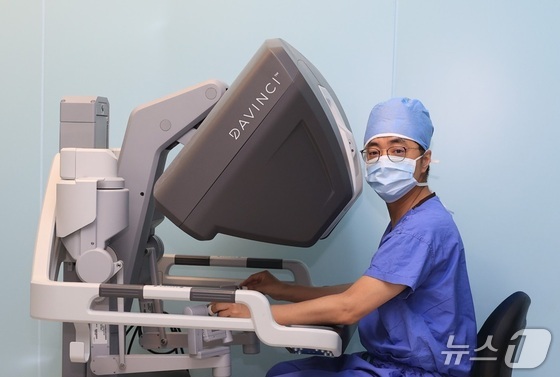
The use of artificial intelligence (AI) in operating rooms is rapidly expanding. Recent studies have shown AI’s ability to guide safe excision paths in real-time during robotic breast cancer surgeries, following its success in laparoscopic liver transplant procedures.
On Thursday, Samsung Medical Center announced a breakthrough in robotic nipple-sparing mastectomies. A team led by Professors Yoo Jae-min and Park Woong-ki from the Department of Breast Surgery, along with Professors Yoo Jin-soo and Oh Nam-ki from the Department of Transplant Surgery, developed an AI-powered navigation system. This system provides real-time guidance for safe excision margins during surgery. The clinical applicability of this innovative technology was confirmed through multi-center external validation.
The groundbreaking research was published in the latest issue of the European Journal of Surgical Oncology (IF=2.9).
Robotic nipple-sparing mastectomy is a cutting-edge procedure that involves making a small incision near the armpit. A robotic arm is then inserted to remove breast tissue while preserving the nipple and skin. This technique results in minimal chest scarring, leading to high patient satisfaction rates.
However, robotic surgery has its limitations, particularly the lack of tactile feedback. Unlike traditional surgery, where doctors can feel tissue boundaries with their fingertips, robotic surgeons must rely solely on visual information from a screen.
One of the most challenging aspects is distinguishing between the subcutaneous fat layer and glandular tissue. Cutting too shallowly risks leaving breast tissue behind, while cutting too deeply could compromise blood flow to the skin, potentially causing damage. The research team tackled these issues using advanced AI image analysis technology.
The AI system analyzes real-time video footage during surgery, highlighting the boundaries between fat and glandular tissue on the screen. This visual guidance acts like a GPS for surgeons, clearly indicating safe excision margins.
To develop this AI model, the team extracted 1,996 frames from 29 robotic mastectomy videos performed at Samsung Medical Center. Expert breast surgeons manually marked safe excision margins on each frame, which the AI then used as training data to automatically recognize these margins in surgical videos.
Internal validation using Samsung Medical Center data showed an impressive 74% accuracy (DSC) for the AI model. External validation, using videos from eight surgeries at Samsung Changwon Hospital, demonstrated similar performance at 70.8%.
These results confirm the AI’s reliability across different institutions and surgeons. This breakthrough builds on the team’s previous success in developing an AI navigation system for laparoscopic living donor liver transplants, which was published in an international journal last year.
The earlier study analyzed 48 surgical videos from three institutions (Samsung Medical Center, Myongji Hospital, and Yeungnam University Hospital). It showcased technology where AI displayed surrounding vascular structures and safe dissection margins in real-time. This latest research expands the application of AI surgical navigation from liver procedures to breast surgeries.
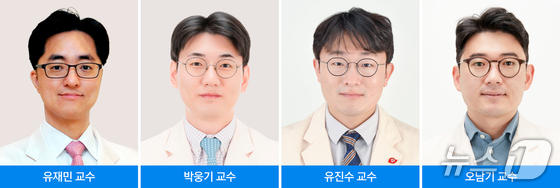
Professor Yoo Jae-min highlighted the significance of this study, stating, “This is a pioneering effort in developing and validating an AI navigation system for robotic mastectomy across multiple centers. The real-time guidance for safe excision margins has the potential to significantly enhance surgical precision and patient safety. Professor Yoo Jin-soo added that they’ve successfully broadened the application of AI navigation from liver transplants to breast cancer surgeries. The ongoing research aims to incorporate AI into various minimally invasive procedures, ultimately improving patient outcomes.