

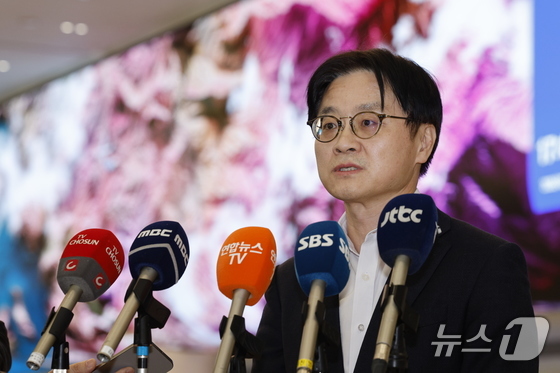
After concluding investment talks with the U.S., Minister of Trade, Industry and Energy Kim Jeong-gwan returned to South Korea on March 8. He reported that based on discussions, if Korea passes the special law on U.S. investment and implements the negotiated terms as planned, it’s unlikely there will be any issues regarding the publication of increased tariffs.
Speaking to reporters at Incheon International Airport upon his return, Minister Kim said that he met with U.S. Secretary of Commerce Howard Lutnick to brief her on the National Assembly’s upcoming passage of the law next week. The U.S. highly appreciated this move and expressed gratitude.
On March 5, Minister Kim attended the opening ceremony of LG Energy Solution’s battery plant in Canada. He then traveled to the U.S. to meet with Secretary Lutnick, aiming to support South Korea’s bid for the Canadian Patrol Submarine Project (CPSP), a contract estimated at up to 60 trillion KRW (about 40 billion USD).
Regarding U.S. investment projects, Minister Kim noted that while no specific projects were discussed, it engaged in substantive talks about potential sectors and strategic directions.
He also addressed the 15% global tariff being considered by the Donald Trump administration following a U.S. Supreme Court ruling on reciprocal tariffs. Kim stated that they’ve secured the possibility of receiving equal or even preferential treatment compared to the competitors.
Currently, the Trump administration plans to increase the proposed global tariff from 10% to 15% under Section 122 of the Trade Act, following the Supreme Court’s decision. They’ve also announced investigations for potential additional tariffs under Section 232 of the Trade Expansion Act and Section 301 of the Trade Act.
Section 232 of the Trade Expansion Act allows the U.S. to impose tariffs or import restrictions on specific goods citing national security concerns. Section 301 of the Trade Act enables the U.S. to take action against other countries for unfair trade practices.