The U.S. has initiated a stakeholder feedback process for its Section 301 investigation into South Korea’s overproduction issue, starting Tuesday. This probe will examine South Korea’s key exports, including electronics, automobiles, and machinery, as well as its petrochemical industry restructuring policies. Experts warn this could lead to increased trade pressure in the future.
The Office of the U.S. Trade Representative (USTR) officially announced the investigation last week, viewing South Korea’s petrochemical industry restructuring as evidence of overproduction in response to global supply excesses originating from China.
The South Korean government is committed to maintaining existing tariffs, particularly the 15% tariff system established through last year’s U.S.-Korea agreement, to avoid additional burdens. The Ministry of Trade, Industry and Energy is preparing feedback in consultation with relevant ministries and industries, and plans to maintain close communication with U.S. officials.
USTR Views Trade Surpluses in Key Exports as Evidence of Structural Overproduction
According to USTR and South Korean trade authorities, the stakeholder feedback period for the Overproduction Section 301 Investigation will continue until April 15.
South Korean officials are expected to conduct a preliminary review and domestic consultations before submitting their position.
A Ministry official stated that it plans to respond by gathering opinions from relevant ministries and industries to ensure the export conditions remain competitive.
USTR intends to focus on potential structural overproduction in South Korea’s key export sectors.
In its announcement, USTR claimed that evidence of South Korea’s structural overproduction capacity is apparent through large or sustained trade surpluses, noting that South Korea maintains a surplus in goods trade, particularly in electronics, automobiles and parts, machinery, steel, ships, and marine equipment.
Automobiles and machinery are South Korea’s top exports to the U.S. Steel has been a contentious area, with the U.S. raising concerns about industrial subsidies. Electronics and shipbuilding are additional sectors where South Korea has achieved surpluses based on its competitive advantages.
While individual tariffs already apply to automobiles and steel, previous Section 301 investigations have sometimes resulted in tariffs on different products than those initially investigated. This raises concerns that findings related to automobiles or steel could lead to additional trade pressure on other products.
Moreover, USTR’s announcement mentioned that the South Korean government recognizes the need to reduce production capacity in the petrochemical sector. Thus, the Ministry’s ongoing Petrochemical Industry Restructuring policy is expected to be addressed in this investigation.
While the South Korean government maintains that this policy aims to restructure the industry in response to global supply excesses from China, the U.S. interprets it as a sign of structural overproduction.
Forced Labor Investigation Raises Supply Chain Management Concerns for South Korean Companies
Alongside the overproduction probe, USTR is conducting a Section 301 investigation related to forced labor. This investigation is likely to focus more on the supply chain management systems of South Korean companies rather than domestic labor practices.
In 2025, U.S. Customs and Border Protection (CBP) issued a Withhold Release Order (WRO) against salt products from the Taean Salt Farm in Sinan County, South Korea, due to forced labor allegations. This case stands as one of the few instances of trade sanctions specifically targeting South Korean products.
However, a more significant issue arises if forced labor products are included in the supply chains of South Korean companies. Even if domestic production processes are clean, the inclusion of forced labor products in raw materials or components could negatively impact this investigation.
USTR has identified the legality and enforcement of laws prohibiting forced labor products as a key area for review in this investigation.
The U.S. has implemented significant trade regulations related to forced labor, particularly the Uyghur Forced Labor Prevention Act (UFLPA), enacted in 2022. This law targets not only products from the Xinjiang region but also includes products from third countries that contain raw materials or components sourced from that region.
From 2022 to 2025, the U.S. Customs and Border Protection (CBP) designated 8.55 million USD worth of South Korean exports for UFLPA-related scrutiny and detention. Of that, 8.41 million USD was included in the investigation in 2025, with most cases occurring recently.
While this amount is relatively small compared to South Korea’s annual exports to the U.S. of 122.8 billion USD in 2025, the problem lies in the ranking by country. The value of South Korean exports that were denied entry or subjected to additional scrutiny under UFLPA ranked 10th globally, and 9th among the 60 countries being investigated under Section 301.
This type of supply chain management requires establishing due diligence and ongoing monitoring systems, which could be challenging for small and medium-sized enterprises lacking sufficient personnel and management capabilities.
U.S. Aims to Maintain Tariff System, Potential for Expanded Trade Issues
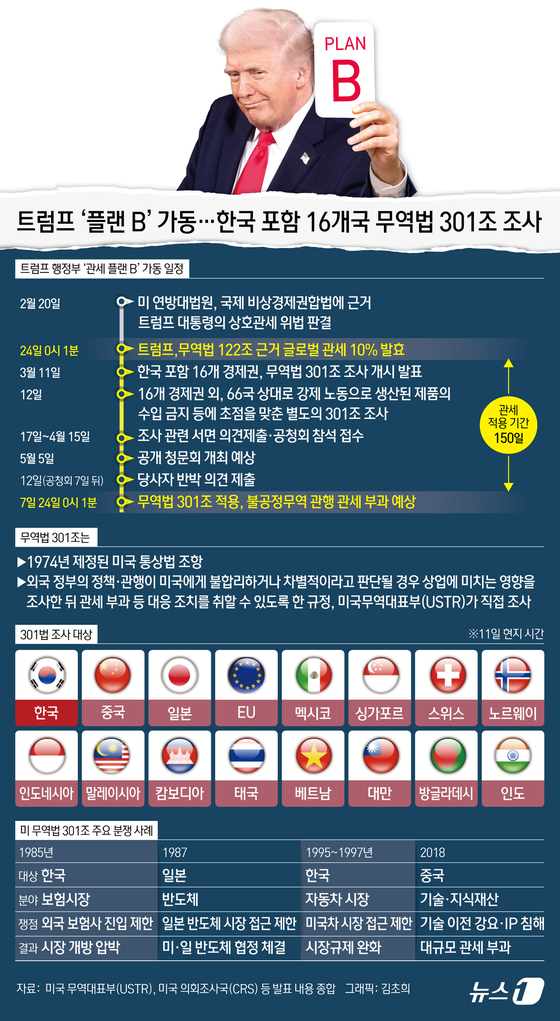
Trade experts believe these Section 301 investigations serve to maintain the existing tariff system following the U.S. Supreme Court’s ruling on reciprocal tariff violations under the International Emergency Economic Powers Act (IEEPA).
Following the ruling, the Donald Trump administration imposed a 10% global tariff on all countries based on Trade Law Section 122. However, this measure is temporary, lasting only 150 days.
USTR representative Jamieson Greer explained that the goal is to conclude the current Section 301 investigation swiftly before the expiration of the Section 122 tariffs.
Unlike previous Section 301 investigations that took six months to over a year, USTR’s expedited approach is seen as an effort to minimize any tariff gaps.
Given that the U.S. is prioritizing the maintenance of its tariff system over resolving specific trade issues, additional investigations are likely to follow.
On March 11, Greer stated that further investigations could arise from issues such as the digital services tax, pharmaceutical pricing policies, and access to seafood and rice markets.
During last year’s U.S.-Korea tariff negotiations, the U.S. reportedly requested South Korea to expand its low-tariff quota for U.S. rice. In the pharmaceutical sector, the U.S. has consistently raised issues through its National Trade Estimate (NTE) report, claiming that South Korea’s pricing methods and health insurance coverage systems restrict U.S. pharmaceutical companies’ market access.
Although South Korea has not been directly targeted by the digital services tax itself, if investigations expand to encompass digital trade norms, such as data transfer and platform regulations, South Korea’s regulatory environment may emerge as a new trade issue.
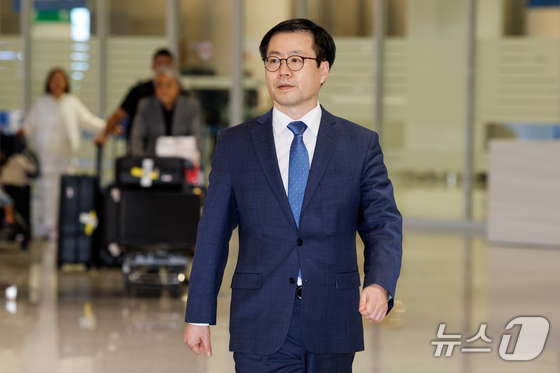
On March 12, Yeo Han-koo, head of the Ministry of Trade’s Negotiation Headquarters, held an emergency briefing, stating that it cannot rule out the possibility of additional Section 301 investigations, and added that it will maximize national interests through close consultations. He further noted that since it has already reached a tariff agreement with the U.S., it has communicated multiple times to prevent any unfavorable outcomes that deviate from the spirit of the most-favored-nation agreement.