

SK Hynix is pursuing a listing of American Depositary Receipts (ADRs) on the U.S. stock market. The company aims to raise substantial funds through this new share issuance to expand its cutting-edge memory production capacity and solidify its position in the artificial intelligence (AI) semiconductor market.
Industry analysts estimate that SK Hynix could raise up to 15 trillion KRW (approximately 9.9 billion USD) through this U.S. listing. The move is also seen as a strategic effort to reassess the company’s value based on its dominant market share in high-bandwidth memory (HBM).
SK Hynix has confidentially submitted a registration statement for its ADR listing to the U.S. Securities and Exchange Commission (SEC) on Tuesday, as part of the process for listing on the U.S. stock market, the company announced on Wednesday.
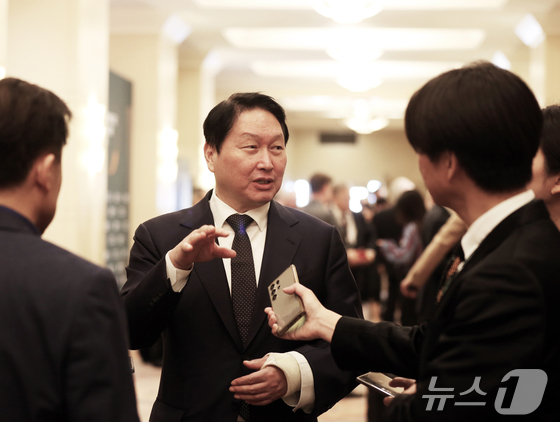
This development follows earlier comments by SK Group Chairman Chey Tae-won at NVIDIA’s annual developer conference, GTC 2026, where he mentioned the company was considering an ADR listing for SK Hynix.
ADRs are financial instruments that enable foreign companies to trade their shares on U.S. stock exchanges, primarily used to improve accessibility for global investors. Industry giants such as Taiwan’s TSMC, the world’s largest contract chipmaker, and Dutch semiconductor equipment manufacturer ASML have previously listed using the ADR method.
SK Hynix stated that while they are targeting a listing within 2026, the specifics of the public offering, including its size, method, and timing, have not yet been finalized. The company added that the final decision on the listing will be based on various factors, including the SEC’s review of the registration statement, market conditions, demand forecasts, and other relevant considerations.
SK Hynix aims to raise up to 15 trillion KRW (approximately 9.9 billion USD), following in the footsteps of TSMC to boost its corporate valuation.
The expected scale of SK Hynix’s ADR listing ranges from 10 to 15 trillion KRW (about 6.6 billion to 9.9 billion USD). The company plans to use these funds to expand its advanced memory production capabilities, particularly in HBM, to strengthen its leadership in the burgeoning AI semiconductor market.
Competition in the HBM sector, a critical component in AI technologies, has reached unprecedented levels. Market projections suggest that the HBM market will triple in size within two years, compared to last year’s 50 trillion KRW (about 33 billion USD) market. This growth trajectory indicates that market share will be determined by production capacity, explaining why SK Hynix, Samsung Electronics, and Micron are aggressively expanding their production capabilities to dominate the HBM market.
The challenge lies in the astronomical costs associated with capacity expansion. SK Hynix’s semiconductor cluster in Yongin, announced in 2019, initially projected costs of 128 trillion KRW (about 84.9 billion USD) by 2028. However, recent estimates have skyrocketed to around 600 trillion KRW (about 398 billion). Additionally, SK Hynix is pursuing investments in the U.S. and other global locations.
Despite reporting a record operating profit of 47.2063 trillion KRW (about 31.3 billion USD) last year, SK Hynix recognizes the need for substantial additional investments to maintain its competitive edge in HBM. The company allocated 30.173 trillion KRW (about 20 billion USD) for capacity improvements last year and recently signed a contract worth 11.9496 trillion KRW (about 7.9 billion USD) with ASML Korea for extreme ultraviolet (EUV) lithography equipment. These massive investments underscore the company’s need to explore new funding avenues, despite its strong cash-generating capabilities.
Market analysts suggest that the ADR listing is also aimed at boosting SK Hynix’s corporate valuation. The successful ADR listings of TSMC and ASML serve as prime examples of how this strategy can enhance a company’s market value.
While SK Hynix is a dominant player in the HBM market, its current market valuation lags behind competitor Micron. SK Hynix’s price-to-earnings ratio (PER) is less than half that of Micron, despite holding a 57% market share in HBM compared to Micron’s 21% as of Q3 2023. This discrepancy underscores SK Hynix’s strategy to leverage ADR issuance to transform into a truly global company capable of attracting international capital.
Analysts Kim Young-geon and Jang Da-hyun from Mirae Asset Securities believe that SK Hynix’s ADR listing will likely result in a timely valuation that reflects the company’s current business outlook, potentially establishing a new benchmark for its market value.
However, some market watchers express concerns about potential dilution of existing shareholders’ stakes due to the new share issuance. This move comes shortly after SK Hynix announced a significant share buyback worth 12.244 trillion KRW (about 8.1 billion USD), raising questions about the company’s capital allocation strategy. As SK Hynix holds its annual shareholders’ meeting in Icheon, Gyeonggi Province, investors are keenly awaiting any comments from President Kwak No-jung regarding the ADR listing and its implications for the company’s future.