

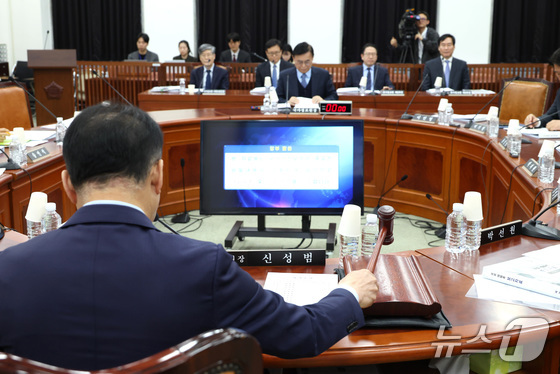
South Korea’s National Intelligence Service has assessed that a limited agreement between the U.S. and Iran remains possible, with the Middle East conflict potentially entering a lull phase by the end of April. The assessment was disclosed following a closed-door session of the National Assembly’s Intelligence Committee.
According to the briefing, the U.S. is facing difficulty translating military gains into political outcomes. Iran, meanwhile, has been using energy supply chains as leverage while weighing how to respond to U.S. demands for nuclear disarmament. Negotiations conducted through Pakistan have yielded no progress.
The intelligence agency outlined three potential scenarios. The first involves a limited deal in which Iran reopens the Strait of Hormuz in exchange for the U.S. unfreezing certain funds, potentially leading to a ceasefire and further negotiations. The second involves the U.S. intensifying strikes on Iranian infrastructure and possibly deploying ground forces to facilitate regime change, with Iran responding with full-scale resistance — though the agency considers this outcome less likely given the current war of attrition. The third scenario is a continuation of the present stalemate.
The agency noted that the next three to four days of U.S. airstrikes would be critical in determining whether Washington plans to escalate its air campaign. Officials also flagged the importance of maintaining free passage through the Strait of Hormuz for commercial and oil tankers, citing energy security as a primary concern. The agency confirmed ongoing coordination with allied intelligence services to help secure stable oil supplies.