

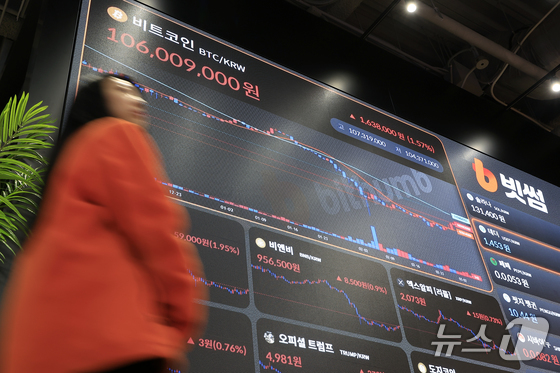
The recent ceasefire agreement between the United States and Iran has triggered a significant rally in major cryptocurrencies, including Bitcoin (BTC). As tensions in the Middle East ease, investor appetite for risk assets appears to be rebounding.
Market watchers are now speculating whether a successful conclusion to the ceasefire talks and growing prospects for peace could finally signal the end of the crypto winter that has gripped the market since late last year.
U.S.-Iran Agree to Two-Week Truce; Major Cryptocurrencies Surge Up to 6%
As of Wednesday, CoinMarketCap data shows the global price of Bitcoin has jumped 4.48% from the previous day, reaching $71,703. Altcoins (cryptocurrencies excluding Bitcoin) saw even steeper gains.
During the same period, Ethereum (ETH) climbed 6.37% to $2,238. XRP and Solana (SOL) also posted impressive gains of 5.64% and 5.76%, respectively.
The broad-based rally in cryptocurrency prices can be attributed to the ceasefire agreement between the U.S. and Iran. Analysts interpret this as a sign of recovering investor confidence as geopolitical uncertainties in the Middle East begin to subside.
On Tuesday, President Donald Trump announced a two-week halt on attacks against Iran, contingent on the immediate reopening of the Strait of Hormuz. Iranian Foreign Minister Abbas Araqchi said Iran had accepted Pakistan’s proposal for a two-week ceasefire and would suspend defensive operations.
Iran has reportedly submitted 10 proposals to the U.S. through Pakistani intermediaries. White House spokesperson Caroline Levitt said discussions about face-to-face negotiations are ongoing, with no final decisions made.
Kim Min Seung, head of the Korbit Research Center, said the ceasefire news has supported both equity and cryptocurrency markets, suggesting an easing of negative sentiment.
Recently, the decentralized prediction platform Polymarket has seen increased activity tied to the U.S.-Iran ceasefire. While earlier bets focused on the likelihood of U.S. attacks on Iran or the rescue of U.S. pilots, recent wagers indicate roughly a 50% probability of a ceasefire this month.
Trump’s Unpredictability Remains a Risk; Investors Eye Positive Catalysts
Market participants are now wondering if the cryptocurrency market, which has been range-bound since its sharp decline late last year, could be poised for a significant rebound.
The crypto market has been in a downtrend since Bitcoin hit its all-time high in October, following the passage of the U.S. stablecoin bill (the Genius Act) in July. This decline was exacerbated by large-scale liquidations of global futures positions and interest rate hikes by the Bank of Japan (BOJ).
Risks stemming from Trump’s policies have also persisted, with U.S. tariffs, U.S.-China trade tensions, and geopolitical factors such as military actions in Venezuela and Iran contributing to increased market volatility. Until recently, uncertainty lingered due to delays in ceasefire negotiations.
However, cryptocurrencies have shown relative resilience amid sharp declines in gold and equity markets. Last week, crypto investment products saw net inflows of $224 million, while Bitcoin spot ETFs attracted $471.4 million on April 6 alone, the highest level since February.
Nevertheless, some analysts caution against premature optimism about a lasting peace. Kim said Trump’s strategy relies on unpredictability and noted that both sides have incentives to either continue or halt the conflict.
He added that macroeconomic uncertainty since last April continues to weigh on the market, and while Bitcoin’s consolidation around $70,000 is a positive sign, uncertainty remains a key factor.
However, several upcoming events could boost investor sentiment in the crypto market. Kim highlighted potential catalysts, including the performance of Morgan Stanley’s Bitcoin spot ETF, the launch of Charles Schwab’s cryptocurrency trading service, and the potential inclusion of cryptocurrencies in U.S. 401(k) retirement plans.
Eric Balchunas had predicted that Morgan Stanley’s spot Bitcoin ETF would debut on the New York Stock Exchange on Wednesday. If launched, it would mark the first spot Bitcoin ETF issued by a major global bank.
Major U.S. brokerage Charles Schwab also announced on April 4 that it would introduce cryptocurrency trading services for Bitcoin, Ethereum, and other digital assets on its platform.
Additionally, the Trump administration is working to ease regulations on the inclusion of alternative assets in 401(k) retirement plans through the U.S. Department of Labor, potentially expanding investment options to include not only real estate and private equity but also cryptocurrencies.