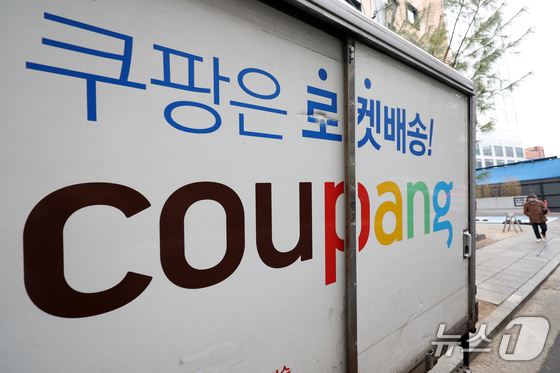
Coupang has rebutted the Economic Justice and Citizens’ Alliance’s call for the Fair Trade Commission to designate Kim Beom-seok, chairman of Coupang Inc., as a single individual. The company argues that despite meeting all of the government’s exemption criteria, the alliance is making unfounded claims.
In a statement released on Thursday, Coupang expressed deep regret over the alliance’s push for this designation.
Coupang explained that the single individual designation system is designed to prevent concerns about distorted corporate ownership and control by Korean conglomerate owners and their relatives who hold only minority stakes. They emphasized that Coupang Inc.’s governance structure, which is subject to U.S. regulations, is unrelated to these concerns. The company warned that applying this system for the first time to a foreign Chief Executive Officer (CEO) of a U.S.-listed company would only produce negative consequences without any real effectiveness.
Meets All Four Criteria for Government Exception… Dual Regulation in the U.S. and South Korea
According to Coupang, they fulfill all four exemption conditions set by the government: 1) The scope of domestic affiliates remains the same whether Chairman Kim is viewed as an individual or a corporation; 2) Kim has no investment in domestic affiliates, excluding Coupang Inc.; 3) His relatives neither invest in nor serve as executives in domestic affiliates; and 4) There are no debt guarantees or financial transactions between relatives among domestic affiliates.
Coupang highlighted its vertical governance structure, where U.S.-listed Coupang Inc. fully owns its Korean subsidiary, which in turn owns its subsidiaries. This structure, they argue, fundamentally differs from domestic conglomerates that exert indirect control over affiliates with minimal stakes.
The company also pointed out that they comply with various disclosure obligations required by the U.S. Securities and Exchange Commission (SEC), noting that this results in dual disclosure obligations from both U.S. and South Korean authorities.
The SEC’s Regulation S-K (Item 404) requires U.S. public companies to disclose all transactions exceeding 120,000 USD involving significant financial interests with related parties. This includes directors, executives, director nominees, individuals holding over 5% of voting shares, and their immediate family members, including parents, in-laws, and siblings-in-law. Coupang maintains that they adhere to these disclosure rules and regulations.
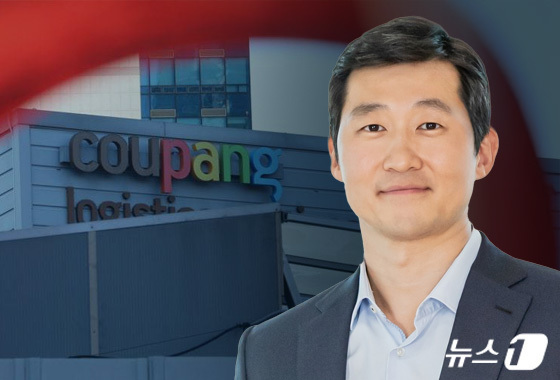
Possible Discrimination vs. Other Foreign Firms, Potential Violation of KORUS FTA MFN Treatment… Chairman Kim’s Brother Holds No Local Stake, Not an Executive
Coupang emphasized that designating them for single individual status would be discriminatory compared to other foreign companies, citing Saudi Arabia’s Aramco, a major shareholder in S-Oil, as an example.
They further argued that such a designation could violate the U.S.-Korea Free Trade Agreement’s most-favored-nation treatment obligations and investor protection duties, potentially disadvantaging U.S. companies compared to those from third countries. This could create long-term obstacles in attracting foreign capital and raise equity concerns regarding foreign companies.
Addressing allegations about Chairman Kim’s brother’s involvement in management, Coupang clarified that he does not hold shares in domestic affiliates and is not an executive under the Fair Trade Act. They added that he works for Coupang Inc., focusing on improving global logistics efficiency, and holds Coupang Inc. shares similar to other employees at his level.