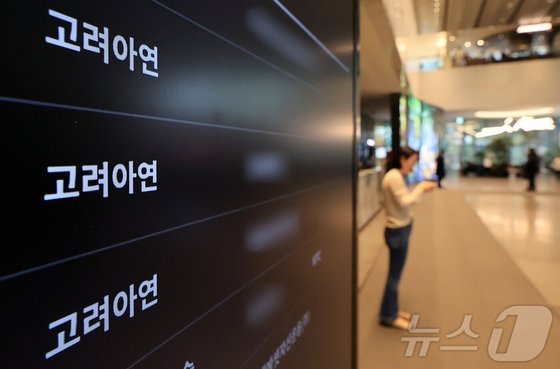
Korea Zinc Co., Ltd. issued a statement on April 23 regarding the U.S. court’s ruling on the appeal for evidence disclosure related to the executive lawsuit. The company emphasized that this was a procedural decision, not a judgment on the appropriateness of their investment.
This clarification comes in response to Youngpoong’s announcement that they would launch a comprehensive investigation into the Ignio investment allegations, following their victory in the evidence disclosure appeal.
The issue stems from a domestic shareholder representative lawsuit against Korea Zinc’s management, which is connected to the evidence disclosure process in the United States.
Earlier, Youngpoong and MBK had requested document submissions and testimony from relevant parties at PedalPoint, Korea Zinc’s U.S. subsidiary. The U.S. court granted this request.
PedalPoint appealed the decision, but on April 22, the U.S. Court of Appeals for the Second Circuit dismissed their appeal.
Youngpoong and MBK see this ruling as an opportunity to continue gathering evidence in the U.S. They plan to use this information to scrutinize the decision-making process and transaction structure of the Ignio acquisition.
Ignio, a company specializing in electronic waste recycling, was established in 2021. Korea Zinc acquired Ignio for 580 billion KRW (approximately 392 million USD) through its U.S. subsidiary PedalPoint in 2022.
Youngpoong and MBK have raised concerns about the high acquisition price and the appropriateness of management decisions, pointing out that Ignio was in a state of complete capital erosion at the time of purchase.
Korea Zinc, however, refuted these claims in a statement, accusing Youngpoong of distorting and exaggerating the results of the U.S. court’s evidence collection procedure.
The company stressed that the ruling only reviewed whether the lower court’s discretionary judgment to grant the evidence collection request under 28 U.S.C. § 1782 was appropriate. It did not assess the validity of Youngpoong’s allegations.
Korea Zinc also explained that the 1782 process is just one type of evidence request procedure, noting that the admissibility of this evidence in Korean courts is a separate issue altogether.
Regarding the Ignio investment, Korea Zinc maintained that it was conducted through reasonable procedures, based on a valuation report from a global investment bank. They pointed out that Youngpoong’s representatives had previously supported the establishment of PedalPoint and the decision for a capital increase to acquire Ignio.
Korea Zinc emphasized that PedalPoint is a key subsidiary in their new business venture Troika Drive, focusing on resource recycling. The company is positioning itself as a crucial player in the supply of copper, a critical material for artificial intelligence (AI) and power grid technologies.