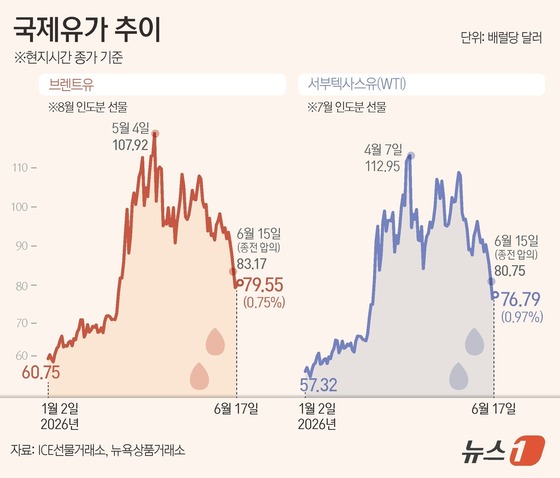
The U.S. and Iran have reached an agreement on a memorandum of understanding (MOU) aimed at ending hostilities, causing international oil prices to decline as markets anticipate reduced supply shocks from the Middle East. However, the MOU includes a provision for 60 days of free passage through the Strait of Hormuz, which could introduce new variables in the future. Analysts suggest that the outcome of these negotiations may significantly impact the global energy market and South Korea’s crude oil imports and supply chain.
Free for 60 Days — MOU Leaves Door Open to Future Tolls
The MOU, agreed upon by the U.S. and Iran on Wednesday, consists of 14 clauses. Notably, Clause 5 states that Iran will immediately take necessary measures to ensure safe passage for commercial vessels in the Persian Gulf and the Gulf of Oman, free of charge, for a period of 60 days upon signing the MOU.
On the surface, this appears to be a measure to normalize the maritime logistics network, which has been disrupted by conflict. However, some analysts argue that the provision leaves room for Iran to potentially impose charges on ships passing through the Strait of Hormuz after the 60-day period expires.
Clause 5 also includes a statement that Iran will engage in discussions with Oman and other coastal states to define future management and maritime services in the Strait of Hormuz, in accordance with international law and the sovereign rights of coastal states. This could provide grounds for Iran and Oman to impose charges under the pretext of managing the strait or providing navigation services.
The U.S. and Iran plan to conduct additional negotiations for a comprehensive final agreement over the next 60 days. If Clause 5 leads to a long-term management system rather than a temporary measure, it could have far-reaching consequences beyond the Middle East, affecting the global energy market and supply chains.
President Donald Trump claimed in an interview with The New York Times shortly after the MOU was finalized that the Strait of Hormuz will remain permanently toll-free. In contrast, Mohammad Bagher Ghalibaf, the head of the Iranian negotiating team, emphasized Iran’s sovereign rights over the Strait in a state TV interview, stating that it must naturally receive fees for the services it provides.
Given the stark differences in positions between the two sides, some predict that future negotiations may face significant challenges.
Middle East Shipping Risks Emerge as Variable in Korea’s Energy Import Costs
The Strait of Hormuz is a critical energy transportation route, with approximately 20% of the world’s oil maritime traffic passing through it, based on pre-conflict standards.
South Korea relies on the Middle East for over 70% of its crude oil imports. A significant amount of the crude oil imported by domestic refiners and the liquefied natural gas from Qatar that Korea Gas Corporation purchases also passes through the Strait of Hormuz.
Following the Russia-Ukraine conflict and the Red Sea incident, South Korea has pursued diversification of its supply chains, but it still heavily depends on the Middle East for its energy supply chain.
Iran describes the collection of tolls for passage through Hormuz as compensation for services provided, citing examples like the Suez Canal. However, while the Suez Canal is an artificial waterway constructed at great expense, the Strait of Hormuz is an international strait, making direct comparisons difficult.
Nevertheless, the Iranian parliament passed a law in April establishing Iran’s sovereignty over the Strait of Hormuz, and reports surfaced that they would impose a fee of 1 USD per barrel.
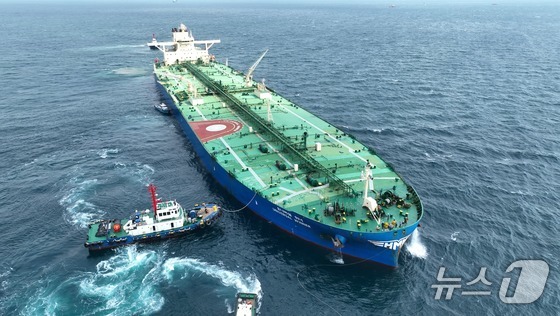
Considering that a Very Large Crude Carrier (VLCC) typically carries about 2 million barrels, this could result in an additional cost of 2 million USD per ship.
Amid this, analysts suggest that the market is focusing more on the Hormuz premium than on the toll itself. If tolls remain at 1 USD to 2 USD per barrel, some believe the oil market could absorb the cost. However, if conflicts over the management of the strait recur, the situation could change dramatically.
Blockchain-focused media outlet BeInCrypto noted that the oil market reacts more sensitively to the potential for supply disruptions than to actual costs, adding that if conflicts over the operation of the Strait of Hormuz persist or disputes arise over toll collection, the market will reflect renewed concerns about supply instability in pricing.
Refining, Petrochemicals Set to Feel Impact as Exporters Face Added Burden
If tolls are implemented, the Strait of Hormuz will not be blocked but will transform into a sort of energy tollgate, resulting in ongoing cost burdens for shipping companies.
South Korean shipping companies are likely to pass these costs onto freight rates. Additionally, if the war risk insurance premiums, which surged after the Middle East conflict, remain high, maritime transportation costs could rise even further.
The transportation costs for various raw materials passing through the Middle East may also increase. The refining and petrochemical industries could face further setbacks. The petrochemical sector, which has previously experienced a shortage of naphtha, is unlikely to escape the pressure of rising costs.
The automotive, semiconductor, and battery industries will also feel indirect effects. Rising energy prices will lead to increased manufacturing and logistics costs, ultimately weakening export price competitiveness.
Professor Kim Jeong-sik from Yonsei University stated that as the Hormuz variable persists, it will become increasingly difficult for international oil prices to recover to the pre-conflict level of around 60 USD per barrel, adding that this will inevitably have negative effects not only on the refining and petrochemical sectors but also on prices overall.
Postwar Reconstruction Projects Emerge as Another Wild Card Amid Toll Concerns
However, experts point out that the MOU’s provisions related to Iran’s reconstruction also warrant attention. Clause 6 states that the United States will work with regional partners to develop a concrete and definitive reconstruction and economic development plan of at least 300 billion USD.
Professor Kim noted that if South Korean companies can participate in the post-war reconstruction process, it can expect positive economic effects. Conversely, if negotiations do not proceed properly and Iran attempts to use the Hormuz tolls as a source of reconstruction funding, the negative impact on the South Korean economy could increase.
Some analysts suggest that the U.S. may have left room for toll discussions in the MOU as a strategy to encourage participation in reconstruction projects.
Professor Heo Yoon from Sogang University’s International Trade Department stated that the U.S. is likely to leverage the importance of opening the Strait of Hormuz during the reconstruction process to pressure allied and friendly nations to participate, presenting the message that they can gain economic benefits from participating in reconstruction while also demanding cost-sharing.
He added that ultimately, from South Korea’s perspective, the participation in reconstruction projects and ensuring supply chain stability may become more significant variables than the tolls themselves.