This week, major players in key industrial sectors, including SK Hynix, LG Electronics, Hanwha Aerospace, and Samsung SDI, will unveil their second-quarter financial results. Tech giants Apple and Microsoft, Meta are also slated to report their earnings, offering insights into the economic outlook for the latter half of the year.
All eyes are on SK Hynix. Analysts are keenly awaiting both its Q2 performance and future projections. If the company meets the consensus operating profit, it’s poised to clinch the fourth spot globally, trailing only Samsung Electronics, NVIDIA, and Apple.
SK Hynix is eyeing a Q2 operating profit of 64 trillion KRW (approximately 43.8 billion USD), potentially overtaking Alphabet, Google’s parent company, for the fourth-highest quarterly earnings in tech history.
Industry sources reveal that SK Hynix will host its earnings call on July 29, followed by Samsung Electronics on July 30. Notably, SK Hynix plans to release its Q2 results just before the conference call.
Financial data provider FnGuide projects SK Hynix’s consolidated Q2 results to show revenues of 84.1693 trillion KRW (about 57.6 billion USD) and an operating profit of 64.2448 trillion KRW (around 44 billion USD). These figures represent staggering year-over-year increases of 278.6% and 597.3%, respectively, marking all-time quarterly highs. The estimated operating profit margin of 76.3% would also set a new record.
If SK Hynix hits the consensus operating profit, it will secure the fourth-highest quarterly operating profit among global tech giants. The current fourth-place holder is Alphabet, which reported an operating profit of 40.77 billion USD for Q2 this year. Should SK Hynix surpass this, Alphabet would drop to fifth place just a week after announcing its Q2 results on July 22.
Samsung Electronics has already set a new benchmark for quarterly operating profit in the tech industry. Its Q2 figures show consolidated revenues of 171 trillion KRW (about 117 billion USD) and an operating profit of 89.4 trillion KRW (around 61.2 billion USD). These numbers reflect remarkable year-over-year growth of 129.31% and 1810.26%, respectively.
Previously, NVIDIA held the record for the highest quarterly operating profit in the global tech sector, reporting 53.536 billion USD in Q1 of fiscal year 2027 (February to April 2026). However, Samsung Electronics has now claimed the top spot, pushing NVIDIA to second place. Apple currently ranks third with an operating profit of 50.852 billion USD for Q1 of fiscal year 2026 (October to December last year).
Analysts attribute the robust Q2 performance of Samsung Electronics and SK Hynix to surging demand for server dynamic random access memory (DRAM) and high-bandwidth memory (HBM), driven by the rapid expansion of generative artificial intelligence (AI). HBM, which vertically stacks multiple DRAM chips to significantly boost data processing speed and bandwidth, has become a critical component for AI servers.
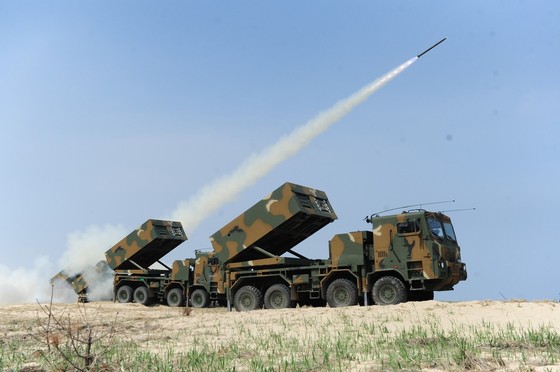
Hanwha Aerospace is on track to achieve its highest quarterly operating profit to date, with a conference call scheduled for this week. Hanwha Ocean (July 27), Hanwha Systems (July 28), and Hanwha Aerospace (July 31) will all host their Q2 earnings calls. Hanwha Ocean expects its Q2 operating profit to reach 533.5 billion KRW (about 365 million USD), a 43.5% increase from last year. Meanwhile, Hanwha Systems anticipates a 75.5% jump in operating profit to 58.8 billion KRW (around 40.2 million USD) for the same period.
Hanwha Aerospace, which owns Hanwha Ocean and Hanwha Systems, projects a Q2 operating profit of 997 billion KRW (about 682.2 million USD), marking a 15.3% increase from last year. This figure surpasses last year’s Q2 operating profit of 864.4 billion KRW (approximately 591.5 million USD), setting a new quarterly record. Exports of K9 self-propelled howitzers to Poland, Australia, and Egypt have likely fueled Hanwha Aerospace’s strong performance.
Korea Aerospace Industries (KAI, 047810) will announce its Q2 results on July 29. KAI’s consolidated Q2 operating profit consensus is estimated at 88.9 billion KRW (around 60.8 million USD), a 4.3% increase from the same period last year. As Hanwha Group expands its stake in KAI, this topic is expected to be a key focus during the conference call. Hanwha Group has shifted its purpose for holding KAI shares from simple investment to management participation, fueling market speculation about a potential acquisition of KAI.
Following LG Energy Solution’s lead, Samsung SDI also appears to be nearing the end of its deficit phase, while chemical and energy companies are poised for a profitable rebound.
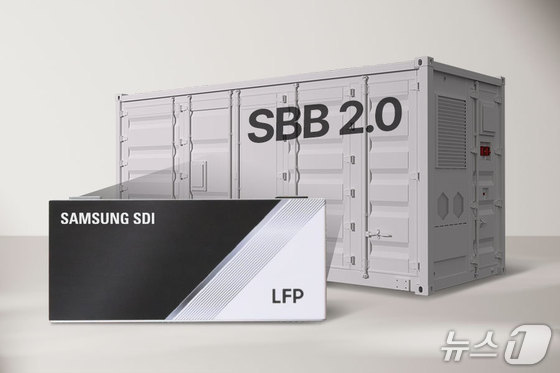
In the battery sector, LG Energy Solution and Samsung SDI will report their Q2 results on July 30. Samsung SDI’s consolidated Q2 operating loss consensus is 35.6 billion KRW (about 24.3 million USD). While this marks seven consecutive quarters of losses since Q4 2024, it represents a 77% reduction in losses compared to the previous quarter (155.6 billion KRW, about 106.5 million USD). This trend raises hopes for a return to profitability in the second half of this year.
On July 7, LG Energy Solution announced preliminary Q2 results showing an operating profit of 113.3 billion KRW (approximately 77.5 million USD), breaking a two-quarter streak of losses. Increased shipments of energy storage systems (ESS) in North America reduced initial production costs, while expanded battery shipments for mid-range electric vehicles in Europe contributed to this turnaround. However, compared to the same period last year, the operating profit has decreased by 77.0%.
In the chemical and energy sectors, SK Innovation and LG Chem will announce their Q2 results on July 30 and 31, respectively. SK Innovation’s consolidated Q2 operating profit consensus is 1.5582 trillion KRW (about 1.06 billion USD), showing a remarkable improvement of 1.9758 trillion KRW (about 1.35 billion USD) compared to an operating loss of 417.6 billion KRW (about 285 million USD) a year earlier. LG Chem’s consolidated Q2 operating profit consensus is 424.6 billion KRW (approximately 290 million USD), reflecting a 10.9% decrease from the previous year, but it is expected to end a two-quarter streak of losses that began in Q4 last year.