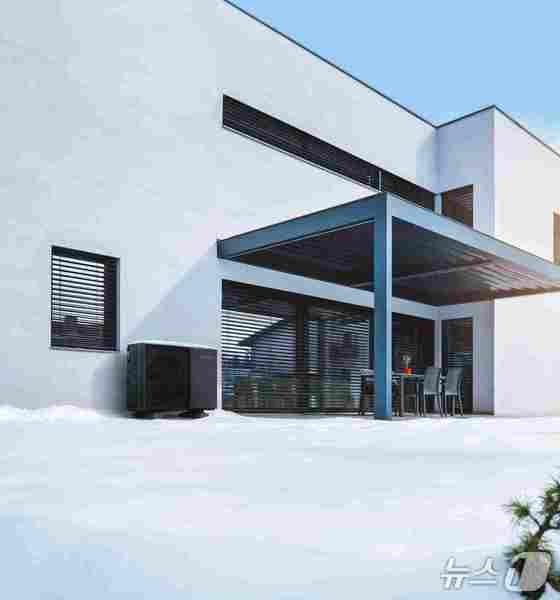
Samsung Electronics is collaborating with the Oak Ridge National Laboratory (ORNL), a division of the U.S. Department of Energy (DOE), to develop next-generation heating technology capable of operating reliably in extreme environments as cold as -22°F (about -30°C).
The company announced on August 9 that it is conducting research on Cold Climate Vapor Compression Space Heating and Multi-functional Equipment in partnership with ORNL. Their goal is to create technology that delivers efficient and stable heating performance even in sub-zero temperatures reaching -22°F (about -30°C).
At the heart of this research is vapor compression technology, which compresses and circulates refrigerants to transfer heat from outside to inside. This highly energy-efficient method can be utilized in heating, ventilation, and air conditioning (HVAC) systems that provide heating, cooling, and hot water. However, the technology’s performance tends to decline as outdoor temperatures drop.
Maintaining high heating performance and reliability is particularly crucial in regions like North America and Northern Europe, where temperatures can plummet below -22°F for extended periods.
To address this challenge, Samsung aims to enhance vapor compression technology to ensure stable heating performance in extreme cold environments, even below -22°F, using a single compressor.
Specifically, the company plans to implement a rotary scroll mechanism in the compressor to boost performance. Unlike traditional piston-based systems that compress refrigerants through linear motion, the scroll mechanism uses two interlocking spirals to compress the refrigerant. This results in lower energy loss and higher stability, making it ideal for long-term operation in cold climates.
Samsung will also incorporate a refrigerant control technology called flash injection to optimize performance by preventing compressor overheating. This innovative system can detect when heating efficiency drops during prolonged operation and inject additional refrigerant as needed.
The company intends to validate the technology developed through this research at the National Laboratory of the Rockies (NLR) field test lab in Fairbanks, Alaska.
Fairbanks is renowned for its extreme cold, with average monthly low temperatures around -40°F (about -40°C) and record lows dipping below -58°F (about -50°C), making it an ideal location for testing product performance and reliability in harsh conditions.
Through this research, Samsung aims to solidify its leadership in vapor compression heating technology and actively respond to the global trend of heating electrification. The company plans to expand the application of this technology to various HVAC products, including air conditioning systems and heat pump boilers.
According to market research firm Fortune Business Insights, the global heat pump market is projected to grow from 93.5 billion USD in 2025 to 211.9 billion USD by 2034, with an average annual growth rate of 9.8%.
Im Seong-taek, Vice President of Samsung’s Digital Appliances Division, stated that this collaboration will serve as a significant opportunity to demonstrate Samsung’s unique high-efficiency technology and device reliability in actual extreme cold environments. Based on the research data, it will introduce heat pump products to the global market that maximize performance and energy efficiency while reducing carbon emissions.