South Korean battery manufacturers and U.S. automakers are restructuring their joint ventures (JVs) that were established on the premise of an expanding electric vehicle (EV) market. As North American EV demand falls short of expectations, automakers are seeking to reduce their investment burdens, while battery companies are independently securing factories to broaden their applications, including energy storage systems (ESS).
General Motors, Ford, and Stellantis Adjust Investment Pace, Triggering a Series of K-Battery JV Restructurings
Industry sources reported on Wednesday that Samsung SDI terminated its joint investment contract with General Motors for Synergy Cells on the previous day and agreed to acquire General Motors’ 49.99% stake.
Synergy Cells is a battery production company established with a total investment of 3.5 billion USD in New Carlisle, Indiana, in 2024. The initial goal was to produce EV batteries with an annual capacity of 27 GWh, with plans to expand to 36 GWh in the future.
The factory is currently under construction, with investments in mass production lines yet to begin. The amount invested so far is reported to be in the billions of KRW, relatively small compared to the overall investment plan of about 5 trillion KRW (about 3.5 billion USD).
The backdrop for these JV restructurings is the slowdown in North American EV market growth. According to market research firm SNE Research, global electric vehicle (BEV+PHEV) deliveries reached approximately 9.906 million units in the first half of this year, a 5.5% increase from the same period last year. However, North America saw a decline of 20.5%, totaling 681,000 units.
This isn’t the first restructuring of JVs between U.S. automakers and Korean battery companies. LG Energy Solution acquired Stellantis’ 49% stake in Canada’s NextStar Energy for 100 USD, converting it into a standalone entity. SK On also restructured its partnership with Ford to independently operate its Tennessee plant.
As General Motors, Ford, and Stellantis adjust their electrification investment pace, the JV structures established by the three Korean battery companies with automakers in North America are rapidly changing.
EV Factories Pivot to ESS to Boost Utilization Rates; Chinese Competition Remains a Wild Card
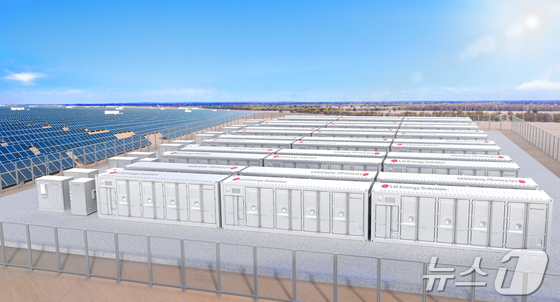
Battery companies plan to leverage their secured production facilities to expand their ESS businesses. With the U.S. ESS market growing rapidly due to AI data center expansions and grid stabilization needs, they aim to improve both utilization rates and investment efficiency by reallocating EV production facilities to ESS.
After converting Synergy Cells into a standalone entity, Samsung SDI plans to establish production lines catering to both EV and ESS demand. NH Investment & Securities projects that Samsung SDI’s North American ESS production capacity could exceed 50 GWh by the end of 2027.
LG Energy Solution also plans to increase its North American ESS production base, aiming to secure over 50 GWh of production capacity by year-end. SK On intends to complement its EV-centric business structure by expanding ESS orders in the second half of the year.
The restructuring of business portfolios, including ESS, contributed to a rebound in the second-quarter performances of the three battery companies. In Q2 of this year, LG Energy Solution reported an operating profit of 113.3 billion KRW (about 80 million USD), Samsung SDI recorded 203.8 billion KRW (about 144 million USD), and SK On achieved 821.8 billion KRW (about 581 million USD). This marks the first time all three battery companies have posted profits in seven quarters.
LG Energy Solution increased its ESS sales by 4.6 times compared to the same period last year by converting EV production capacity to ESS. Samsung SDI benefited from increased demand for high-output products such as uninterruptible power supplies (United Parcel Service – UPS) and battery backup units (BBUs) due to expanded investments in artificial intelligence (AI) data centers.
However, intensifying competition in the ESS market poses a challenge. According to LS Securities, Chinese companies held a 70-75% market share in the North American ESS market in the first half of this year. Automakers like General Motors, Ford, and Volkswagen are also entering the ESS market directly, raising the possibility that former EV customers may become ESS competitors.
Even as the strategy shifts towards independent operation of production facilities, collaboration with automakers remains crucial. Securing stable demand for EV batteries and developing next-generation products require ongoing cooperation with automakers.
In fact, Samsung SDI and General Motors signed a joint development agreement (JDA) for next-generation cylindrical batteries for electric vehicles simultaneously with the termination of their joint investment contract. The jointly developed batteries are expected to be used in General Motors’ next-generation electric vehicles.
An industry insider stated that it’s becoming increasingly important to flexibly utilize production facilities in line with the growing demand for ESS. Even as joint structures are restructured, collaboration between automakers and battery companies in the EV market will continue.