As the selection of U.S. investment projects approaches in September, last-minute negotiations between South Korea and the U.S. are in full swing. The South Korean government has confirmed that the U.S. demand for semiconductor investment is indeed a formal topic of discussion in the negotiations, validating previous speculation.
Observers suggest that the government’s decision to brief the ruling party privately on U.S. investment negotiations indicates that talks are entering their final stages. However, key issues such as the method and scale of semiconductor investment, as well as its relationship to the existing 200 billion USD U.S. investment, remain uncertain.
There’s growing speculation that the U.S. has requested domestic semiconductor giants like Samsung Electronics and SK Hynix to expand their local production facilities. The scope of negotiations between the two countries has evolved beyond simply deciding where to invest, to determining who will undertake business ventures and under what conditions.
Moreover, U.S. pressure in the final stages of negotiations is escalating beyond economic and trade issues, spilling into diplomatic and security realms. President Donald Trump has publicly expressed dissatisfaction with South Korea’s support for Iran and hinted at the possibility of targeted tariffs on semiconductors.
Additionally, Trump’s renewed emphasis on South Korea’s participation in the Alaska liquefied natural gas (LNG) project suggests that the U.S. investment negotiations are becoming a far more complex package deal compared to last year’s tariff negotiations.
The government has confirmed the reality of the semiconductor investment demand. A senior Blue House official stated that discussions have arisen due to U.S. requests. However, the official clarified that the specifics of how and in what manner have not been determined, emphasizing that it’s merely a discussion point raised by the U.S.
The official also noted that it remains unclear whether semiconductor investments are separate from the previously agreed 200 billion USD investment in the U.S. They added that they’re working to ensure these discussions don’t create any hindrances or obstacles.
While specific demands haven’t been made public, market analysts suggest the core issue likely revolves around expanding U.S. manufacturing investments for domestic semiconductor companies like Samsung and SK Hynix. This aligns with U.S. pressure for increased domestic production through tariffs and its view of semiconductors as a critical industry in reshaping manufacturing and supply chains.
Recently, President Trump suggested that companies building semiconductor facilities in the U.S. would receive tariff reductions, while those that don’t would face tariffs to enter the U.S. market. Commerce Secretary Wilbur Ross also indicated a targeted and careful tariff policy regarding semiconductors.
Analysts suggest the gap between the two sides lies more in the conditions governing investment rather than where to invest. The U.S. seeks to ensure substantial funds lead to increased domestic production, employment, and supply chain expansion, while South Korea must ensure the profitability and commercial viability of its investments given the large capital outlays involved.
Specifically, the memorandum of understanding regarding the 200 billion USD investment includes provisions for a special purpose vehicle (SPV) to manage strategic investments, which the U.S. or a designated party will control. Since separate U.S.-owned SPVs are mentioned for individual projects, the extent to which South Korean companies will retain shares, voting rights, profit distribution, and management rights could become contentious.
From the U.S. perspective, expanding production capacity with South Korean funds is crucial. However, South Korean companies need to secure ownership and profitability as investment size increases. Ultimately, negotiations may slow due to disagreements over investment structure and conditions rather than the semiconductor business itself.
Meanwhile, the government’s decision to brief the ruling party on U.S. investment negotiations has sparked speculation that talks have entered the final adjustment phase.
According to multiple Democratic Party sources, members of the National Assembly’s Finance and Economy Planning Committee and the Industry, Trade, and SMEs Committee will hold a closed-door meeting on Monday to receive briefings from the Ministry of Trade, Industry and Energy regarding U.S. investment negotiations.
Key negotiators, including Park Jeong-seong, head of the Ministry’s Trade Negotiation Headquarters, are expected to attend this meeting.
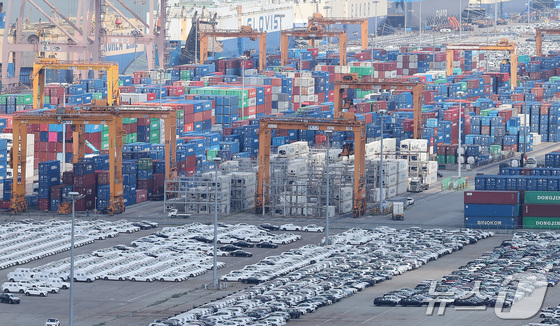
U.S. Investment Negotiations Now EncompassSemiconductors, Security, and LNG, Creating Complex High-Stakes Equation
The challenge is that these negotiations have expanded beyond economic and trade issues. President Trump’s recent public statements targeting South Korea have introduced diplomatic and security variables to the negotiation table.
In a Fox News interview on August 30, Trump expressed frustration that allies like South Korea didn’t assist the U.S. regarding Iran. He referenced the number of U.S. troops in South Korea, claimed that South Korea had declined to help with Iran, and warned, “Remember that.” Earlier, on August 19, he had voiced displeasure over South Korea’s response to the Strait of Hormuz situation.
While this dissatisfaction ostensibly relates to Iran and allies’ roles, given the ongoing investment negotiations, it could be interpreted as indirect pressure on economic issues. South Korea’s consideration of contributions for safe passage through the Strait of Hormuz further intertwines investment and security concerns.
The Alaska LNG project has also resurfaced. On September 2, Trump specifically mentioned South Korea and Japan’s participation in fuel transportation and pipeline construction projects in Alaska. The Trump administration has consistently emphasized this project in connection with U.S. investments from South Korea and Japan.
Consequently, current U.S.-South Korea negotiations have become entangled with economic issues related to semiconductors, energy, and investment structures, alongside tariffs, diplomacy, and security. While last year’s tariff negotiations involved high-stakes discussions exchanging tariff rates for U.S. investments, this round encompasses project selection, investment conditions, semiconductor production facilities, LNG, and security contributions.
Trump’s negotiation style of leveraging multiple issues to extract concessions isn’t new. However, the stakes are higher this time, as South Korea, having already committed to substantial U.S. investment, may face demands for additional participation and stricter investment terms.
With the selection and announcement of U.S. investment projects looming in September, the key challenge will be finding common ground between U.S. demands and South Korea’s acceptable investment conditions. The extent of U.S.-desired projects like semiconductors and LNG, and how to safeguard South Korean companies’ commercial interests, including profitability and management rights, will likely be crucial in final negotiations.
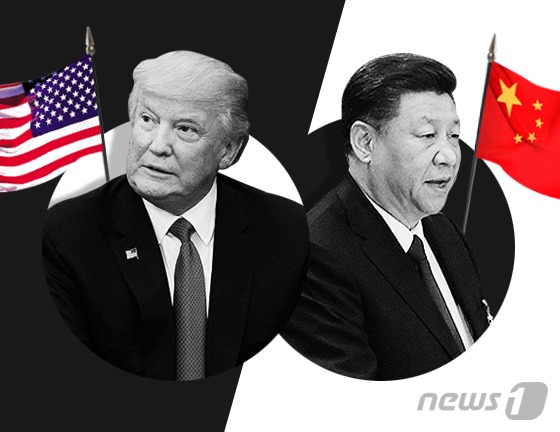
U.S. Views South Korea as Benefiting From Supply Chains in Countering China; A Strategy Balancing Conflict Management and PracticalBenefits is Crucial
Professor Heo Yoon from Sogang University’s International Trade Department suggests that U.S. pressure in negotiations stems from recognizing South Korea’s supply chain benefits amid efforts to counter China.
Professor Heo noted that as the U.S. excludes China from Western supply chains, South Korean companies have significantly benefited. The U.S. perceives this as providing substantial advantages to South Korea. He explained that this underlies U.S. pressure on South Korea in sectors like semiconductor manufacturing and shipbuilding.
He further analyzed that the U.S. aims to expand roles for allies like South Korea, Taiwan, and Japan while addressing its trade deficit and reducing dependence on China in supply chains and defense industries. The U.S. critically needs allied support to stabilize its supply chains and reduce Chinese reliance in defense, hence the pressure on South Korea, Taiwan, and Japan, he stated.
Accordingly, he advised that South Korea should secure practical benefits by integrating into U.S. supply chains and innovation ecosystems rather than outright rejecting demands.
Professor Heo emphasized that completely opposing the U.S. could lead to significant backlash. It’s crucial to manage conflicts while focusing on companies that integrate into U.S. innovation ecosystems and establish supply chain connections, building an independent position in Western manufacturing.
He cautioned that failing to manage conflicts properly due to burdensome U.S. demands could result in considerable disadvantages for South Korea.
Regarding whether the semiconductor investment demand falls under the existing 200 billion USD investment, Professor Heo suggested it’s likely a separate investment.
He explained that the cost of a single semiconductor factory is so high that a separate large-scale investment within the 200 billion USD framework would be challenging. Whether this is an entirely new request or utilizes part of the existing investment is crucial.
He added that given South Korea’s ongoing domestic semiconductor mega-project, initiating another large-scale U.S. investment is realistically difficult. The U.S. seems to be considering expanded local production in light of South Korea’s semiconductor trade deficit.