

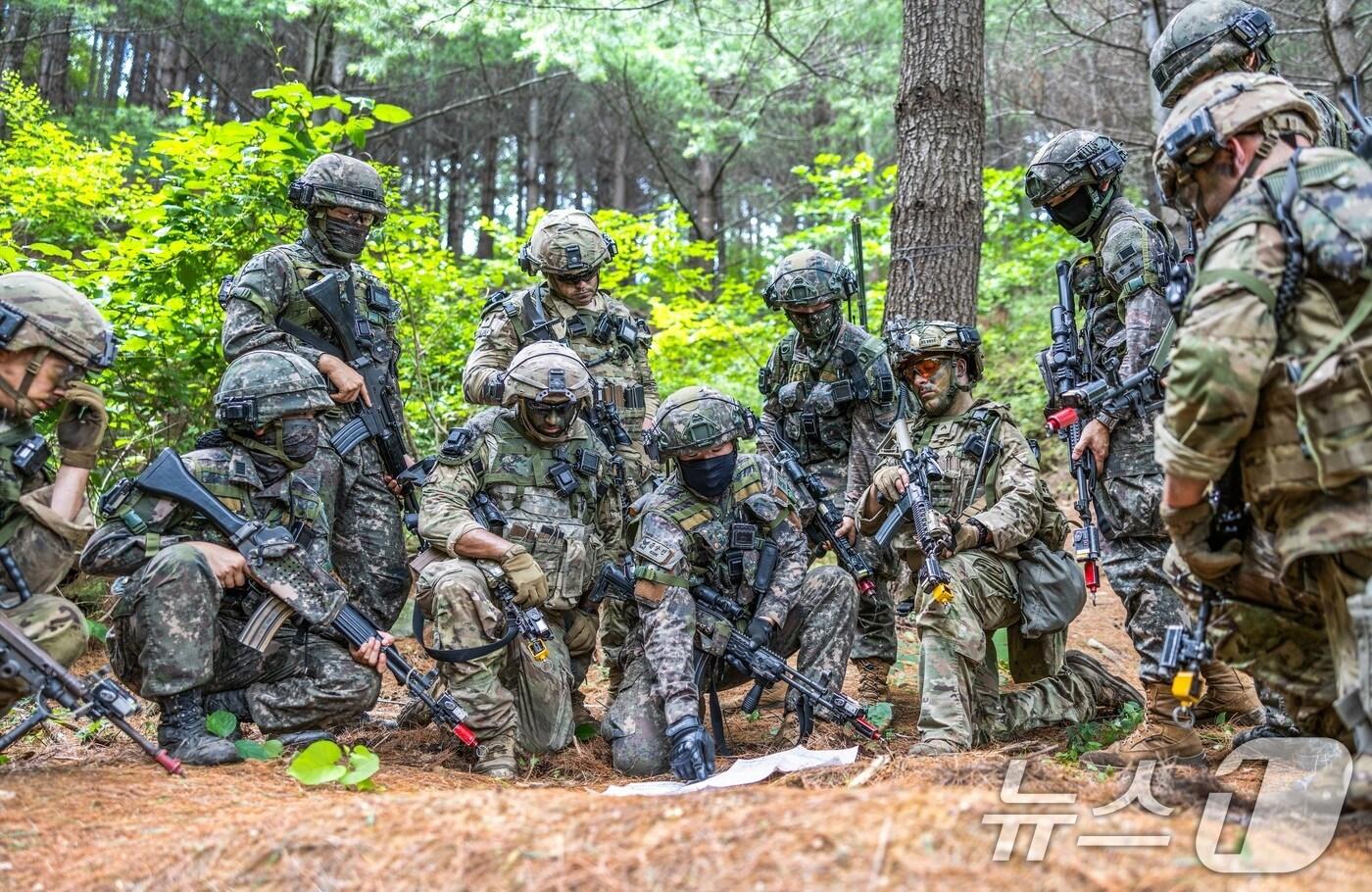
South Korean and U.S. defense officials have reached an agreement to strengthen their joint response capabilities to address the growing threats from North Korea’s nuclear and other weapons of mass destruction (WMD), according to a statement from Seoul’s defense ministry.
The agreement was made between both countries at the Counter WMD Committee session held in Seoul yesterday.
Key representatives, including Yoon Bong Hee, director-general of the ministry’s policy planning bureau, and Richard C. Johnson, U.S. Deputy Assistant Secretary of Defense for Nuclear and Countering Weapons of Mass Destruction Policy (N-CWMD), attended the event.
Both sides expressed concern that North Korea’s nuclear and WMD capabilities are causing instability on the Korean Peninsula and in the region, which led to discussions on enhancing the effectiveness of U.S.-South Korea deterrence and defense against the potential use of these weapons by North Korea.
The agreement includes expanding information sharing and boosting the expertise of relevant units through the Cooperative Threat Reduction (CTR) program. This U.S. initiative aims to strengthen the capabilities of allies in countering WMD threats.
The Defense Ministry emphasized that both nations recognized the detrimental impact of regional issues, such as the illegal proliferation of WMDs through arms transactions between Russia and North Korea. They committed to enhancing their collaboration to prevent the spread of WMDs and maintain peace and stability in the Indo-Pacific region, including the Korean Peninsula.