

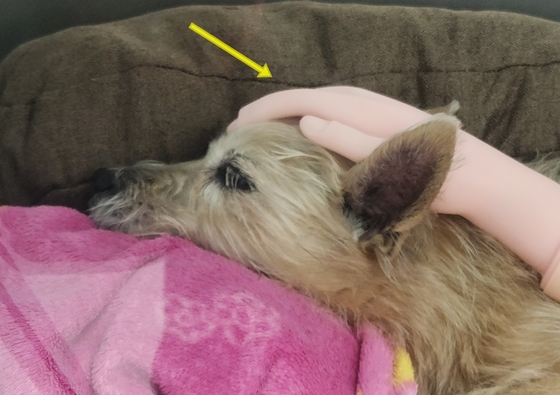
A canine heart surgery patient, suffering from severe anxiety and dangerously high blood pressure due to hospital stress, found an unexpected source of comfort. A simple hand model placed on the dog’s head effectively lowered its blood pressure, playing a crucial role in post-operative recovery.
The Korea Animal Medical Center in Cheongju recently shared a YouTube video detailing the treatment and recovery of Peanut, a dog that underwent V-Clamp surgery for mitral valve insufficiency.
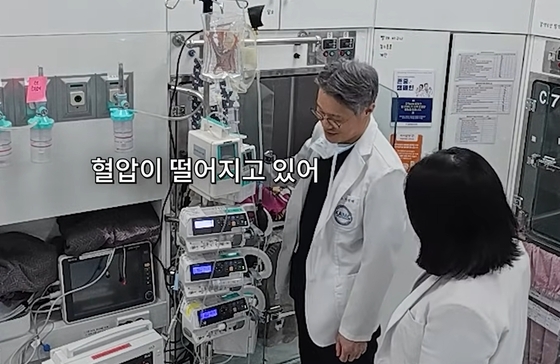
On Friday, the medical center reported that Peanut, hospitalized in intensive care following heart surgery, would calm down when touched by humans but experience significant anxiety, elevated blood pressure, and increased heart rate when left alone. This recurring pattern posed a risk of excessive cardiac strain, potentially compromising post-operative recovery and prognosis.
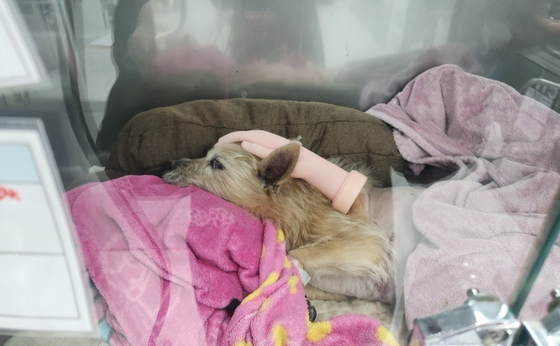
Dr. Lee Seon-tae, director of the Advanced Surgery Center, likened the situation to caring for a child. He introduced a hand model to simulate a comforting touch on Peanut’s head, substituting for the owner’s hand.
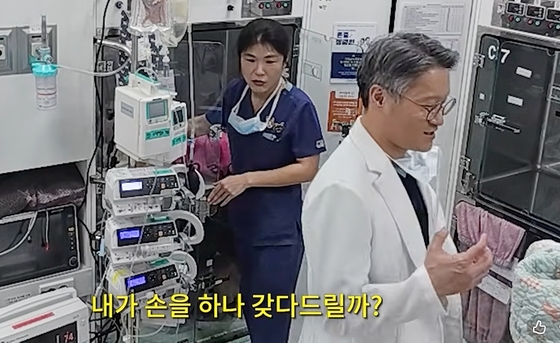
Dr. Lee originally used this hand model to soothe aggressive animals or those unfamiliar with human touch. Remarkably, after placing the model on Peanut, the medical team observed a significant drop in blood pressure and sustained stability.
Peanut’s journey began two years ago when a routine dental cleaning at a local clinic revealed a heart murmur, leading to a referral. Since then, medication had kept Peanut’s condition relatively stable. However, recent symptoms of rapid breathing prompted further examination, uncovering a ruptured chordae tendineae, the fibrous cords supporting the heart valve.
Chordae tendineae rupture indicates physical damage to the valve structure, necessitating surgical intervention as medication alone proves insufficient. Peanut’s stress response was particularly severe, with heart rates exceeding 200 beats per minute in the hospital environment, underscoring the urgency for treatment.
To prevent further deterioration, the medical team opted for V-Clamp surgery. This procedure involves clamping the area of valve regurgitation to reduce blood backflow, directly addressing the structural issues associated with mitral valve insufficiency. Dr. Yeop Gyeong-ah performed the surgery at the Korea Animal Medical Center in Cheongju.
The surgical outcome was positive. Post-operative examinations showed the previously audible heart murmur had nearly disappeared. Ultrasound confirmed a significant reduction in blood backflow, while X-rays demonstrated stable cardiac condition, with expectations for gradual improvement in heart size.
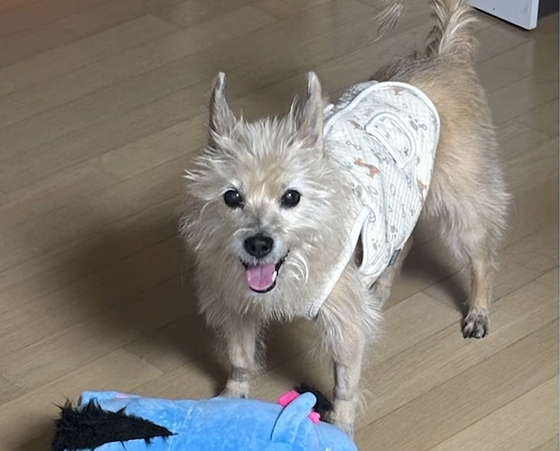
Following surgery, Peanut showed promising progress, regaining appetite and vitality. Currently, Peanut continues to receive heart medication as part of ongoing management.
Dr. Yeop emphasized that chordae tendineae rupture is a structural issue that medication alone cannot resolve. Timely surgical correction is crucial. This case illustrates how surgery can stabilize heart function and enhance quality of life.
Dr. Yeop added that the patient’s psychological stability during recovery is equally vital. This case highlights how even small environmental factors can significantly impact the healing process.
For more details on Peanut’s story, visit the official YouTube channel of the Korea Animal Medical Center in Cheongju.