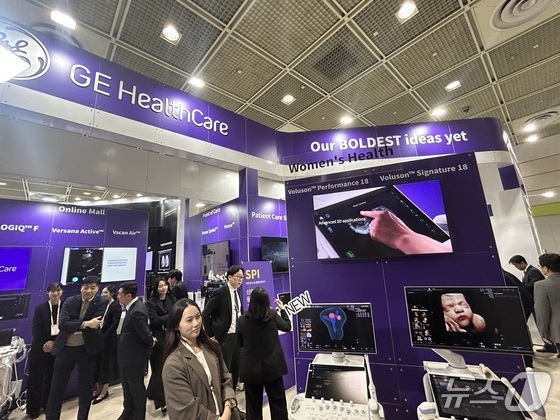
The landscape of competitiveness in the medical device market is shifting. While clear imaging and rapid, precise examinations were once paramount, the industry is now pivoting towards data and software-driven solutions.
Equipment sales alone have limited growth potential, but data and software services offer the opportunity to forge lasting partnerships with healthcare providers. Hospitals are increasingly drawn to solutions that boost treatment efficacy and operational efficiency, rather than simply acquiring new hardware.
GE Healthcare Korea’s recent initiatives exemplify this transformation. The company is enhancing patient and clinician experiences through artificial intelligence (AI) powered digital automation tools, while also leading the market with cutting-edge ultrasound equipment, diagnostic imaging devices, and monitoring solutions.
Industry sources reported on Monday that GE Healthcare had entered into a memorandum of understanding (MOU) with Daegu Miracle Women’s Clinic in March, aimed at advancing infertility treatment practices.
Infertility treatment is a complex field requiring long-term patient monitoring and comprehensive analysis of diverse test results. The process integrates ultrasound images, hormone levels, treatment histories, and progress reports. Ultimately, the quality of care hinges on efficient data utilization.
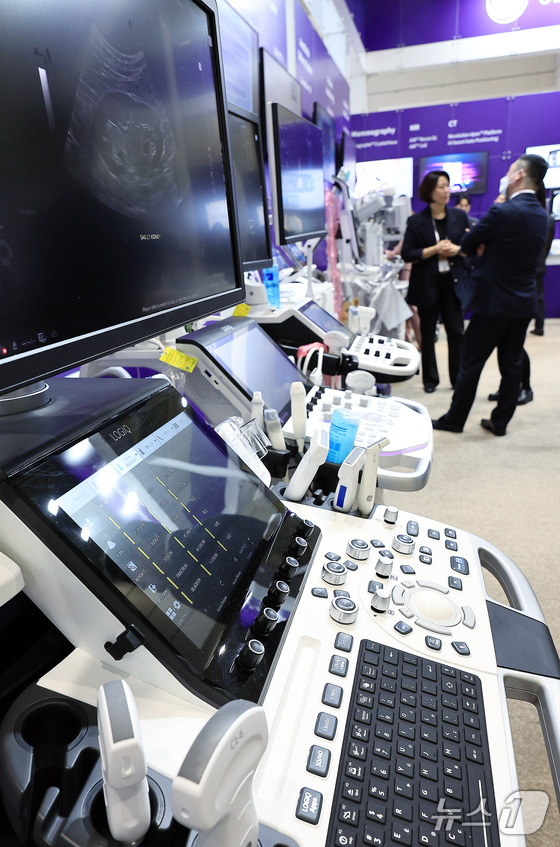
GE Healthcare’s strategy extends beyond merely supplying ultrasound equipment; they’re focused on developing a robust data ecosystem for medical professionals to leverage during diagnostics. This approach underpins their recent push to bolster women’s health initiatives.
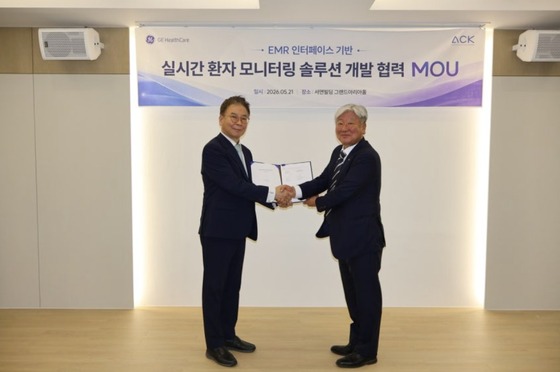
A parallel trend is emerging in critical care management. The company recently inked an MOU with ACK to develop a real-time patient monitoring solution that integrates electronic medical record (EMR) and medical equipment interfaces.
This collaboration aims to create an ecosystem where patient vital signs and diverse medical data generated within hospitals can be collected and utilized in real time.
The goal is to provide healthcare institutions with a digital healthcare environment that seamlessly integrates data from various medical devices, enabling medical staff to swiftly identify and respond to patient anomalies.
In the patient monitoring market, data processing and utilization capabilities are now more crucial than hardware specifications. The key lies in integrating data from multiple devices and ensuring healthcare professionals have timely access to critical information.
GE Healthcare’s business strategy appears to be centered on connecting data generated across various medical domains, including infertility treatment, diagnostic imaging, and patient monitoring.
In recent years, global healthcare companies have increasingly differentiated themselves based on their data utilization capabilities rather than just equipment performance. Consequently, the industry is closely monitoring GE Healthcare’s evolution into a platform company.
An industry insider observed that GE Healthcare, once a titan in medical devices, is now pivoting to become a data aggregator within hospitals. The future of the medical device market hinges on effectively connecting disparate hospital data and translating it into tangible value for healthcare providers and patients.
They added that data-driven healthcare shows immense growth potential. These market-wide shifts are poised to significantly reshape the domestic medical landscape.