

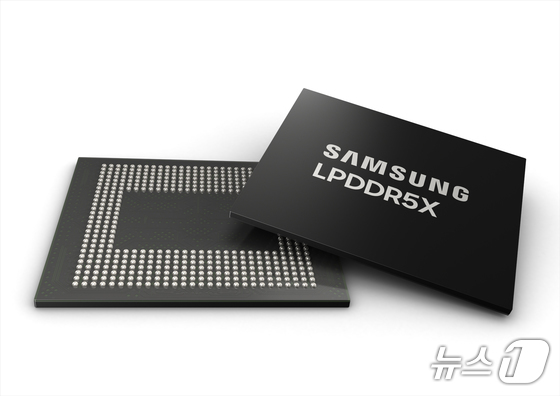
Samsung Electronics has recently supplied its 12-nanometer (nm) class low-power double data rate (LPDDR) 5X DRAM products to automotive customers.
The company aims to lead the development and supply of high-performance, low-power memory solutions that offer stability, performance, and energy efficiency. This move comes in response to the growing demand driven by vehicle electrification and the proliferation of software-defined vehicles (SDVs).
Industry sources reported on the 12th that Samsung Electronics has recently delivered automotive LPDDR5X DRAM manufactured using a 12nm process. These chips boast data processing speeds of up to 9600 megabits per second (Mbps).
This development follows Samsung’s introduction of LPDDR5X in April last year. This device has an industry-leading operating speed of 10.7 Gbps and has now been adapted for automotive applications.
The new product is optimized to meet the increased data processing demands resulting from the integration of advanced driver-assistance systems (ADAS) and in-vehicle infotainment (IVI) functions into centralized system-on-chip (SoC) architectures.
As ADAS and IVI technologies advance, vehicles face a surge in data processing requirements. Implementing these functions with low power consumption has become increasingly crucial. Energy efficiency is closely tied to the driving range of electric vehicles, making high-performance, low-power solutions like LPDDR5X essential.
Samsung’s LPDDR5X significantly boosts data transfer speeds, reaching 9600 Mbps—a substantial improvement over previous generations. It’s available in many capacities, from 3GB to 24GB. The company has also enhanced signal integrity and optimized performance by incorporating three JEDEC standard FBGA packages, including the 561F FBGA, which is 50% smaller than the existing 441F FBGA solution.
Automotive-grade LPDDR5X must adhere to more stringent safety standards than consumer electronics. Samsung’s offering meets AEC-Q100 certification requirements and supports an extended operating temperature range from -40°C to 125°C. Automobile chips’ relatively slower operating speeds than mobile variants result from the rigorous safety testing mandated for automotive applications.
In a recent tech blog post, Samsung highlighted its decades-long leadership in memory solutions for data centers, mobile devices, IoT, and home appliances. The company emphasized that it’s now extending this legacy of trust and innovation to the automotive sector. Samsung asserted that its comprehensive automotive memory portfolio is ideal for customers who must meet functional safety goals characterized by high fault detection rates, enhanced safety mechanisms, reliability, and uncompromising quality.