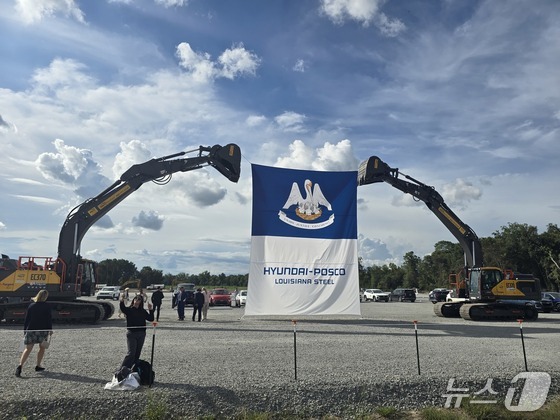
Two massive excavators towered over the site, their long arms raised high. Between them, a giant banner proclaimed HYUNDAI-POSCO LOUISIANA STEEL, flanked by the Louisiana state flag with its iconic pelican.
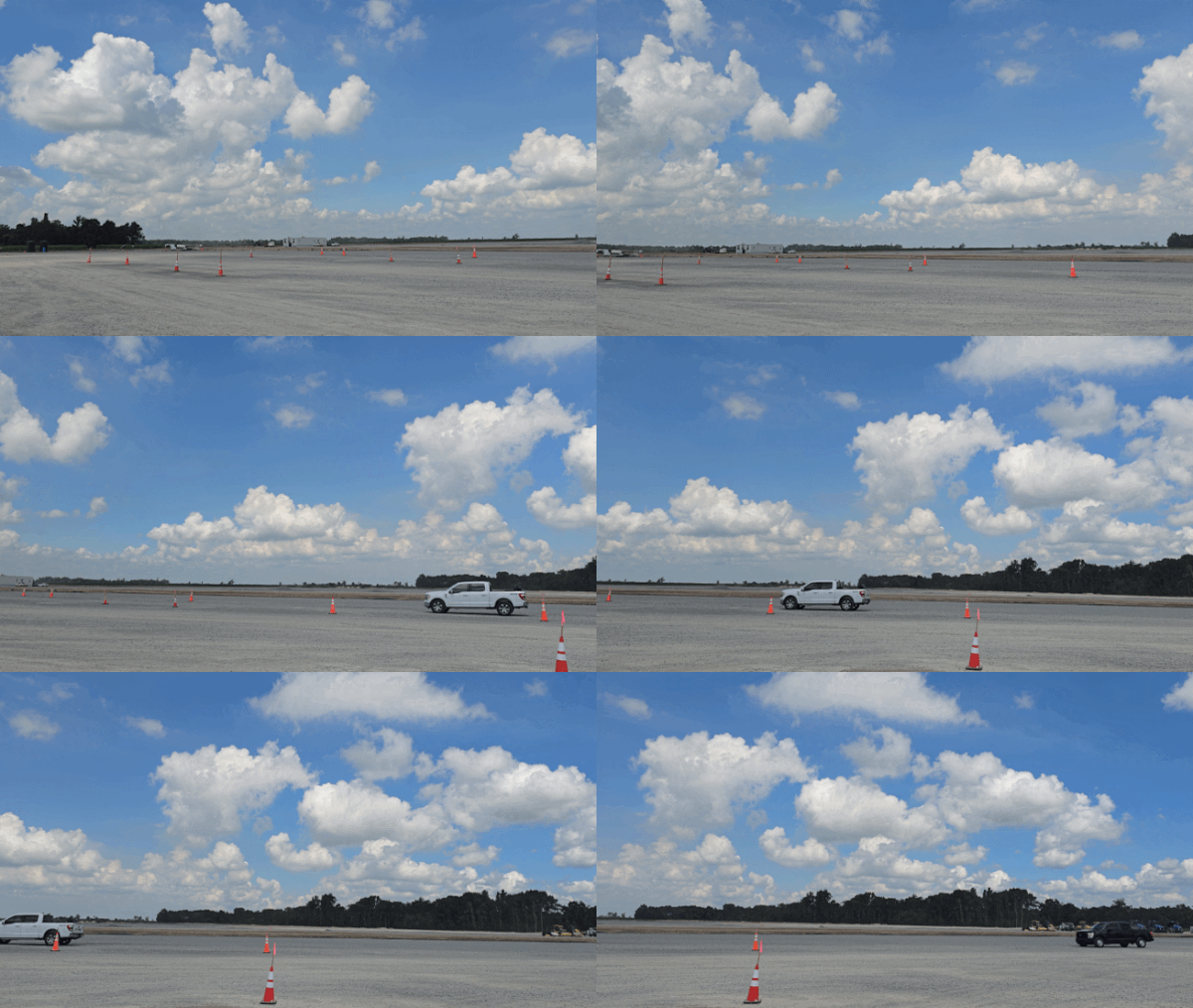
Instead of a sprawling factory or steel equipment, a vast expanse of cleared land stretched out below. This once-fertile sugarcane field had been transformed into a meticulously prepared construction site, leveled with dirt and gravel.
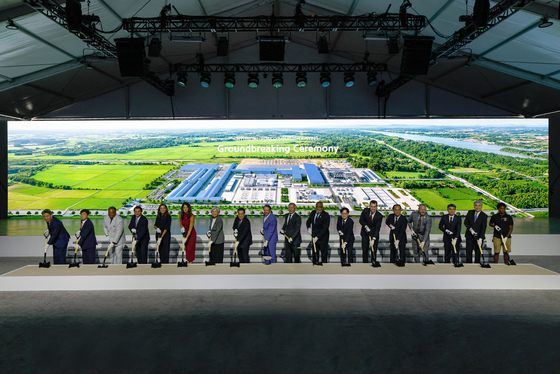
On September 4, Hyundai Steel broke ground on its first U.S. electric arc furnace steel mill, the Hyundai Steel-POSCO Louisiana Electric Steel Mill (HPLS), in Donaldsonville, Louisiana.
The journey to this remote location mirrored the unfamiliarity of the site itself. An hour-long bus ride south from New Orleans saw urban landscapes give way to endless plains. After crossing the Mississippi River via the Sunshine Bridge, another 20-minute drive brought us to Donaldsonville, a small town of just over 7,000 residents.
On this momentous day, the usually tranquil town bustled with activity. The influx of officials and journalists from both South Korea and the U.S. created a hive of activity around the event site. A section of the expansive lot had been outfitted with facilities for the groundbreaking ceremony.
Signs of change were already visible in the surrounding area. En route to the ceremony, a building proudly displayed a sign reading “KOREA BBQ COMING SOON.” Following the spring opening of a Korean restaurant after Hyundai Steel’s announcement, another is slated to open by year’s end.
The emergence of these Korean eateries, even before the steel mill’s construction begins, offers a glimpse into the profound changes awaiting this small Louisiana town.
The HPLS project represents a staggering 5.8 billion USD investment. Once operational, it will produce 2.7 million tons of steel products annually, including 1.8 million tons of automotive steel sheets. The mill aims to supply not only Hyundai and Kia’s U.S. production facilities but also local automakers.
Hyundai Steel plans to commence construction in the fourth quarter of this year, with mass production targeted for 2029. The construction phase alone is expected to generate up to 4,800 jobs.
Today, only a handful of construction vehicles dot the dirt landscape. Soon, however, this site will house Hyundai Steel’s first U.S. steel mill. In a poetic transformation, steel produced on former sugarcane fields will soon be incorporated into American-made vehicles.
A Hyundai Steel spokesperson emphasized that this project transcends mere steel mill construction, positioning it as a catalyst for the future of the steel industry and the hydrogen ecosystem.