

A South Korean research team has developed a groundbreaking technology that destroys cancer cells by breaking down proteins they use to evade immune system attacks.
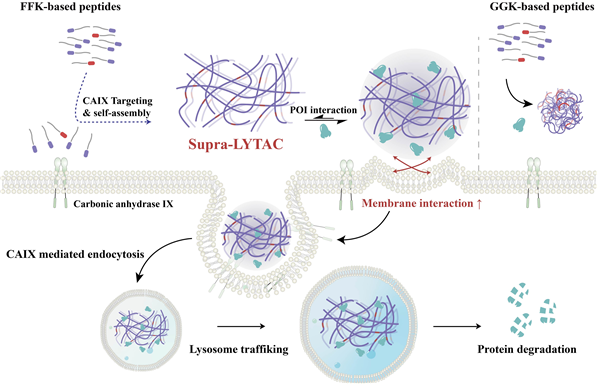
On Wednesday, researchers at Ulsan National Institute of Science and Technology (UNIST) announced a major breakthrough in cancer treatment. Professor Ryu Ja Hyoung and his team from the Department of Chemistry have engineered a protein complex assembly technology that degrades proteins cancer cells use to avoid immune detection. This approach traps immune evasion proteins within a complex and transports them to the lysosome, the cellular organelle responsible for protein degradation. This process could potentially revolutionize cancer treatment by creating an environment where the body’s immune system can effectively recognize and eliminate cancer cells.
Cancer cells are known to produce abnormally high levels of PD-L1 protein, which is displayed on their surface. These proteins act as a Do Not Attack signal to immune cells, allowing cancer to escape the immune surveillance system and proliferate rapidly.
The research team developed a technique that selectively degrades PD-L1 in cancer cells using a molecule called acetazolamide. Acetazolamide binds to the CAIX enzyme found on cancer cell surfaces, forming a protein nanocomposite. This nanocomposite then pulls immune evasion proteins like PD-L1 into the cell, where they are recognized as abnormal and subsequently broken down by the lysosome. Importantly, this reaction is specific to cancer cells, as the CAIX enzyme is rarely found in normal cells.
With their PD-L1 proteins destroyed, cancer cells become visible targets for the immune system. In animal studies using mice, tumors in the group treated with the nanocomplex shrank to less than half their original size, and PD-L1 levels were significantly reduced.
The groundbreaking research was published in the international journal Advanced Science on April 3. This study was supported by South Korea’s Ministry of Science and ICT and the National Research Foundation of Korea.