

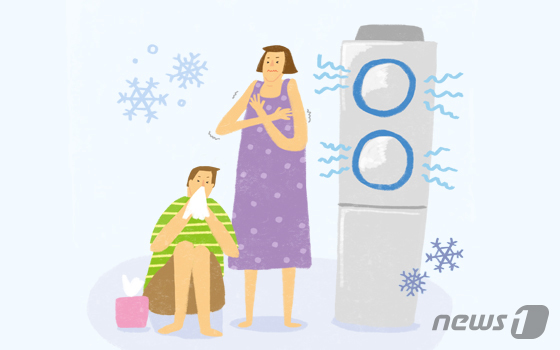
As an early summer heatwave grips South Korea, with over 500 reported cases of heat-related illnesses such as heatstroke, the use of air conditioners has surged — and so have reports of health issues caused by air conditioning, prompting heightened awareness for personal health management.
Health issues caused by air conditioning linked to drastic temperature differences and bacteria in AC units
Though commonly referred to as a disease in some countries, illness caused by air conditioning is not a medically defined condition. Instead, it describes a set of symptoms similar to those of a cold or flu, such as headaches, fatigue, lethargy, drowsiness, dizziness, indigestion, diarrhea, and abdominal pain. Respiratory symptoms, such as a sore throat, runny nose, and coughing, may also occur. Significant differences between indoor and outdoor temperatures can impede blood circulation, resulting in swelling in the hands and feet or a heavy sensation in the shoulders and limbs.
Professor Seo Min Seok of the Family Medicine Department at Incheon St. Mary’s Hospital, Catholic University, noted that individuals with weakened immune systems or underlying conditions such as asthma, allergies, or chronic migraines are more susceptible to severe symptoms. He also pointed out that women tend to be more vulnerable to these effects than men, sometimes experiencing worsened menstrual pain or irregular menstrual cycles.
The primary cause of these health issues is a sharp contrast in temperature between indoor and outdoor environments. During the summer, when this temperature gap becomes too wide, the body’s autonomic nervous system becomes fatigued as it tries to adapt.
Another major concern is Legionnaires’ disease, caused by the Legionella bacteria that thrive in the cooling water of air conditioning systems. These bacteria can spread throughout an entire building using the same cooling system and can mainly infect individuals with weakened immune systems.
Early symptoms resemble flu and COVID-19… Seek medical attention if fever exceeds 37.5°C
In its early stages, illness caused by air conditioning can mimic the symptoms of influenza or COVID-19, leading to confusion. Professor Choi Joon Yong from the Division of Infectious Diseases at Severance Hospital emphasized that the initial symptoms are very similar to those of COVID-19. Suppose muscle aches, coughing, and a persistent fever above 37.5°C are observed. In that case, it is important to get tested, as these may indicate not only COVID-19 but also a possible Legionella infection related to air conditioning systems.
To summarize, illness caused by air conditioning is triggered by large indoor-outdoor temperature differences and typically results in mild, cold-like symptoms. In contrast, flu and COVID-19 are viral infections that are accompanied by high fever and chills.
Fortunately, these symptoms can usually be alleviated with adequate rest and reduced use of air conditioning. Preventive measures include maintaining indoor temperatures between 22°C and 26°C and keeping the difference between indoor and outdoor temperatures within 5°C. Avoid having cold air directly blow onto the body, and use jackets or lap blankets to help regulate body temperature.
Additionally, air conditioner filters should be cleaned every two weeks and dried in sunlight after washing to prevent bacterial growth. It’s also advisable to ventilate the room by opening windows at least once a day.
Professor Seo added that during the monsoon season, indoor activities increase, and air conditioner usage naturally becomes prolonged. He recommended maintaining basic healthy habits such as regular exercise, sufficient sleep, and stress management, along with light activities like walking or stretching, to help prevent discomfort or illness related to air conditioning.