

Concerns are mounting over the domestic active pharmaceutical ingredient (API) industry’s persistent vulnerability and reliance on foreign sources. The concentration of key imports from China and India raises red flags about potential disruptions to essential medicine supplies in the event of global supply chain shocks.
Data obtained by Rep. Baek Jong-heon of the ruling People Power Party from the Ministry of Food and Drug Safety on Wednesday reveal a troubling trend. The self-sufficiency rate for domestic APIs plummeted to a record low of 11.9% in 2022, only marginally improving to 25.6% in 2023. China (37.7%) and India (12.5%) continue to dominate API imports, highlighting a dangerous dependence on these two nations.
Last year’s domestic API production value stood at 4.4 trillion KRW (about 3.1 billion USD), a mere 13.4% of the total pharmaceutical market. This figure drops to a concerning 7.8% when excluding biopharmaceutical exports, underscoring the industry’s fragility.
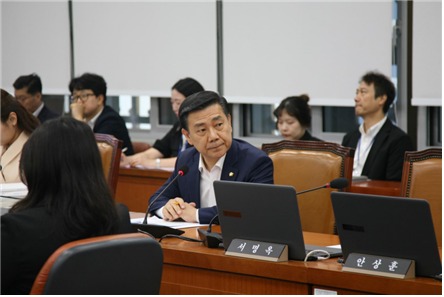
Han Sang-soo, Chief Executive Officer (CEO) of Inist ST, testified as a witness during the Ministry of Health and Welfare’s audit, painting a grim picture of the domestic API industry. Han stated that their heavy reliance on China and India for most ingredients leads to recurring supply instabilities during global crises or geopolitical tensions. He added that they’ve already witnessed actual production disruptions for certain components.
Han urged the government to take decisive action by calling for the designation of strategic items and support for research and development (R&D) and production infrastructure to boost domestic production. He advocated for a special law governing the API industry as well as reforms to the innovative pharmaceutical company certification system. He emphasized that they need to explore incentives and public procurement strategies that encourage domestic pharmaceutical firms to prioritize locally produced ingredients.
The U.S. is currently promoting domestic procurement through its Buy American policy, while the European Union (EU) is bolstering production capacity with joint R&D funds and subsidies. Japan has also designated essential pharmaceutical ingredients and maintains production facilities through government subsidies.
Rep. Baek criticized the government’s efforts, noting that despite implementing a price preference policy for 68% of essential national drugs manufactured using domestic APIs in March, not a single pharmaceutical company or product has applied in the seven months since. Baek argued that this is clear evidence that the policy provides no real incentive.
He called for a substantial policy overhaul, proposing to the Ministry of Health and Welfare a multi-pronged approach: designating strategic items, strengthening R&D support, expanding production infrastructure, and improving laws and regulations related to public procurement.