

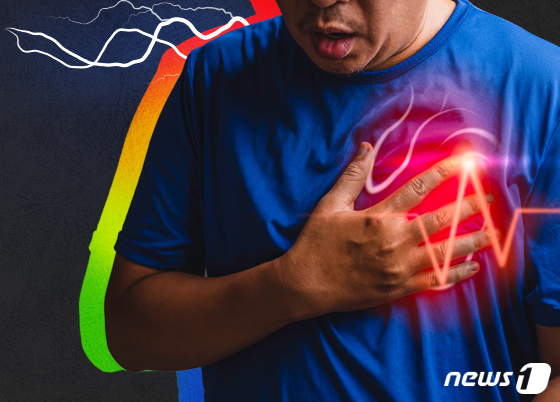
Recent medical findings suggest that recurring heart palpitations after alcohol consumption may indicate an arrhythmia rather than a simple hangover. Experts caution that untreated arrhythmias can lead to severe complications such as strokes, heart failure, or sudden cardiac death, emphasizing the importance of early detection and lifestyle modifications.
The Cardiovascular Center at Korea University Guro Hospital reported on Wednesday that a considerable number of patients seeking medical attention for post-drinking palpitations or irregular heartbeats are subsequently diagnosed with arrhythmias. Interestingly, even when initial ECG tests appear normal, extended monitoring often reveals cardiac irregularities.
Arrhythmia occurs when the heart’s normal rhythm is disrupted, causing it to beat too fast, too slow, or irregularly. While a healthy heart typically maintains a steady rate of 60 to 100 beats per minute, issues with the heart’s electrical signaling can disrupt this pattern. Arrhythmias are classified into tachycardia (rapid heartbeat), bradycardia (slow heartbeat), and atrial fibrillation (irregular heartbeat), each with distinct clinical implications.
Atrial fibrillation is a particularly concerning form of arrhythmia. It causes the atria to quiver erratically, reducing heart function and potentially leading to blood clot formation. These clots can significantly increase stroke risk if they travel to the brain.
Dr. Lee Dae In, a physician at the Cardiovascular Center of Korea University Guro Hospital, warned that atrial fibrillation is closely associated with serious complications such as stroke, heart failure, and sudden cardiac death. He noted that the condition is particularly dangerous because it often progresses without noticeable symptoms. Citing recent studies, Lee said that even moderate alcohol intake, including as little as one drink per day, can raise the risk of developing atrial fibrillation, adding that individuals at high risk or those already diagnosed are advised to avoid alcohol completely.
While palpitations are the most common symptom of arrhythmia, patients may also experience shortness of breath, chest discomfort, dizziness, or fainting. Many people dismiss these symptoms as insignificant due to their intermittent nature. Dr. Lee emphasized that even mild or occasional symptoms, particularly an irregular pulse, should prompt a professional medical evaluation. He added that arrhythmias without obvious symptoms can be even more dangerous, as they may go undetected while still increasing the risk of serious complications.
Diagnosis typically begins with an ECG. For patients with infrequent symptoms, doctors may employ 24-hour Holter monitors or multi-day patch ECGs. The use of wearable devices for early detection of pulse irregularities is also on the rise.
Arrhythmias can stem from heart diseases, systemic conditions, or lifestyle factors. Common cardiac causes include hypertension, diabetes, heart failure, valve disorders, and myocardial infarction. Obesity, sleep apnea, and thyroid issues are also contributing factors. Lifestyle choices such as frequent alcohol consumption, smoking, excessive caffeine intake, chronic stress, and sleep deprivation can disrupt the autonomic nervous system, increasing arrhythmia risk.
Treatment approaches are tailored to the type of arrhythmia, symptom severity, and the patient’s condition. Medication forms the cornerstone of treatment, using drugs to stabilize heart rate or normalize rhythm. When medications prove ineffective or symptoms persist, procedural interventions may be considered.
Dr. Lee explained that catheter ablation, a procedure that uses radiofrequency or cryoenergy to block abnormal electrical signals, has demonstrated high success rates for certain arrhythmias. He added that in cases of bradycardia, where the heart beats too slowly, implantation of a pacemaker may be required.
Lifestyle management plays a crucial role in both treatment and prevention. Experts recommend limiting alcohol and avoiding smoking, while restricting caffeine intake to one or two cups daily. A diet rich in vegetables, whole grains, and fish is beneficial, as opposed to salty or fatty foods. Regular moderate aerobic exercise, such as brisk walking, cycling, or swimming, is encouraged. However, intense workouts should be cleared with a physician first.
He noted that even a modest 5–10% reduction in body weight can substantially reduce the risk of arrhythmia recurrence. He added that combining regular electrocardiogram (ECG) checkups with small lifestyle changes can be one of the most effective strategies for prevention.