

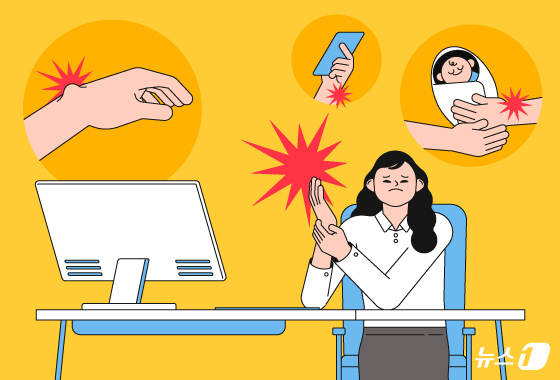
If you discover an unexpected lump on your wrist or the back of your hand without any prior injury, it’s likely a ganglion cyst. These benign tumors develop in the tissue surrounding joints or tendons. While they can appear on the wrist, fingers, ankle, or knee, they’re most commonly found on the wrist.
Office workers who spend long hours at computers and individuals who frequently use their wrists should be particularly mindful of wrist ganglion cysts. These cysts manifest as fluid-filled sacs beneath the skin, formed by a viscous, jelly-like substance that accumulates from the tendon or joint capsule.
While usually asymptomatic and not necessarily requiring treatment, surgical intervention may be considered if pain becomes severe, according to medical experts on Wednesday. These cysts can range in size from a small pea to a chestnut and tend to enlarge with frequent hand use, shrinking during periods of rest. They most commonly affect women in their 20s and 30s, typically appearing on the wrist or back of the hand. Cysts on the back of the hand may cause increased pain during activities that involve pressing against surfaces.
Dr. Lee Yong-seok, Professor of Orthopedic Surgery at Incheon St. Mary’s Hospital, noted that most ganglion cysts are asymptomatic, with many individuals unaware of their presence. He added that while treatment isn’t always necessary, choosing the right approach and proper management can help prevent recurrence and maintain wrist health.
The exact cause of ganglion cysts remains unclear, but repetitive wrist use is often implicated. Minor damage to the membranes surrounding tendons and joints can lead to degenerative changes in cells, resulting in mucus production and subsequent cyst formation.
Initially, ganglion cysts may not present noticeable symptoms. However, as they grow or compress surrounding nerves and blood vessels, they can cause pain, pressure, numbness, and in severe cases, neurological symptoms such as muscle atrophy or weakness. Diagnosis typically involves physical examination, ultrasound, and when necessary, magnetic resonance imaging (MRI) scans.
Dr. Lee explained that if the cyst doesn’t cause pain or compress nerves and blood vessels, monitoring it without significant treatment is usually fine. However, if it compresses a nerve, leading to severe pain, numbness, or muscle atrophy, surgical treatment may be necessary.
Recurrence is Possible… Moderation in Activities Like Tennis and Golf, Along with Regular Wrist Care Recommended
Treatment options fall into two categories: non-surgical and surgical. Non-surgical treatment involves draining the cyst’s contents using a syringe. This method is minimally invasive but has a high recurrence rate as the cyst wall and joint capsule remain intact.
If the cyst is excessively large or wrist pain persists, surgery may be required. Surgical options include open surgery and endoscopic procedures. Open surgery involves removing both the cyst and the affected joint capsule, resulting in a lower recurrence rate but unavoidable scarring.
Endoscopic treatment typically results in less pain and smaller scars compared to open surgery. However, this method may not be suitable for cysts divided into multiple compartments or when multiple cysts develop in various locations, necessitating thorough examination before proceeding.
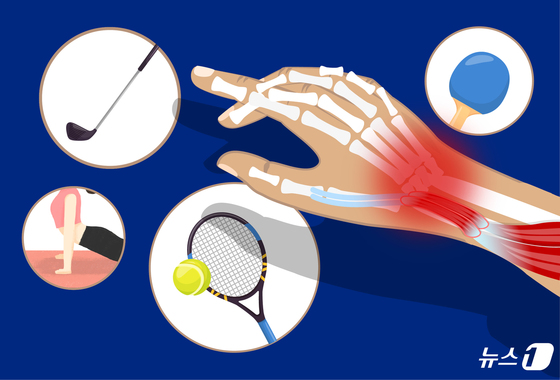
Dr. Lee Seung-jun, Professor of Orthopedic Surgery at Konkuk University Medical Center, noted that even after surgery, there’s a reported recurrence rate of over 20%. This is because the cyst can reform during the joint capsule’s healing process, even after partial removal of the cyst and affected joint capsule.
He advised that frequent wrist users should perform regular stretches to maintain flexibility and consider appropriate exercise levels before engaging in wrist-intensive activities like tennis or golf. Dr. Lee emphasized that preventing recurrence through pre-exercise stretching and post-exercise care is the most effective approach.