

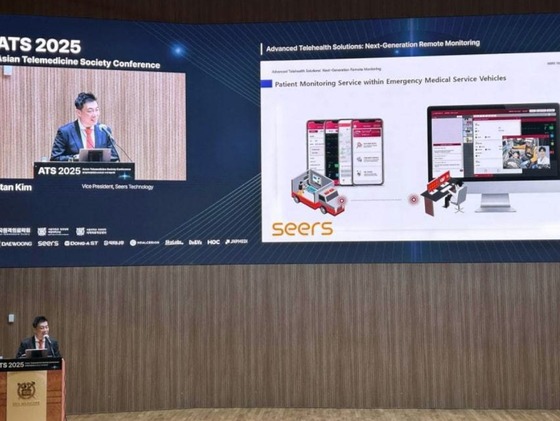
Seers Technology is pioneering digital healthcare innovation by shifting the paradigm of disease management from diagnosis to prevention, combining artificial intelligence (AI) with wearable technology. The company, a leader in inpatient monitoring systems, continues to evolve, recently expanding its services into outpatient monitoring.
Industry sources, including the Korea Medical Device Development Fund, report that Seers has excelled in the telemedicine device sector since its founding in 2009. Its flagship products are mobiCARE, an arrhythmia diagnosis service for outpatients, and thynC, a remote monitoring service for inpatients. These services have enabled Seers to create an AI healthcare ecosystem connecting hospitals and patients.
mobiCARE is South Korea’s premier AI electrocardiogram device. This state-of-the-art medical solution enhances heart disease detection, including arrhythmias, by integrating wearable devices and AI technology, helping to uncover hidden cardiac conditions in patients.
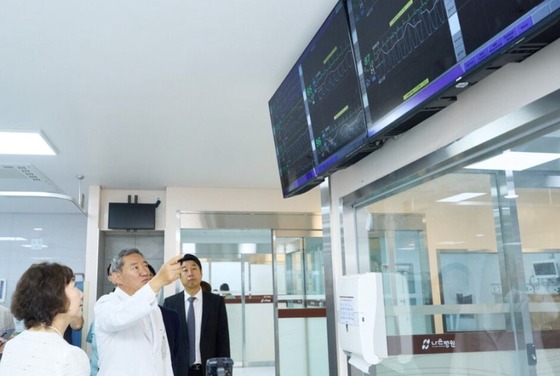
thynC is a service that provides real-time integration and monitoring of vital signs for hospitalized patients, including electrocardiograms, body temperature, oxygen saturation, and blood pressure. This systematic approach to inpatient management boosts the efficiency, productivity, and reliability of medical resources.
Seers has partnered with Daewoong Pharmaceutical for the domestic distribution and marketing of mobiCARE and thynC, effectively transferring technology. Daewoong leverages its established network of hospitals and medical institutions for marketing purposes.
The synergy between these products is evident: when mobiCARE or thynC detects heart abnormalities, sales of Daewoong’s heart health supplement, Coenzyme, are expected to rise. This partnership has helped Seers secure the top market share in South Korea.
The company’s financial performance is promising. Last year, its consolidated sales for the first half reached 12 billion KRW (about 8.23 million USD), marking a record high for any half-year period. The company also turned profitable with a net income of 900 million KRW (about 617,000 USD). Product-wise, mobiCARE generated 2.22 billion KRW (about 1.52 million USD) in sales, while thynC brought in 9.8 billion KRW (about 6.72 million USD).
Notably, thynC demonstrated rapid growth, with installations in 3,000 hospital beds in both the first half and third quarter of last year.
Wall Street Takes Notice as FDA Approval Status Comes Under Scrutiny
The financial community has responded positively to Seers. The company went public on the KOSDAQ on June 19, 2024, with an initial offering price of 17,000 KRW (about 11.67 USD) per share. Since then, its stock has skyrocketed, currently trading between 150,000 KRW and 160,000 KRW (about 102.9 USD to 109.8 USD). This dramatic rise led to the company being designated as an investment warning stock last August.
On January 26, Seers conducted a Non-Deal Roadshow (NDR) in Hong Kong, presenting its business strategies and vision to international investors.
Seers continues to innovate its services. Recently, the company inked a memorandum of understanding with Hering’s, a digital healthcare firm specializing in personalized nutrition and lifestyle management for cancer patients. Together, they aim to develop a comprehensive monitoring platform for discharged cancer patients.
Additionally, Seers launched the thynC Connected Hub to ensure stable expansion and operational enhancement of thynC. This initiative supports various on-site demands and improves healthcare professionals’ workflows.
Seers is now setting its sights on international expansion. Having already entered markets in Hong Kong, Vietnam, Kazakhstan, and Mongolia, the company is now targeting the U.S. Clearing the Food and Drug Administration (FDA) review process could pave the way for a strong foothold in the U.S. market.
Currently, iRhythm, a U.S. company valued at approximately 5 trillion KRW (about 3.43 billion USD), leads the global arrhythmia diagnosis market. However, Seers is confident it can carve out a new niche, given the differences in insurance markets between the two companies.
An industry insider commented that Seers is gaining recognition as a leading medical AI firm due to its insurance-based business model and strong performance growth. While competition in the industry will intensify, the company’s profitability is expected to improve as it accelerates its global market expansion.