


A recent study from Florida revealing the presence of heavy metals in popular candy and chocolate products has sparked concern among consumers in the U.S. However, no recall has been issued, and the confectionery industry has strongly contested the findings. Let’s delve into what’s happening.
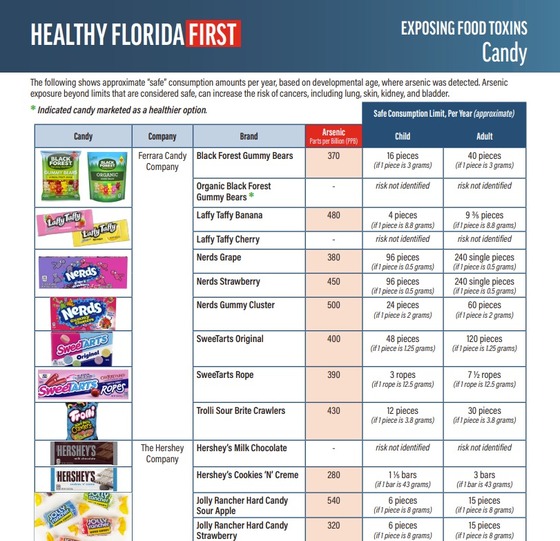
On January 26, the Florida Department of Health announced that arsenic was detected in 28 out of 46 candy products commonly consumed by children. Arsenic, a type of heavy metal, is classified as a Group 1 carcinogen in its inorganic form.
The affected products include well-known brands such as Black Forest Gummy Bears and Nerds (grape, strawberry, gummy clusters) from Ferrara Candy Company, Hershey’s Cookies ‘n’ Cream and Twizzlers (strawberry, cherry, watermelon) from Hershey, and KitKat from Nestlé. These products are popular not only in the U.S. but also in international markets.
Florida Reports Arsenic Detected in Confectionery Products: Consumers Alarmed
The news has caused significant alarm among consumers. Since January 29, online retailers selling these products have been flooded with inquiries about product safety and specific arsenic levels. Some consumers expressed shock, particularly concerning consumption by pregnant women and children.
However, food safety authorities maintain that the situation may not be as severe as initially perceived. They explain that the reported level of 1 microgram per kilogram (about 2.2 pounds), measured in parts per billion (PPB), is extremely low. Moreover, they note that neither the U.S. Food and Drug Administration (FDA) nor regulatory bodies in other countries currently have established PPB detection standards for arsenic in processed foods.
A food safety official stated that the exact batch numbers or concentrations are not documented, and there appears to be ongoing debate in the U.S. regarding safety thresholds and transparency. If these products were indeed harmful, it would expect to see follow-up actions such as mandatory recalls in the U.S.
Controversy Erupts as National Confectioners Association Questions Study’s Credibility
The credibility of the Florida study has been called into question across the U.S. Critics argue that the testing methods lack transparency regarding evaluation criteria and calculation methods, making the results difficult to trust.
They point out that the report only disclosed total arsenic content without distinguishing between organic and inorganic arsenic. This omission makes it challenging to determine harmful levels and could potentially cause confusion among consumers and regulators.
Rather than imposing a consumption ban, Florida health officials provided a hypothetical safe consumption guideline based on estimated monthly and annual intake. However, this guideline has faced criticism for being potentially inaccurate, as it can vary based on an individual’s weight and age.
The National Confectioners Association (NCA) issued a statement disputing the study’s findings. They assert that FDA data shows arsenic levels in confectionery products are much lower than those reported in Florida. The NCA emphasized that chocolate and candy can be consumed safely and enjoyed as snacks, as they have been for centuries.
Importers and distributors are closely monitoring the situation and are committed to ensuring consumer safety. A company distributing Nerds products in the U.S. stated that it has conducted its own arsenic testing and verified that its products meet all safety standards.