

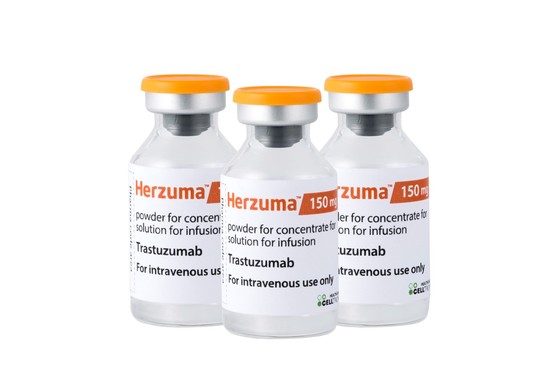
The cancer biosimilar Herzuma (trastuzumab) is gaining a significant foothold in major global markets, including Japan and Europe, improving patient access to treatment.
Herzuma has captured a 74% market share in Japan, breaking through the traditionally conservative market with effective direct sales strategies.
Industry reports from March 7 indicate that Herzuma has secured a 74% share of the Japanese trastuzumab market.
Herzuma is approved for treating HER2-positive metastatic breast cancer, early-stage breast cancer, and metastatic gastric cancer.
Experts attribute this success to the tailored marketing approach of Celltrion’s Japanese subsidiary and its distribution partners, which capitalizes on Japan’s biosimilar-friendly cancer treatment policies.
Japan is known for its conservative approach to drug adoption, with a historical preference for original medications due to its strong domestic pharmaceutical industry.
Japan’s Diagnosis Procedure Combination (DPC) system, a form of comprehensive payment for cancer treatments, allows the government to set overall medical expenses for cancer care. This system incentivizes hospitals to use lower-priced medications, as they can retain the cost savings.
The DPC system is widely seen as beneficial for hospitals, the government, and patients. By prescribing the effective and cost-efficient Herzuma, the government can offer reimbursements while patients see reduced out-of-pocket expenses.
Celltrion has leveraged the DPC system’s favorable stance on biosimilars in its marketing strategy, outpacing competitors in prescription rates.
Celltrion’s Japanese subsidiary and local partners have implemented a dual distribution strategy, minimizing supply gaps by selling products separately.
Despite the DPC system creating a favorable environment for all biosimilars, Celltrion’s localized sales approach has led to exceptional performance, surpassing competitors.
Herzuma is making waves globally, while Celltrion advances its subcutaneous (SC) formulation to enhance administration convenience.
Beyond Japan, Herzuma maintains a leading market share in key European countries. This success stems from Celltrion’s competitive pricing and high supply reliability in Europe’s tender-based market.
Celltrion’s acquisition of World Health Organization (WHO) prequalification has facilitated entry into global public procurement markets, including Europe.
This certification has enabled Celltrion to expand Herzuma’s market share in emerging markets across Latin America and Southeast Asia.
Herzuma has established Celltrion as a major player in the global cancer treatment market.
Celltrion aims to solidify its market position by introducing a subcutaneous (SC) formulation of Herzuma. The company has successfully completed clinical trials for this new formulation and plans to seek regulatory approval in various countries.
The current intravenous (IV) formulation requires 1-2 hours for administration and necessitates patients to remain in hospital beds. In contrast, the SC formulation allows for self-administration in the abdomen or thigh within minutes, significantly improving treatment convenience.
Healthcare providers favor the SC formulation for its potential to reduce preparation time and improve bed turnover rates.
Building on the success of its autoimmune disease treatment ‘Remsima SC’ (marketed as Inflectra in the U.S.), Celltrion expects to strengthen its position in the Herzuma biosimilar market with this SC formulation.