Home Health Unlocking Alzheimer’s: The Surprising Role of Tau Protein in Cell Division Revealed

Unlocking Alzheimer’s: The Surprising Role of Tau Protein in Cell Division Revealed

0
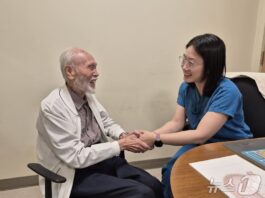
On Wednesday, Professor Son Min-ju of the Department of Physics and the Department of Systems Biology at POSTECH, Professor Hwang Dong-soo of the Department of Environmental Engineering and the Department of Systems Engineering at the Graduate School of Convergence Science and Engineering, and Dr. Hong Yoo-ri of the Max Planck Institute (formerly of the Department of Systems Biology at POSTECH) announced that they have identified a new function of tau, a protein known to cause Alzheimer’s disease. From left: Professor Son Min-jun, Integrated Program student Park Se-rin, Integrated Program student Jeong Jae-hoon, Dr. Hong Yoo-ri of the Max Planck Institute, and Professor Hwang Dong-soo (provided by POSTECH) 2026.3.18 / News1
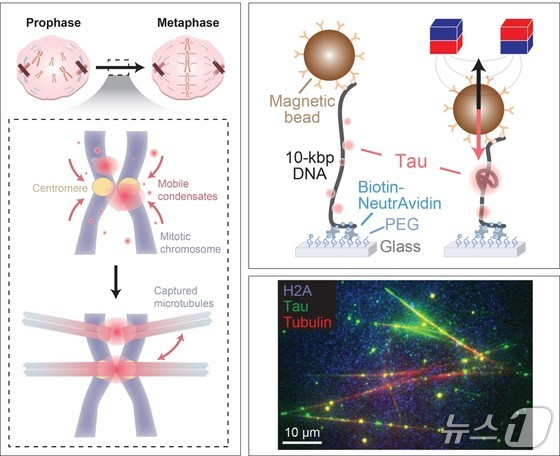
POSTECH Research Image (Provided by POSTECH) 2026.3.18 / News1

Pohang University of Science and Technology (POSTECH) researchers have made a groundbreaking discovery about tau, a protein linked to Alzheimer’s disease. On Wednesday, Professor Son Min-joo from the Department of Physics and Systems Bioengineering, Professor Hwang Dong-soo from the Department of Environmental Engineering and Systems Engineering Graduate School, and Dr. Hong Yoo-ri from the Max Planck Institute unveiled Tau’s previously unknown function.

The team’s focus on tau emerged while investigating the mechanisms behind accurate chromosome division during cell replication.

Cell division, a cornerstone of life processes, can lead to infertility or birth defects when disrupted.

The scientists found that tau forms condensates on DNA, influencing both chromosomes and microtubules. They also discovered that tau’s phosphorylation, a chemical modification, plays a crucial role in this process.

Recent studies have shown that tau aggregates various molecules within cells to form small condensates, but the implications of tau-DNA interactions remained elusive until now.

This breakthrough could revolutionize research on infertility, congenital disorders, and neurodegenerative conditions like Alzheimer’s.

Professor Son explained that the findings suggest that tau proteins not only interact with microtubules but also directly with DNA, potentially bridging these two structures. Further adding that this study demonstrates tau’s possible involvement in the early stages of cell division.
NO COMMENTS

LEAVE A REPLY

Please enter your comment!
Please enter your name here

Exit mobile version