

ABL Bio, a bispecific antibody specialist, announced on Thursday that it will present preclinical data for its next-generation antibody-drug conjugates (ADCs), ABL206 and ABL209, at the upcoming American Association for Cancer Research (AACR) Annual Meeting in April.
The AACR Annual Meeting is a premier gathering where pharmaceutical and biotech companies, researchers, healthcare professionals, and patients from around the world convene to share cutting-edge research findings. The event is set to take place from April 17 to 22 at the San Diego Convention Center in California.
ABL206 and ABL209, slated for poster presentation on April 20, are key components of ABL Bio’s bispecific antibody ADC pipeline. NEOK Bio, which holds the clinical and global development rights for both candidates, has rapidly advanced clinical trials following the Food and Drug Administration (FDA) approval of their Investigational New Drug (IND) application for a Phase 1 study.
ABL206 targets both B7-H3 and ROR1, while ABL209 focuses on Epidermal Growth Factor Receptor (EGFR) and Mucin 1 (MUC1). Both pipeline candidates feature payloads based on Topoisomerase I inhibitors.
Preclinical studies have shown that ABL206 demonstrated superior efficacy and safety compared to monoclonal antibody ADCs in both cellular and animal models. Glucagon-like-peptide (GLP) toxicity tests in non-human primates also confirmed generally good tolerability. ABL209 exhibited potent anti-cancer activity while reducing EGFR-related toxicity.
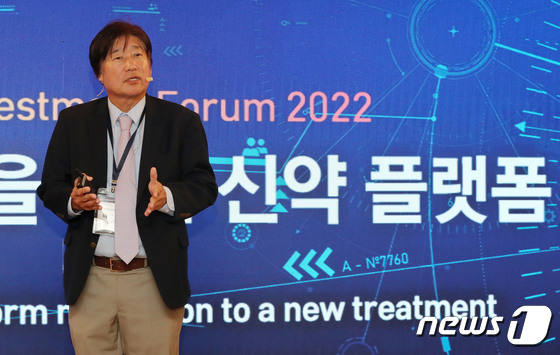
Chief Executive Officer (CEO) Lee Sang-hoon stated that ABL206 and ABL209 are promising next-generation ADC candidates with compelling preclinical data. He added that NEOK Bio is spearheading the clinical development of these two pipeline candidates in the U.S. They’ve crafted optimal clinical strategies in collaboration with ADC development experts, aiming to present early Phase 1 clinical data by 2027.
Lee further noted that concurrently, ABL Bio is actively pursuing research on next-generation ADCs to succeed ABL206 and ABL209. It is intensifying the research and development (R&D) efforts to unveil subsequent pipeline candidates as soon as possible.