


Lung cancer is often difficult to detect early due to the lack of distinct symptoms in its initial stages. Even as it progresses, symptoms may be limited to coughing or phlegm. However, experts advise that if the tumor is discovered in the limited stage, confined to one lung, there’s a chance for complete recovery. The key is not missing this golden window of opportunity.
Small Cell Lung Cancer Accounts for 15-25% of All Lung Cancers and Poor Prognosis
Lung cancer is categorized into small cell lung cancer and non-small cell lung cancer based on the size and shape of cancer cells.
Small Cell Lung Cancer (SCLC) is named for its smaller cell size compared to normal cells and represents about 15-25% of all lung cancers. It’s classified as a difficult-to-treat cancer due to its rapid cell proliferation and frequent metastasis to lymph nodes or other organs at the time of discovery. The five-year survival rate is reported to be 6%.
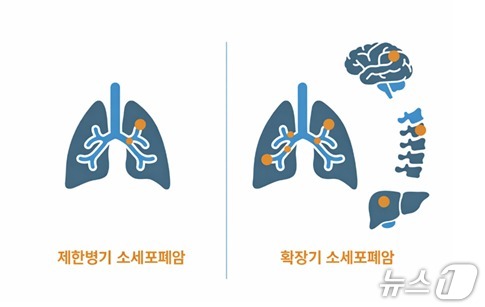
SCLC is divided into two stages based on the extent of disease progression. The limited stage refers to cancer confined to one side of the chest and adjacent lymph nodes, which can be included within the radiation therapy field. This stage accounts for about 30% of all SCLC patients.
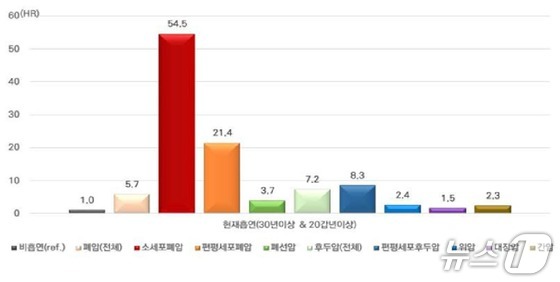
The primary risk factor for SCLC is smoking. Over 95% of patients have a history of smoking, and current smokers with 30 or more pack-years have a 54.5 times higher risk of developing SCLC compared to non-smokers. This risk is significantly higher than for other cancers, with smoking contributing to 98.2% of SCLC cases.
Early symptoms of SCLC are not significantly different from common respiratory diseases. Typical signs include persistent cough lasting more than two weeks, phlegm, and mild shortness of breath. As a result, people may mistake it for a cold or bronchitis and delay seeking medical attention, or even if they do, doctors might not initially suspect lung cancer.
As the disease progresses, symptoms become more pronounced. These may include bloody sputum, voice changes, chest pain, and difficulty breathing. If the cancer compresses the superior vena cava, it can lead to swelling of the face and neck, known as superior vena cava syndrome. By the time these symptoms appear, the disease has often advanced significantly. Smokers should consider proactive screening through regular check-ups.
To detect lung cancer early, low-dose chest CT (LDCT) screenings are conducted for high-risk groups in the U.S. South Korean lung cancer screening targets high-risk individuals aged 54-74 with a smoking history of 30 or more pack-years, recommending low-dose chest computed tomography (CT) scans every two years.
Dr. Hong Sook-Hee, an oncologist at Seoul St. Mary’s Hospital, told News1 that while the expansion of national lung cancer screening is expected to lead to earlier detection of more SCLC cases, it’s crucial not to stop at diagnosis but to begin treatment quickly before the cancer progresses to an extensive stage.
Dr. Hong emphasized that SCLC progresses so rapidly that the stage can change in just a few weeks after diagnosis. Therefore, it’s critical not to miss the treatment window during the limited stage when complete cure is still a possibility.
Encouraging New Treatment Options for Patients After 30 years
The prognosis for SCLC varies dramatically depending on the stage. For limited-stage SCLC, the standard treatment has been a combination of chemotherapy and radiation therapy. However, most patients experienced recurrence within two years of starting treatment, with a median overall survival of only 16-24 months.
A hopeful change has emerged in the treatment landscape after 30 years of stagnation. In April of last year, the immunotherapy drug durvalumab (brand name Imfinzi) was approved for limited-stage SCLC treatment. It has become the only immunotherapy option for limited-stage SCLC patients whose disease has not progressed following platinum-based chemoradiation therapy.
Clinical studies showed that durvalumab monotherapy extended overall survival by about 1.7 times compared to the placebo group, reaching 55.9 months and reducing the risk of death by 27%. The safety profile was consistent with known treatment methods, and most adverse reactions were mild or manageable with appropriate care.
Regarding this development, Dr. Hong stated that the emergence of immunotherapy is very encouraging for medical professionals, as it provides a new treatment option for patients even after completing standard therapy, something that hasn’t been available for 30 years.
She added that combination immunotherapy is becoming the new standard treatment for limited-stage SCLC. Considering the characteristic of immunotherapy to maintain its effects for a long time if the initial response is good, long-term survival can be expected even in SCLC. Dr. Hong advised patients to actively consult with specialists and pursue treatment.