

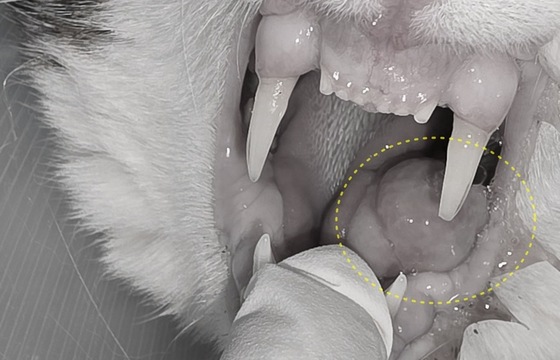
Detecting oral tumors in cats can be difficult for pet owners, often resulting in delayed diagnosis. By the time these tumors are discovered, the lesions may already be significantly advanced, underscoring the importance of comprehensive pre-surgical evaluation rather than immediate removal.
The Care 24 Animal Medical Center recently treated an 11-year-old Korean Shorthair cat that presented with drooling and decreased appetite. During the examination, veterinarians identified a mass under the cat’s tongue. Due to their location, oral lesions often go unnoticed, with owners typically recognizing a problem only after changes in eating habits or excessive drooling become apparent.
Instead of proceeding directly to surgery, the medical team conducted detailed diagnostic testing, including a CT scan, to evaluate the tumor and check for metastasis. They also performed a fine needle aspiration (FNA) on the mass and nearby lymph nodes to assess the cellular composition.
The results were encouraging: the FNA showed no clear evidence of malignant cells, and the CT scan did not reveal any signs of metastasis to other organs. Based on these findings, the team established a targeted surgical plan that avoided unnecessarily aggressive treatment.
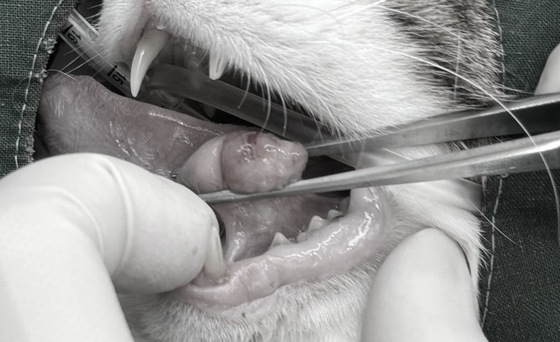
The veterinary surgeons then proceeded to remove the oral mass, and the cat is now recovering steadily. The oral cavity is constantly in motion and exposed to various stimuli, making post-operative care particularly challenging. This highlights the importance of precise surgical technique and careful recovery management.
The case highlights the role of a multidisciplinary approach in veterinary medicine. The treatment involved coordinated collaboration among internal medicine, surgery, radiology, and clinical pathology, ensuring continuity from diagnosis through surgery to post-operative care. This integrated approach reflects a shift beyond simple mass removal toward comprehensive treatment planning.
Dr. Kim Won Min, head of the internal medicine team at the center, emphasized that feline oral tumors require more than the removal of visible masses. He noted that pre-surgical CT imaging and cellular analysis to determine the tumor’s nature and potential metastasis play a critical role in shaping both the surgical approach and long-term prognosis.
He also advised pet owners to remain vigilant, explaining that symptoms such as decreased appetite, drooling, or bad breath should not be dismissed as minor issues. Prompt veterinary evaluation is essential, he said, as early intervention can significantly affect overall prognosis.