

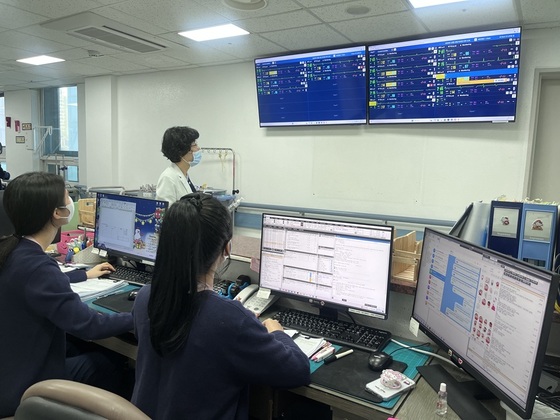
Seoul Sungsim Hospital announced on April 3 that it has implemented the artificial intelligence (AI) bed monitoring system thynC in partnership with Daewoong Pharmaceutical to enhance patient safety management in its integrated nursing care service ward. The system has been applied to 80 beds.
This implementation marks a shift to a digital-based inpatient management system, enabling round-the-clock real-time monitoring of patient conditions.
Seoul Sungsim Hospital, the first medical facility in Dongdaemun District to adopt thynC, aims to improve patient comfort and safety while easing the workload on medical staff.
The continuous sharing of patient status information within the ward is expected to reduce repetitive checks and documentation for medical personnel, allowing them to focus more on providing high-quality care and treatment.
thynC is an AI-powered smart bed monitoring system that collects and analyzes key vital signs of hospitalized patients in real-time. It allows medical staff to monitor patient conditions 24/7 without entering the room, enabling faster responses to any abnormalities through alerts.
In the integrated nursing care service ward, where nursing staff manage patients without family members or caregivers, one nurse typically oversees ten patients simultaneously. This structure can potentially create blind spots in patient monitoring.
Previously, limited staffing during night shifts made continuous patient monitoring challenging. However, the introduction of thynC has provided a central monitor that offers a comprehensive view of all patient statuses within the ward.
Moreover, the system’s ability to collect continuous data on patient conditions enhances inpatient management and establishes a foundation for quicker emergency responses.
Park Hyeong-cheol, head of the Ethical Drug (ETC) Marketing Division at Daewoong Pharmaceutical, stated that thynC is designed to observe hospitalized patients’ conditions in real-time, enabling medical staff to respond more swiftly and efficiently. Through collaborations with institutions like Seoul Sungsim Hospital, it aims to support digital healthcare in providing tangible value in real-world medical settings.