

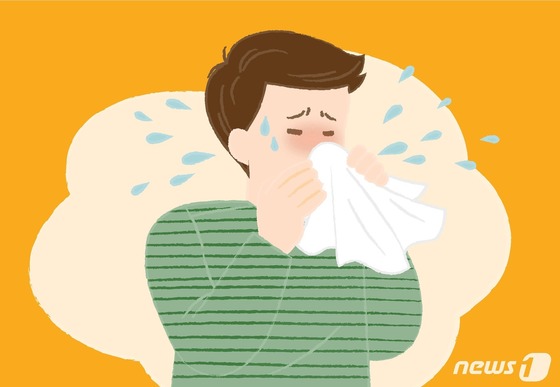
Cases of allergic rhinitis are rising as warmer weather and increased outdoor activity lead to more people experiencing symptoms such as runny nose, sneezing and nasal congestion, medical experts said April 7.
Often mistaken for a common cold and left untreated, allergic rhinitis can become chronic and significantly disrupt daily life.
According to the medical community, allergic rhinitis is a condition in which the nasal mucosa becomes hypersensitive to specific allergens. Common symptoms include nasal congestion, clear nasal discharge, repeated sneezing and nasal itching.
A diagnosis is likely when two or more of these symptoms occur and worsen upon exposure to allergens such as pollen or dust mites. Itching around the eyes and excessive tearing may further indicate the condition.
Park Jae-sun, a professor of otolaryngology at Kangbuk Samsung Hospital, said rhinitis can extend beyond the nasal cavity and be accompanied by conditions such as otitis media and sinusitis, while also affecting overall quality of life through sleep disturbances and reduced concentration.
He emphasized that identifying the exact cause is the first step in treatment, recommending hospital visits and allergy testing if symptoms persist. He noted that testing can be conducted through a simple blood test.
Treatment options for allergic rhinitis include avoidance strategies, medication, immunotherapy and surgical intervention.
The most common approach is avoidance. For example, if a pollen allergy is confirmed, patients are advised to monitor pollen levels through weather services and limit exposure.
Because pollen levels are typically higher in the morning, outdoor activities are recommended in the evening. On high-pollen days, reducing outdoor exposure and wearing masks can help prevent inhalation.

Park also advised keeping windows closed indoors, using air purifiers, and washing clothes and showering after returning home to remove pollen and fine dust.
He added that if symptoms persist despite these measures, patients may benefit from antihistamines or nasal spray treatments prescribed by a doctor.