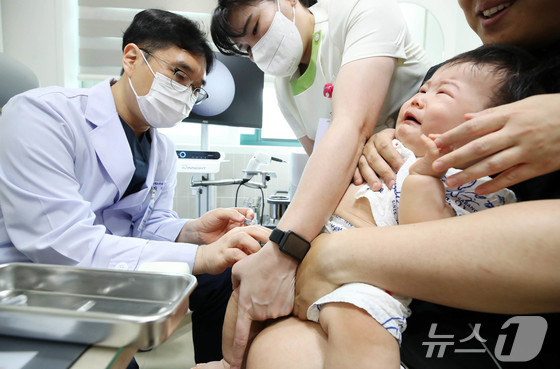
Respiratory Syncytial Virus (RSV) is a type of acute respiratory virus that can lead to severe complications like pneumonia and bronchiolitis in infants, often resulting in hospitalization. Infants under six months old are particularly vulnerable, facing the highest risk of severe RSV disease and mortality. This underscores the critical need for proactive prevention strategies.
As of Tuesday, medical experts classify RSV-induced acute respiratory infections as a Category 4 notifiable infectious disease. These infections are a leading cause of infant hospitalizations during late fall and winter, highlighting the ongoing importance of prevention. While basic hygiene practices are crucial, they alone aren’t sufficient to prevent RSV.
Fortunately, a breakthrough came last year with the introduction of a preventive antibody injection (nirsevimab) for all newborns and infants facing their first RSV season. A single dose can provide at least five months of protection, making it highly effective when administered just before peak season.
However, this preventive measure comes with a catch – it’s not covered by health insurance. Parents must bear the full cost, ranging from 500,000 to 600,000 KRW (about 337 to 408 USD) per injection, leading to widespread concerns in parenting forums about the financial burden.
The injection has proven its worth beyond clinical trials, demonstrating high efficacy, sustained effectiveness, and safety in real-world settings. Recent domestic studies have also confirmed its cost-effectiveness. Medical experts believe it offers immediate protection for infants with still-developing immune systems.
Despite these benefits, the current vaccination system remains vaccine-centric. While vaccines stimulate the body to produce antibodies, preventive antibodies provide immediate protection through direct administration. This fundamental difference in mechanism has led to disparate regulatory treatment.
The Korea Centers for Disease Control and Prevention took a step forward last year by including the preventive antibody in the vaccination registration system. However, the lack of legal framework has hindered public funding, exposing a gap between rapid advancements in preventive technologies and slower-moving regulatory systems.

In contrast, several countries are adapting to this new landscape. The United States, Spain, and Canada have implemented public-funded programs providing preventive antibodies to all infants. Australia is taking legislative action, amending its national health law to include passive immunity in the definition of vaccines.
In response, Korean medical societies, including the Korean Pediatric Society and the Korean Society of Pediatric Infectious Diseases, have consistently advocated for institutional changes. They propose adopting preventive antibodies and passive immunity strategies as effective infection prevention methods.
Dr. Choi Young-jun, a pediatric professor at Korea University’s Anam Hospital and research director of the Korean Society of Pediatric Infectious Diseases, called for national support for RSV preventive antibodies during a panel discussion last September.
Dr. Choi argued that providing preventive antibodies to all infants through national vaccination support and expanding health insurance coverage for isolation treatment costs could prevent severe RSV infections in young children, reduce hospital-acquired infections, protect children’s health, and ultimately lower national healthcare costs.
In light of these developments, the government is now considering enacting a comprehensive vaccination management law. This legislation aims to address the limitations of the existing infectious disease prevention law and encompass various preventive measures. As vaccines and preventive antibodies share the common goal of protecting public health, policymakers must ensure that regulations keep pace with scientific advancements in the field.