
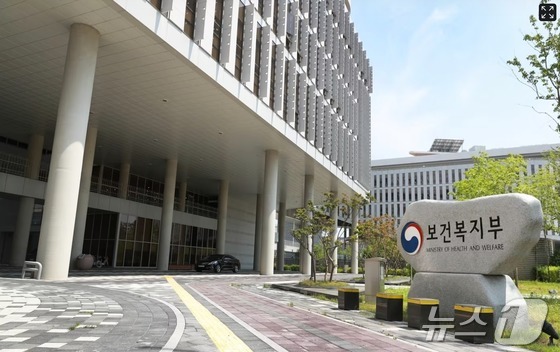
The government has initiated preparations for an era of Artificial Intelligence (AI) Basic Healthcare, aiming to ensure all citizens have access to high-quality medical services, regardless of where they live.
On Thursday morning, the Ministry of Health and Welfare hosted the 1st Expert Policy Forum on AI Basic Healthcare at the Koreana Hotel in Seoul. The forum addressed structural challenges in South Korea’s healthcare system, including widening regional healthcare disparities, shortages in essential medical staff, and vulnerabilities in public healthcare. The proposed solution, dubbed Regional, Essential, and Public Healthcare AI Transformation (AX), was a key topic of discussion.
Starting with this forum, the Ministry plans to introduce artificial intelligence technology across the healthcare sector, ushering in the AI Basic Healthcare era.
The forum brought together experts from key institutions, including Lim Moon-young, Vice Chairman of the National AI Strategy Committee, and Shin Young-seok, President of the Korea Institute for Health and Social Affairs. They engaged in comprehensive discussions about integrating AI technology into medical practices and the associated policy challenges.
Participants reached a consensus that AI technology could provide advanced diagnostic and prescription support functions without geographical limitations, potentially addressing healthcare gaps in underserved areas and shortages in essential medical services.
The experts emphasized that successful implementation of the Regional, Essential, and Public Healthcare AX would require addressing challenges such as data standardization and upgrading information systems in the healthcare sector.
They highlighted the need to unify diverse medical data formats across hospitals and establish clear incentives for hospital information technology (IT) modernization and AX implementation to facilitate inter-institutional data sharing.
During the keynote presentation, the Ministry revealed its collaboration with the National AI Strategy Committee and relevant departments to establish the foundational direction for the AI Basic Healthcare Strategy and prepare a cross-departmental approach to consolidate capabilities in this area.
The government plans to continue engaging with various stakeholders, including medical AI experts, AI development firms, and local healthcare providers, in future forums.
Lee Hyung-hoon, Deputy Minister of Health and Welfare, stated that AI is more than just a technological advancement; it’s a key to addressing long-standing regional healthcare disparities. They’re committed to developing an AI Basic Healthcare strategy that will have a tangible impact on public health, informed by real-world feedback from healthcare professionals.
The forum also featured presentations by Dr. Seo Jun-beom, head of the medical subgroup of the National AI Strategy Committee from Asan Medical Center, on The AI Basic Healthcare Strategy from the Perspective of National AI Strategy, and Dr. Shin Hyun-woong, Director of the Korea Institute for Health and Social Affairs, who discussed The Necessity, Key Issues, and Outlook for Regional, Essential, and Public Healthcare AX.


