Women with heart valve disease often need tremendous courage to pursue pregnancy and childbirth. During pregnancy, a mother’s blood volume increases and her heart beats faster to deliver oxygen and nutrients to the fetus, placing significantly greater strain on the heart. For women with valve disease, that added burden can be difficult to tolerate.
Because pregnancy can threaten the lives of both the mother and the baby, healthcare providers and family members are often reluctant to encourage pregnancy, and many patients ultimately give up on the idea of having children.
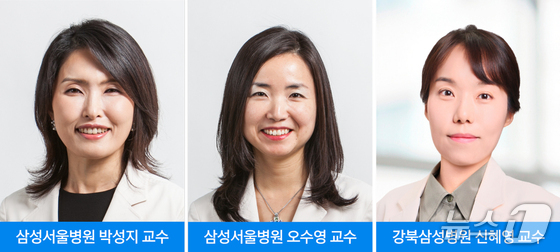
Against this backdrop, Samsung Medical Center announced on July 21 (EST) that a research team led by Park Sung-ji, director of the Imaging Center and professor of cardiology; Oh Soo-young, director of the Maternal Intensive Care Center and professor of obstetrics and gynecology; and Shin Hye-young, professor of cardiology at Kangbuk Samsung Hospital, has published findings summarizing three decades of experience helping women with heart valve disease successfully deliver babies.
The study was recently published in the Journal of Korean Medical Science (JKMS).
Large-scale studies involving pregnant women with heart valve disease are rare in Korea, making this the country’s largest clinical cohort analysis spanning 30 years.
The study also reflects the efforts of multidisciplinary medical teams that have supported women determined to become mothers despite the risks posed by heart valve disease, providing care from pre-pregnancy counseling through pregnancy and delivery to protect both mother and child.
Heart valve disease occurs when one or more of the heart’s four valves fails to open or close properly, disrupting normal blood circulation. Without timely treatment, the condition can lead to acute heart failure and become life-threatening.
“We wanted to show that while pregnancy and childbirth are certainly challenging for women with heart valve disease, they are not impossible,” the researchers said. “We hope Samsung Medical Center’s experience will help more women with valve disease safely achieve pregnancy.”
The team analyzed 138 women with heart valve disease who gave birth at Samsung Medical Center between December 1994 and June 2023.
The mothers ranged in age from 29 to 35 years, with a median age of 32. Based on disease severity, 46 women (33.3%) had mild disease, 67 (46.8%) had moderate disease, and 25 (18.1%) had severe disease.
The analysis found no maternal deaths during the study period.
There were five cases of miscarriage or stillbirth (3.6%). According to the researchers, comprehensive pre-pregnancy counseling, risk assessment, intensive monitoring during late pregnancy, and proactive delivery planning all contributed to improved outcomes.
The study also identified clinical factors that can guide treatment decisions aimed at protecting both mothers and babies.
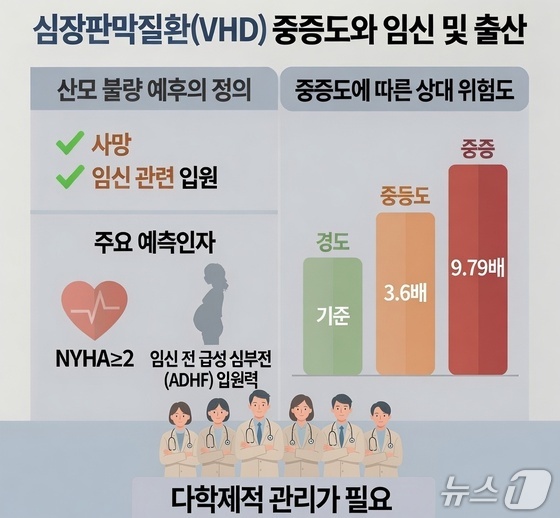
Maternal and fetal outcomes worsened as valve disease severity increased, with most maternal complications involving hospitalization for heart failure.
Fortunately, complications typically occurred late in the third trimester, at a median gestational age of 39.8 weeks, while deliveries occurred at a median of 38.7 weeks—allowing most pregnancies to progress long enough for adequate fetal development.
Among the infants, 18 (13%) were born before 37 weeks of gestation, while only two (1.4%) were born extremely preterm before 28 weeks.
As a result, only 15 newborns (11.3%) required treatment in a neonatal intensive care unit (NICU).
The researchers also found that anatomical disease severity alone was insufficient for predicting maternal and neonatal outcomes.
Instead, they concluded that physicians should also consider reduced functional capacity early in pregnancy—defined as New York Heart Association (NYHA) functional class II or higher, in which patients experience shortness of breath or fatigue during routine activities such as walking or climbing stairs—along with a history of hospitalization for acute heart failure before pregnancy and the presence of at least moderate valve disease.
The NYHA functional classification consists of four stages. Class I indicates no symptoms, while Class II marks the onset of symptoms such as shortness of breath or palpitations during physical activity.
For newborns, maternal functional impairment early in pregnancy (NYHA class II or higher) and hospitalization for heart failure during pregnancy were also identified as major predictors of outcomes, underscoring the importance of evaluating a mother’s functional and hemodynamic status rather than relying solely on anatomical findings.
Samsung Medical Center established a multidisciplinary team involving obstetrics and gynecology, cardiology, and cardiac surgery around 2010 after helping deliver the baby of a woman whose life had been threatened by an enlarged heart following artificial heart valve surgery and severe mitral and tricuspid valve regurgitation.
Last year, the hospital was designated a national referral center for critically ill high-risk mothers and newborns, providing advanced multidisciplinary care through its Maternal-Fetal Medical Center.
Oh Soo-young, professor of obstetrics and gynecology, said, “Safe pregnancy and childbirth for women with heart disease require far more than obstetric care alone. Precise risk assessment that reflects patients’ functional status and history of heart failure, together with multidisciplinary collaboration between cardiologists and obstetricians, is essential.”
Park Sung-ji, professor of cardiology, added, “We confirmed that the risks faced by pregnant women with heart valve disease depend more on their actual functional status and history of heart failure than on anatomical disease severity alone. We expect these findings to provide an important foundation for developing Korean-specific risk prediction models and personalized management strategies.”